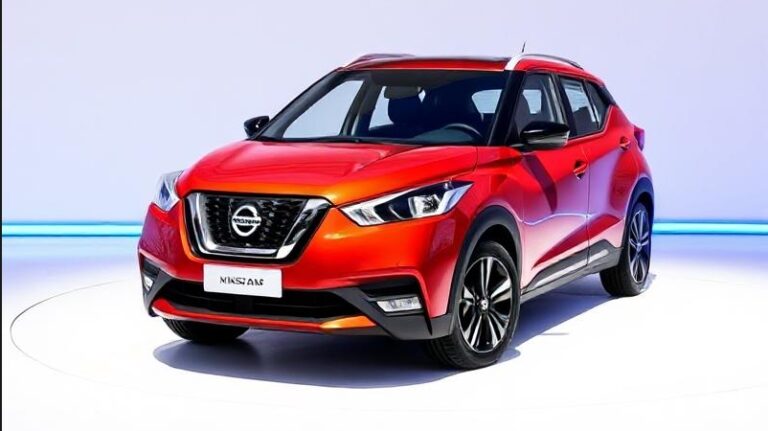
Evolution of The Daihatsu Boon: A Compact Kei Car with Global Appeal
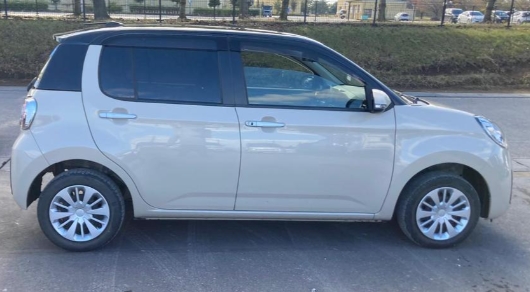
Introduced in 2005, the Daihatsu Boon stands as a notable chapter in the evolution of compact, fuel-efficient urban vehicles. Originally developed as part of a broader collaboration between Toyota and Daihatsu, the Boon was engineered to fill a niche in the growing market for affordable, maneuverable subcompact cars—particularly in Japan’s congested cities. With its kei car underpinnings, straightforward design, and efficiency-focused engineering, the Boon quickly gained popularity across Japan and found its way into select international markets under different badges. While production of the original Boon ceased in 2020, its legacy persists through its platform siblings and ongoing influence in Daihatsu’s lineup.
Origins and Development
The Daihatsu Boon was unveiled in November 2005 as a direct response to the rising demand for compact, fuel-efficient vehicles suited for urban environments. Though classified as a subcompact, the Boon slightly exceeded kei car dimensions, allowing for flexibility in engine size and interior space while still maintaining excellent city-driving capabilities. It was developed under a strategic partnership between Toyota and Daihatsu, with Toyota assuming majority ownership of Daihatsu in 2016. This collaboration allowed the Boon to share its platform and mechanical components with the Toyota Passo—its badge-engineered twin—reflecting a common industry practice to maximize efficiency in manufacturing and distribution.
Based on the D-100 platform, the Boon was designed from the outset to deliver practicality, low running costs, and reliability. The model targeted young drivers, single users, and small families who needed reliable urban transportation without the drawbacks of larger vehicles—such as high fuel consumption and limited parking availability.
.
NO MORE dead batteries with this:

.
Years of Production and Generations
The Daihatsu Boon was produced in two distinct generations over a 15-year span:
- First Generation (M700 series): 2005–2010
Launched in November 2005, the first-generation Boon featured a tall, boxy design maximizing interior space despite a modest exterior footprint. It was available with either front-wheel drive (FWD) or optional all-wheel drive (AWD), catering to varied driving conditions, especially in Japan’s rural or mountainous regions. Engine options included a 1.0-liter 1KR-FE three-cylinder and a 1.3-liter K3-VE four-cylinder, both mated to either a 5-speed manual or a 4-speed automatic transmission. - Second Generation (M800 series): 2010–2020
Introduced in October 2010, the second-generation Boon featured a more modern aesthetic, improved aerodynamics, and advancements in fuel economy and safety. The platform was updated for better crashworthiness and ride comfort. The 1.0-liter and 1.3-liter engines were retained, but with refinements including dual VVT-i for improved efficiency. Transmission options expanded to include a continuously variable transmission (CVT), which became standard on most trims. A notable engineering addition was the inclusion of the “Eco Idle” start-stop system to reduce fuel consumption during city driving.
Production of the Daihatsu Boon officially ended in 2020, with Daihatsu focusing on newer models like the Rocky (also known as the Raize) and the renewed emphasis on electric and hybrid urban transport solutions.
Trim Levels and Model Variants
Throughout its production lifespan, the Daihatsu Boon was offered in a variety of trim levels catering to different buyer preferences—from budget-conscious commuters to style-focused drivers.
First Generation (2005–2010) Trim Levels:
- X: The base model emphasized affordability and efficiency, featuring steel wheels, manual windows, and basic audio. Ideal for personal city commuting.
- G: A mid-tier trim with upgraded fabric seats, a center console, and improved sound insulation. Some versions included alloy wheels and air conditioning.
- S: Sportier in appearance with aerodynamic body kits, rear spoilers, and sport-tuned suspension. Offered a more engaging driving experience, targeting younger buyers.
- Custom Style: A high-end variant with unique exterior treatments, upgraded interior materials, keyless entry, and enhanced audio systems. Positioned as a premium compact with personality.
All trims came with options for front- or all-wheel drive. The AWD system, marketed as “4WD” in Japan, was popular in regions with snowy winters.
Second Generation (2010–2020) Trim Levels:
- X: Retained its position as the entry-level model, focused on economy. Standard features included power-adjustable side mirrors, remote keyless entry, and a digital trip meter.
- G: Offered additional creature comforts such as a touch-screen audio system (in later models), automatic climate control, and rear seat heater ducts. Became the most popular trim due to its balance of features and price.
- S “L Package”: A sport-luxury variant distinguished by LED headlights, fog lamps, body-colored side moldings, and exclusive interior trim. Featured the 1.3-liter engine as standard.
- Custom Style “S”: A limited-run model with exclusive colors, larger alloy wheels, and enhanced instrument lighting. Marketed toward younger, fashion-conscious consumers.
Additionally, Daihatsu introduced special edition models throughout the years, such as the “Boon Xmas Limited” and “Boon Spring Select,” which offered seasonal color schemes and minor equipment upgrades to boost appeal during promotional periods.
Mechanical Specifications and Performance
The Daihatsu Boon was engineered to deliver reliable performance and exceptional fuel economy. Engine options remained consistent across both generations:
- 1.0L 1KR-FE 3-cylinder: Producing approximately 67 horsepower and 89 Nm of torque, this engine was ideal for city driving, achieving up to 28 km/L (approximately 66 mpg) under Japan’s JC08 test cycle.
- 1.3L K3-VE 4-cylinder: With 87 horsepower and 120 Nm of torque, this engine provided more confident acceleration, especially when climbing hills or carrying passengers.
All models were paired with either a 5-speed manual, 4-speed automatic (first generation), or continued with the 5-speed manual and upgraded to a CVT in the second generation. The CVT significantly enhanced fuel efficiency and driving smoothness.
Suspension used a MacPherson strut setup in the front and a torsion beam at the rear—typical for vehicles in this class. Braking systems included front ventilated discs and rear drums, with ABS and Electronic Brakeforce Distribution (EBD) becoming standard in later years.
Safety and Technology
Safety was gradually enhanced over the Boon’s production run. Early models featured dual front airbags, seatbelt pretensioners, and ABS. By the second generation, additional safety measures included Vehicle Stability Control (VSC), Brake Assist, and, in higher trims, a rear parking camera. However, the Boon was not tested by global safety organizations such as Euro NCAP or JNCAP extensively, and its safety ratings were considered modest by modern standards.
Technology updates included Bluetooth connectivity, USB ports, and compatibility with Daihatsu’s navigation system in later G and Custom Style models. The infotainment systems were basic but functional, reflective of the car’s economy-focused mission.
International Presence and Badge Engineering
Though the Daihatsu Boon was primarily marketed in Japan, its engineering had a global footprint. The most significant international variant was the Toyota Passo, sold in Japan, Southeast Asia, and parts of Oceania. The Toyota Passo shared nearly every mechanical and structural component with the Boon, differing mainly in grille design, badging, and minor trim details.
In Indonesia, the second-generation Boon platform underpinned the Toyota Agya and Daihatsu Ayla, both launched in 2013. These models were specifically designed for emerging markets, featuring smaller 1.0L and 1.2L engines, simplified suspensions, and ruggedized underbodies to handle varied road conditions. The Agya and Ayla remain in production and have achieved strong sales across ASEAN nations.
Market Significance and Consumer Reception
In Japan, the Boon was praised for its practicality, low running costs, and ease of parking. Its tall seating position provided excellent visibility, a feature appreciated by urban drivers and older individuals alike. Fuel efficiency and low insurance premiums due to its compact class also added to its appeal.
However, as market preferences shifted toward SUVs and crossovers, and as Japanese consumers gravitated toward hybrid and electrified options, demand for conventional subcompacts like the Boon waned. Daihatsu responded by ending Boon production in 2020 and pivoting toward SUVs such as the Terios and the battery-electric e:S technology vehicles.
Future Outlook and Legacy
While the Daihatsu Boon is no longer in production, its platform and design philosophy continue to influence Daihatsu’s approach to urban mobility. The company has since introduced the Daihatsu Rocky (sold internationally as the Toyota Raize), a subcompact crossover that builds on the Boon’s practicality while offering increased ride height, SUV styling, and available hybrid powertrains.
Moreover, the Boon’s focus on modularity and cost-effective manufacturing directly informed Daihatsu’s development of entry-level vehicles for the global south. Its legacy lives on in the Agya and Ayla platforms, which have become bestsellers in markets like Indonesia, the Philippines, and Thailand.
As the automotive industry transitions toward electrification, Daihatsu—operating as a Toyota subsidiary—has announced plans to launch fully electric kei-sized vehicles by 2025. These future models will likely carry forward the Boon’s core values: compact dimensions, city-friendly performance, and affordability.
Conclusion
The Daihatsu Boon may not have been a global superstar like the Toyota Corolla or Honda Civic, but it fulfilled a crucial role in Japan’s automotive ecosystem. Over its 15-year production run (2005–2020), it offered a dependable, efficient, and affordable transportation solution tailored to urban life. Available in a range of trims from the utilitarian X to the stylish Custom Style, and powered by frugal yet reliable engines, the Boon represented the essence of pragmatic car ownership.
Though production has ended, the Boon’s impact endures—not only in its badge-engineered siblings but also in the design language and engineering strategies of Daihatsu’s current lineup. For those who drove it, the Boon was more than just a small car; it was a cleverly engineered companion for navigating the complexities of modern city life, one efficient kilometer at a time.