The Evolution of the Haval Chitu: From “Red Hare” Compact SUV to Globalized Jolion Pro
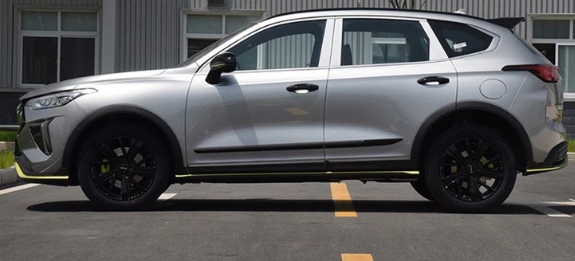
The Haval Chitu (Chinese for “Red Hare”) is a compact crossover SUV produced by Great Wall Motor (GWM) under its Haval brand. Introduced in 2021, the Chitu was originally designed as a sportier, more premium alternative to the Haval Jolion, built on the same L.E.M.O.N. platform. Over time, it evolved through multiple engine revisions, hybrid introductions, trim restructurings, and export rebranding—eventually becoming known in some markets as the Haval Jolion Pro.
This article explores the full evolution of the Haval Chitu, including production years, powertrain changes, trim level structures, market positioning, and future outlook.
Origins and Development Background
The Haval Chitu was developed as part of Great Wall Motor’s rapid expansion of its compact SUV lineup. It was intended to replace the aging Haval F5 and sit alongside the Haval Jolion, offering a more aggressive, performance-oriented alternative.
The model was first revealed in February 2021, with sales beginning shortly afterward at the Shanghai Auto Show period. Its name, “Chitu,” translates to “Red Hare,” referencing a famous horse associated with Chinese historical legend.
From the beginning, the Chitu was positioned as:
- A compact SUV with sporty styling
- A more dynamic alternative to the Jolion
- A technology showcase for GWM’s L.E.M.O.N. platform
- A bridge model between economy and premium compact SUVs
Production Timeline
Key production milestones
- Start of production: 2021
- China domestic production: 2021–2025
- Export production (as Jolion Pro / equivalents): 2024–present
- Production status: Ongoing in select markets (as of 2026)
The Chitu is assembled primarily in Tianjin, China, with additional localized production or assembly in export markets such as Iran under different branding.
.
THIS could come in handy for your auto garage (and everywhere else!):

.
Platform and Architecture
The Chitu is built on the GWM L.E.M.O.N. platform, a modular architecture shared with other Haval models such as the Jolion.
Key platform features:
- Front-wheel drive layout (standard)
- Optional hybrid system (DHT-based)
- 2,700 mm wheelbase shared with Jolion
- Lightweight high-strength steel construction
- Designed for global export compliance
Although closely related to the Jolion, the Chitu features:
- More aggressive exterior styling
- Slightly different body proportions
- Sportier tuning in higher trims
Dimensions and Body Style
The Chitu is classified as a compact crossover SUV.
Core dimensions:
- Length: 4,470 mm
- Width: 1,898 mm
- Height: 1,625 mm
- Wheelbase: 2,700 mm
Despite sharing a wheelbase with the Jolion, the Chitu has a more performance-oriented design, with sharper styling cues and a lower visual stance.
Powertrain Evolution (2021–Present)
One of the most complex aspects of the Chitu’s evolution is its rapidly changing engine lineup.
2021 Model Year: Original Turbo Engine
At launch, the Chitu used a 1.5-liter turbocharged engine:
- Engine code: GW4B15C
- Power: ~135 kW (184 hp)
- Torque: ~275 Nm
This version was paired with a 7-speed dual-clutch transmission (DCT) and represented the most performance-focused configuration of the early lineup.
2022 Model Year: Revised Engine + Hybrid Introduction
In 2022, GWM replaced the original engine in many trims with a detuned version:
- Engine code: GW4G15K
- Power: ~110 kW (148 hp)
- Torque: ~220 Nm
At the same time, the first hybrid version was introduced:
- 1.5-liter naturally aspirated engine + electric motor
- Combined output: ~190 hp
- Dedicated hybrid transmission (DHT)
- Lower fuel consumption (~4.7 L/100 km)
This marked the Chitu’s transition toward electrification.
2023 Model Year: Engine Reconfiguration
In 2023, GWM reintroduced higher-output engines for premium trims:
- GW4B15L turbo engine (updated version) for higher trims
- GW4G15M engine for base trims
Hybrid variants continued unchanged but gained improved software tuning.
This created a clearer split between:
- Economy trims (lower-output engines)
- Performance trims (higher-output turbo engines)
- Hybrid efficiency models
2024–2025: Export Shift and Decline in Domestic Production
By 2024, the Chitu began to decline in China but expanded internationally under new names:
- Haval Jolion Pro (export markets)
- IKCO Cheval 2 (Iran)
Production in China significantly decreased by 2025, with only minimal domestic sales remaining.
Trim Levels and Model Evolution
Unlike older vehicles with stable trim structures, the Chitu’s trims changed frequently between 2021 and 2025.
2021 Launch Trims
At launch, the Chitu was offered in three primary trims:
- Base Comfort Trim
- Standard turbo engine
- Basic infotainment system
- Cloth or entry-level interior
- Mid-Level Tech Trim
- Larger touchscreen
- Advanced driver assistance features
- Improved interior materials
- Sport/Top Trim
- Full power turbo engine
- Sport styling package
- Enhanced digital cockpit
2022 Expanded Trims (Hybrid Introduction)
With the hybrid launch, the lineup expanded:
- Gasoline Base Trim
- Gasoline Mid Trim
- Gasoline High Trim
- Hybrid DHT Trim
The hybrid version included:
- Regenerative braking
- Electric-assisted driving
- Lower emissions and fuel consumption
2023 Trim Restructure
The lineup became more segmented:
- Entry Trim (detuned engine)
- Standard Trim
- Premium Turbo Trim (high-output engine)
- Hybrid Efficiency Trim
This structure reflected dual powertrain strategies.
2024–2025 Export Trims (Jolion Pro / Cheval 2)
In export markets, the Chitu lineage continued with simplified trims:
- Comfort
- Luxury
- Premium AWD (market dependent)
These versions often combined features from multiple Chinese trims into more standardized global packages.
Technology and Features
The Chitu was one of Haval’s more tech-forward compact SUVs during its peak.
Key features included:
- 12.3-inch infotainment display (higher trims)
- Digital instrument cluster
- Head-up display
- Facial recognition (select trims)
- OTA (over-the-air) updates
- Level 2 driver assistance systems
These features helped position the Chitu above many competitors in its price range.
Market Position and Competition
The Haval Chitu was positioned between:
- Entry-level compact SUVs (like early Haval H2 replacements)
- More mainstream crossovers like the Jolion
Main competitors included:
- Geely Coolray
- Changan CS55 Plus
- MG ZS / HS variants
- Toyota Corolla Cross (in export comparisons)
Strengths:
- Strong performance for its class
- Competitive pricing
- Modern interior technology
- Hybrid availability
Weaknesses:
- Rapid engine and trim changes
- Brand overlap with Jolion
- Weak resale value in later years
Sales Performance and Decline
The Chitu experienced a relatively short domestic peak.
Sales trend highlights:
- Strong launch in 2021–2022
- Moderate performance in 2023 (~7,600 units in China)
- Sharp decline by 2024–2025 (under 2,000 units combined)
This decline was largely due to:
- Overlap with Haval Jolion
- Shift toward newer hybrid SUVs
- Internal product consolidation within GWM
Role in the Haval Lineup
The Chitu played a transitional role:
- It bridged older compact SUVs (like the F5) and newer global models
- It helped test hybrid DHT systems
- It supported early export branding strategies
However, it was ultimately absorbed into the broader Jolion family strategy.
Future Outlook
The Chitu name is gradually being phased out, but its platform and design influence continue.
Likely future developments:
- Full replacement by Jolion Pro globally
- Continued hybrid system evolution in successor models
- Integration of Chitu engineering into next-generation L.E.M.O.N. platform vehicles
It is unlikely that the Chitu name will return as a standalone model in China, but its legacy continues in export markets.
The Haval Chitu represents a short but important chapter in Great Wall Motor’s SUV evolution. Introduced in 2021 as a sporty compact crossover, it rapidly evolved through multiple engine updates, hybrid introductions, and global rebranding efforts.
Although its domestic lifecycle was relatively brief, the Chitu helped GWM refine hybrid technology, expand export markets, and strengthen its compact SUV lineup. Its transformation into models like the Jolion Pro demonstrates its lasting influence within the Haval ecosystem.
As the automotive industry continues shifting toward electrification, the Chitu’s legacy lives on through newer hybrid and electric SUVs built on its technological foundation.