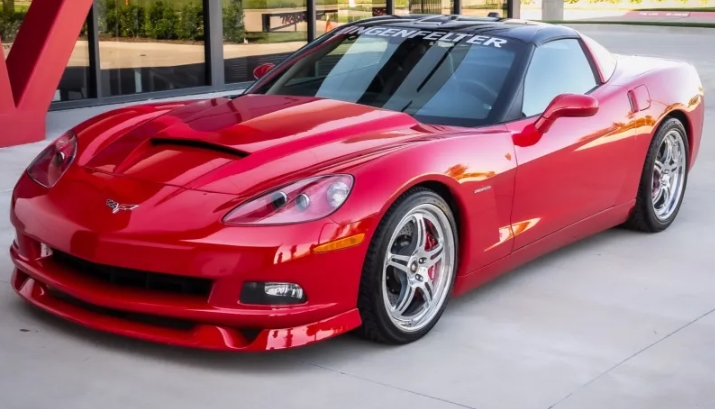
Lingenfelter (Chevrolet) Corvette: The Evolution of America’s Ultimate Tuner Vette
From late-20th-century drag record breakers to modern supercharged and twin-turbo street rockets, Lingenfelter Corvettes represent some of the most extreme performance builds based on America’s sports car. Unlike factory Corvette models built by Chevrolet with defined model years and factory trim levels, Lingenfelter Performance Engineering (LPE) has applied custom packages, engine upgrades, and one-off builds to Chevrolet Corvettes across multiple generations — C4, C5, C6, C7, and C8 — transforming them into bespoke high-performance machines tailored to enthusiasts seeking far more power than stock.
This article traces the evolution of the Lingenfelter Corvette, exploring notable builds, performance packages, and how the tuner’s approach expanded over time — from aftermarket enhancements to limited-edition and commemorative models — while also covering future directions in the Lingenfelter Corvette world.
What Is a “Lingenfelter Corvette”?
The term Lingenfelter Corvette doesn’t refer to a single production model like a factory Corvette Z06 or ZR1. Instead, it describes Corvettes modified by Lingenfelter Performance Engineering, a Michigan-based tuning house founded by John Lingenfelter, an NHRA champion, engineer, and tuner who helped build performance engines and custom Corvettes from the 1980s onward. LPE’s work ranges from engine and supercharger packages to full custom builds — some of which are one-off creations, and others sold as upgrade packages to customers’ cars.
LPE Corvettes are known for their extreme horsepower gains, often pushing well beyond factory limits — examples include twin-turbo C4 Corvettes setting quarter-mile records and modern supercharged C7 and C8 builds rivaling supercars.
.

.
C4 Generation: Early Lingenfelter Performance Corvettes (1980s–1990s)
In the late 1980s and 1990s, Lingenfelter began modifying Corvettes extensively, especially the C4 Corvette (1984–1996). These early efforts revealed LPE’s philosophy: extract the most power possible while maintaining reliability.
Twin-Turbo C4 Corvettes and Records
A standout from this era is the 2000 Lingenfelter 427 Twin Turbo Corvette, which set tuner Corvette records with extreme acceleration numbers — including a quarter-mile pass in the 8-second range and 0–60 mph times near 2.0 seconds in testing.
Other notable C4 builds included:
- 1995 Lingenfelter 415 CID Corvette owned by John Lingenfelter himself, featuring custom bodywork and a LPE-tuned engine.
- A 1995 Lingenfelter Twin-Turbo ZR-1 producing over 1,000 hp, built with custom internals, fuel systems, and turbocharging that transformed the already potent LT5 engine into an all-out drag machine.
- A 2006 LPE Twin-Turbo C6 Z06 with a 427-ci LS7 engine, which achieved dizzying speeds and long-mile performance runs (e.g., 0–200 mph times in the teens).
These early Lingenfelter Corvettes didn’t adhere to factory trim levels but were instead custom performance builds tailored to owners’ goals, often resulting in unique vehicles that are historically significant and extremely fast.
C5 Generation: Wide Variety of LPE Packages (1997–2004)
When Chevrolet introduced the C5 Corvette (1997–2004) with its LS1 V8 engine and improved chassis balance, it provided an excellent platform for Lingenfelter upgrades. Enthusiasts continued to seek more power and performance than factory Corvettes offered.
427 and Twin-Turbo Variants
LPE’s C5 Corvettes span a wide spectrum of power goals:
- Naturally aspirated 427 builds based on the LS1, often producing 500–600+ horsepower.
- Twin-turbo setups pushing 600–800+ horsepower, and in some extreme cases exceeding 1,000 hp with substantial supporting modifications.
- Widebody conversions and bespoke aerodynamic enhancements on some builds, blending power with aggressive styling.
Unlike factory trims like Coupe, Convertible, Z06, or Grand Sport, Lingenfelter’s C5 builds were defined by engine and power output tiers, each customized to the customer’s performance targets rather than a fixed trim catalog.
C6 Generation: Supercharged Packages and High-Output LS3/LS7 Builds (2005–2013)
The C6 Corvette era brought new engines — including the LS3 and powerful LS7 — providing LPE with even more potential to extract performance through forced induction and internal upgrades.
Supercharged LS2/LS3 Corvette Packages
Lingenfelter offered bolt-on and internal upgrades to C6 engines:
- For 2005–2007 C6 Corvettes powered by the LS2, LPE’s supercharger package — incorporating an Edelbrock E-Force TVS2300 intercooled system — yielded 630 horsepower while retaining a stock hood fitment.
- Further packages for LS3 Corvettes (e.g., base and Grand Sport models) provided 670+ horsepower through careful integration of supercharger, CNC-ported heads, and upgraded camshafts.
- ZR1 engines (LS9) could be enhanced via three distinct supercharger packages — ranging from modest pulley upgrades to complete systems yielding up to 750 hp or more.
Unlike factory trims, these upgrades were add-on performance packages — customers chose a base C6 Corvette and then selected the desired level of Lingenfelter performance enhancements.
C7 Generation: Supercharged and Widebody Performance Packages (2014–2019)
When Chevrolet launched the C7 Corvette (2014–2019) with modern direct-injection LT1 and LT4 engines, Lingenfelter continued expanding its performance package lineup.
LPE’s C7 Packages
For the C7:
- Multiple engine packages were introduced for the LT1 — with guaranteed outputs ranging 550 to 750+ horsepower, featuring CNC-ported heads, camshafts, superchargers, and stroker engines.
- A widebody styling and performance package added aggressive aero bits (carbon fiber hoods, splitters, widened quarter panels) paired with a supercharged LT1 generating around 624 hp, bridging the gap between the Stingray and higher factory trims like the Z06.
These packages were offered as aftermarket LPE performance upgrades, meaning an owner could take any compatible C7 and have it transformed to one of several performance specifications — akin to “trim levels” but customer customizable rather than factory standardized.
C8 Generation: Mid-Engine Tuning and Future Prospects (2020–Present)
With the arrival of the C8 Corvette (2020–) and its revolutionary mid-engine layout, Lingenfelter has already begun extending its tuning experience into a new era.
High-Performance C8 Builds
LPE’s work includes:
- 60th Anniversary Cunningham C8 Corvette — a limited custom series commemorating historic Corvettes with bespoke aero, interior touches, and power upgrades around 600+ horses, limited to 60 units.
- 7.0L engine packages and prospective turbo or hybrid enhancements showing that LPE is already planning ways to push C8 performance further — including hybrid and turbo configurations.
Lingenfelter’s approach to the C8 continues the philosophy of offering performance and aesthetic packages rather than strictly defined factory trims, providing Corvette owners options to tailor their cars far beyond stock specifications.
How Lingenfelter Packages Differ From Factory Trims
Unlike Chevrolet’s own trim levels — e.g., Stingray, Grand Sport, Z06, ZR1, or E-Ray — Lingenfelter Corvettes are defined by modification package and performance output objectives rather than broad cataloged trims. Owners bring a base Corvette (of any generation with compatible platforms), and LPE offers upgrades such as:
- Engine displacement upgrades (stroker engines)
- Supercharger and turbocharging kits
- CNC-ported cylinder heads and cam upgrades
- Suspension, brake, and aero enhancements
- Special widebody kits or limited-edition themed builds
This model allows tremendous flexibility: a single Corvette can be built to different performance “tiers” depending on owner goals — e.g., 600 hp street car, 800+ hp track monster, or bespoke showpiece.
Cultural Impact and Enthusiast Appeal
Lingenfelter Corvettes have earned a reputation in the performance community for breaking boundaries between factory sports cars and bespoke supercars. Their builds are not mass-market; they’re bespoke and performance-oriented. Examples like the twin-turbo Corvette setting drag records or supercharged C7s outperforming more expensive competition demonstrate LPE’s ability to blend engineering expertise with real-world results.
Collectors and enthusiasts seek Lingenfelter builds because they push Corvette performance to extremes while often maintaining reliability and usability relative to full race cars.
Future Outlook
Looking ahead, the evolution of Lingenfelter Corvettes is tied to a few central trends:
- Integration with modern Corvette technology: As Chevrolet pushes more hybrid and electric performance tech into future models, LPE will likely adapt its packages to emerging platforms similar to early C8 hybrid concepts and forced-induction options.
- More limited edition and commemorative builds: Projects like the Cunningham C8 demonstrate interest in exclusive, low-volume creations that tie performance with heritage.
- Expanded performance tiers: With modular LPE packages for each generation, owners can tailor their Corvette to specific performance targets — from street/track blends to drag or autocross-oriented builds.
Ultimately, the Lingenfelter Corvette evolution isn’t a linear model lineup with factory designations; it’s a continuum of performance enhancements and custom projects that reflect both the Corvette’s potential and LPE’s engineering creativity.
Conclusion
The Lingenfelter Corvette is not a single production line with annual model years and factory trims — it is a performance philosophy expressed through meticulous engineering, bold power upgrades, and bespoke creations across multiple Corvette generations. From early C4 twin-turbo drag record holders to modern supercharged and special-edition C7 and C8 builds, LPE’s influence on Corvette performance culture is significant. These Corvettes are defined by output, customization, and capability rather than cataloged trims — and they represent some of the most exciting possibilities for Corvette owners who want to go far beyond factory performance.
Whether you’re chasing quarter-mile times, building a showpiece, or simply seeking more power than stock, the Lingenfelter Corvette legacy remains a fascinating and evolving chapter in American high-performance automotive history.