More Than a Wish: The Enduring Legacy of the Toyota Wish
In the vast and varied history of Toyota, some vehicles become global icons, their names synonymous with the brand itself—the Corolla, the Land Cruiser, the Camry. Others, however, carve out a fiercely loyal following in specific regions, becoming legends in their own right without ever gracing a showroom in North America or Europe. The Toyota Wish is a prime example of the latter. A compact multi-purpose vehicle (MPV) that perfectly blended practicality, reliability, and a touch of style, the Wish was Toyota’s definitive answer to a growing market demand, and for fifteen years, it was the quintessential family hauler for millions across Asia and beyond.
The Genesis: A Wish is Born (2003-2009)
The story of the Toyota Wish begins in the early 2000s. The automotive landscape, particularly in Japan, was witnessing a surge in the popularity of compact MPVs. These vehicles offered the interior space of a larger minivan but with the smaller footprint, easier maneuverability, and better fuel economy of a sedan. Honda had struck gold with its Stream, a sleek, car-like seven-seater that was a runaway success. Toyota, never a company to be outdone, needed a direct and compelling competitor.
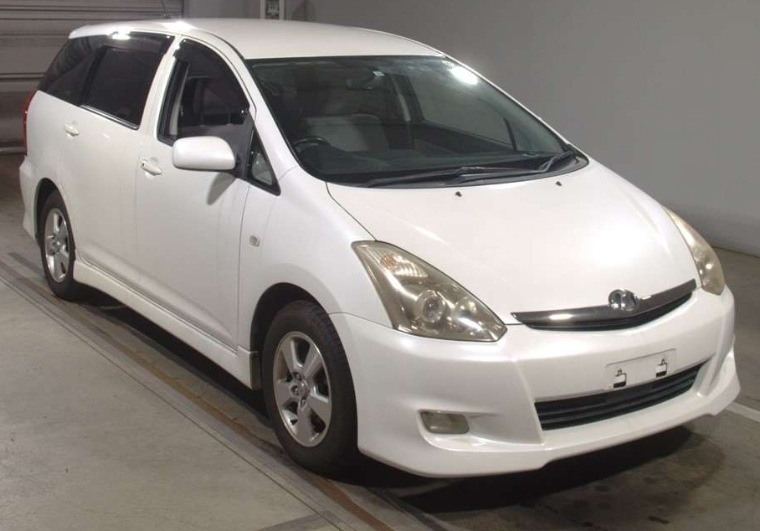
In January 2003, their answer arrived. Codenamed AE10, the first-generation Toyota Wish was launched in its home market of Japan. Built on the same platform as the dependable Toyota Allion and Premio sedans, the Wish was engineered for family life from the ground up. Its design was sharp and contemporary, eschewing the boxy aesthetic of traditional vans for a more dynamic, wagon-like profile with a steeply raked windscreen and a tapering roofline. The name “Wish” was deliberately chosen to encapsulate the vehicle’s purpose: to fulfill the “wishes” of a modern family for a single vehicle that could do it all.
Under the hood, the Wish offered two proven engine choices:
- 1.8-litre 1ZZ-FE: This was the workhorse engine, a DOHC four-cylinder with VVT-i (Variable Valve Timing with intelligence). Producing around 132 horsepower, it was paired with a conventional 4-speed automatic transmission. This combination was lauded for its smooth power delivery, robust reliability, and excellent fuel economy. It was available in both front-wheel drive (FWD) and an optional all-wheel drive (AWD) configuration.
- 2.0-litre 1AZ-FSE: For those seeking more power, this engine featured D-4 direct injection technology, boosting output to approximately 155 horsepower. This engine was exclusively mated to a sophisticated Super CVT-i (Continuously Variable Transmission with intelligence), which offered seamless acceleration and even greater efficiency. A key feature of this powertrain was the 7-speed sport sequential shiftmatic mode, allowing drivers to manually select ratios using the gear lever for a more engaging driving experience.
The interior was a masterclass in packaging efficiency. Despite its compact exterior dimensions, the Wish comfortably accommodated seven occupants in a 2-3-2 configuration. The third-row seats could be folded completely flat into the floor, creating a cavernous cargo area. A six-seater version was also available, featuring comfortable “captain’s chairs” in the second row instead of a bench.
The trim levels for the first generation catered to a wide range of buyers:
- X: The entry-level model, offering all the essential features for family transport.
- X “S Package”: A slightly sportier version of the X, typically including features like alloy wheels, a rear spoiler, and a leather-wrapped steering wheel.
- G: The premium trim level, equipped with added comforts such as automatic climate control, higher-quality interior materials, and advanced lighting.
- Z Aero Sports Package: The top-of-the-line sporty model. Available exclusively with the 2.0-litre engine and in a six-seater configuration, the Z featured an aggressive aero body kit, larger alloy wheels, paddle shifters for the CVT, and a sport-tuned suspension.
In late 2005, the Wish received a mid-cycle facelift. The changes were subtle but effective, including revised front and rear bumpers, new headlight and taillight designs (with LEDs becoming standard), updated interior fabrics, and quality-of-life improvements. The Wish was an immediate hit, not only in Japan but also in markets where it was officially sold, such as Taiwan and Thailand. Its popularity exploded in the grey import market, becoming a dominant force on the roads of Singapore, Malaysia, Hong Kong, New Zealand, Kenya, and Jamaica, where its reliability and versatility made it a sought-after used vehicle.
.
NO MORE dead batteries with this:

.
The Evolution: Refining a Winning Formula (2009-2017)
After a successful six-year run, Toyota introduced the second-generation Wish (codename AE20) in April 2009. Rather than a radical reinvention, Toyota opted for an evolutionary approach, refining every aspect of the vehicle that had made its predecessor so popular. The design was an updated take on the original, with a more aggressive front fascia, sharper character lines along the body, and a distinctive rear-end treatment with horizontal LED taillights.
The most significant upgrades were mechanical. The old engine lineup was replaced with Toyota’s next-generation ZR-series engines, both featuring the advanced Valvematic technology. Valvematic continuously adjusts both valve timing and lift, providing a significant boost in fuel efficiency, power output, and throttle response.
- 1.8-litre 2ZR-FAE: This new base engine produced a healthier 144 horsepower while consuming less fuel than the outgoing 1ZZ-FE.
- 2.0-litre 3ZR-FAE: The new top-tier engine delivered a potent 158 horsepower, offering brisk performance for a fully loaded vehicle.
A major change was the standardization of the Super CVT-i across the entire range, with the old 4-speed automatic being retired. This move further cemented the Wish’s reputation for smooth and efficient driving. The 7-speed sequential mode remained, now operable via paddle shifters on higher-end models.
The trim structure was simplified and refined for the second generation:
- 1.8X: The well-equipped base model.
- 1.8S: A sportier variant with 16-inch alloy wheels, a subtle body kit, and paddle shifters.
- 2.0G: The luxury-oriented model, featuring premium interior appointments and advanced features.
- 2.0Z: Returning as the flagship sporty model, the Z was again a six-seater exclusive, boasting a full aero kit, 17-inch wheels, and a sport-tuned chassis for a more dynamic driving feel.
A facelift in 2012 brought updated styling, improved interior materials, and a crucial safety upgrade: Vehicle Stability Control (VSC) and Traction Control (TRC) became standard across all models, reflecting a growing emphasis on active safety.
The End of an Era and the Future Outlook
Despite its continued success, the automotive world was changing. By the mid-2010s, two major trends began to squeeze the Toyota Wish from the market. First was the unstoppable rise of the SUV and crossover. Families were increasingly drawn to the high-riding position and rugged image of SUVs, even if they offered less interior flexibility than an MPV.
Second, and perhaps more importantly, was the fierce competition from within Toyota’s own lineup. For families wanting a more compact and city-friendly vehicle with supreme ease of access, the Toyota Sienta, with its powered sliding doors and incredibly clever interior packaging, was a more modern alternative. For those needing more space and luxury, Toyota’s trio of larger MPVs—the Noah, Voxy, and Esquire—offered a more premium experience, also with the coveted sliding doors that are a major advantage for families with small children. The Wish, with its conventional hinged rear doors, was caught in the middle.
In October 2017, after nearly fifteen years of production, the last Toyota Wish rolled off the assembly line. Toyota announced that there would be no direct successor. Its market position was effectively absorbed by the Sienta and the Noah/Voxy family, marking the end of an era for one of the brand’s most beloved, if not globally known, models.
A future revival of the “Wish” nameplate seems highly unlikely. Toyota’s modern MPV strategy is firmly focused on the efficiency and utility of models with sliding doors. The classic, car-like MPV segment that the Wish once dominated has been largely superseded by three-row crossovers.
The Legacy: Why the Wish Still Matters
Though no longer in production, the legacy of the Toyota Wish is undeniable. In the countless countries where it was sold officially or as a grey import, it remains a common sight, a testament to its incredible durability. Many first- and second-generation models are still serving as dependable daily drivers for families, a role they perform with quiet, unfaltering competence.
Its legacy is threefold:
- Unimpeachable Reliability: The Wish embodied the very best of Toyota’s engineering philosophy. Its engines were simple yet efficient, its transmissions were robust, and its interior was built to withstand the rigors of family life. This is why it remains a top choice in the used car market.
- Perfect Practicality: The Wish hit the sweet spot. It was large enough to carry seven people or a significant amount of cargo, yet small enough to navigate tight city streets and be economical to run. It was the “just right” solution for countless people.
- A Surprising Enthusiast Following: In regions like Southeast Asia, the Wish developed a cult following within the car modification community. Owners fit aggressive body kits, aftermarket wheels, and performance upgrades, transforming their family haulers into stylish head-turners—a phenomenon that speaks to the car’s well-balanced chassis and appealing design.
In conclusion, the Toyota Wish may not have the global recognition of a Corolla, but its impact was just as profound for its target audience. It was a vehicle born of a specific need, executed with near-perfect precision, and adopted with passion. For the millions of families it served, it wasn’t just a car; it was a trusted partner in life’s journeys. While its production has ceased, its spirit lives on, a rolling testament to a wish that was, for so many, completely fulfilled.