Rover 45: The Final Classic British Compact
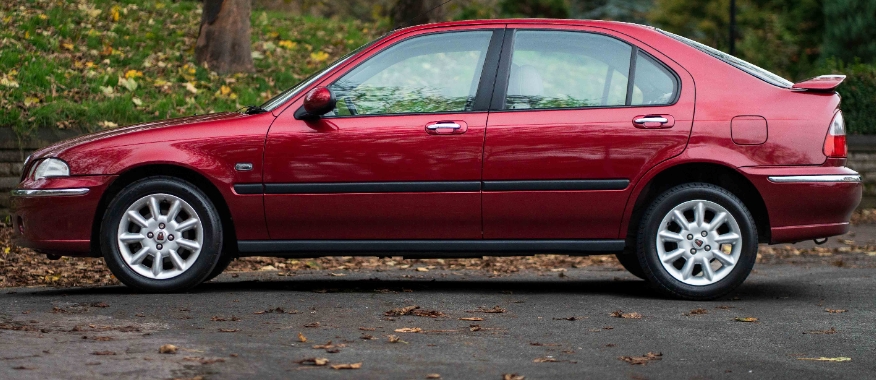
The Rover 45 occupies a unique place in British automotive history — a compact car that bridged the gap between the Rover 400 of the 1990s and what might have become a modern successor in a revitalized Rover brand. Produced from 1999 until 2005, the Rover 45 was built as a thoroughly updated evolution of the Rover 400, intended to appeal to buyers seeking comfort, refinement and everyday usability in a competitively priced family-car package.
Over its relatively short production life, the 45 underwent two main phases (commonly known as Phase I and Phase II), offered multiple body styles and featured a broad selection of engines and trim levels. This article traces the Rover 45’s evolution, details its lineup and configurations, and places the model into both its historical and future outlook contexts.
Origins & Historical Context
The Rover 45 emerged as a direct successor to the Rover 400 — itself part of a family of vehicles derived from partnerships with Honda and developed during a time of global consolidation in the automotive industry. In 1999, MG Rover introduced the 45 with updated styling, revised interiors and repositioned marketing, seeking to make the car competitive against rivals such as the Ford Focus and Vauxhall Astra rather than larger executive models like the Ford Mondeo.
The 45’s development retained the fundamental RT platform from the 400 while incorporating nearly 75% new parts, improving both refinement and visual appeal. It also shared modern design cues with the larger Rover 75 — most notably the distinctive quad-headlamp front end — giving the 45 a more upscale look in its segment.
.

.
Production Timeline: Phase I & Phase II (1999–2005)
The Rover 45’s production spanned seven years, from 1999 to 2005. During this period it was offered in two distinct phases that reflect evolutionary styling and trim changes:
- Phase I (1999–2004): The original launch generation marked by standard trim definitions and a choice of saloon and hatchback body styles.
- Phase II (2004–2005): A modest facelift and trim reorganization refreshed the 45’s appearance and equipment offerings ahead of its eventual discontinuation.
Throughout both phases, the 45 was available in either four-door saloon or five-door hatchback body configurations — giving buyers versatility in choosing the style that best suited their needs.
Engine Lineup & Mechanical Options
One of the Rover 45’s strengths was its varied engine lineup, offering petrol and diesel powertrains to suit different driving preferences and markets. The model’s engines largely carried over from the Rover 400 series while also welcoming new additions:
Petrol engines:
- 1.4 L K-Series 16V: Entry-level petrol engine, typically offering around 100–103 hp.
- 1.6 L K-Series 16V: Common mid-range petrol offering roughly 108–109 hp.
- 1.8 L 16V: Slightly larger petrol unit with approximately 117 hp, available with manual or CVT (continuously variable transmission) options.
- 2.0 L V6 24V: Top-end petrol engine with about 148–150 hp, providing stronger performance especially on saloon models.
Diesel engines:
- 2.0 L L-Series turbo diesel: Offered with about 101–113 hp depending on version, appealing to economy-focused buyers.
These engines, combined with typically front-wheel drive layouts and a mix of manual, CVT or optional automatic gearboxes, allowed the Rover 45 to cater to drivers seeking economical daily commuting, periodic highway travel, or more involved driving experiences with the V6.
Trim Levels & Equipment Differences
Throughout its production, the Rover 45 was marketed with a variety of trim levels that offered different combinations of equipment, comfort features and aesthetic choices. While exact trim names could vary by market and model year, some of the main configurations included:
Phase I Trim Structure (1999–2004)
Saloon trims:
- Classic: Base equipment level targeted at value buyers.
- Club: Mid-range trim adding comfort and convenience features above the Classic.
- Connoisseur: Top-end trim with luxury appointments and better standard equipment; particularly common on 1.8 and diesel versions.
Hatchback trims:
- i: Entry trim level for hatchback variants.
- iE: Adding enhanced equipment such as air conditioning and upgraded audio.
- iL: A more comfort-focused level with additional interior and exterior features.
- iS: Sport-oriented trim with desirable visual and mechanical extras.
The 1.8 and diesel models in Phase I were typically available in Classic, Club and Connoisseur trims, while the V6 was usually reserved for the mid- and top-spec levels — especially Club and Connoisseur.
Phase II Trim Structure (2004–2005)
The Phase II refresh in 2004 brought updated styling with new bumpers, lighting and refinements to the interior. Associated with these updates were new trim badges such as GLi and GSi, which emphasized higher levels of equipment (leather upholstery, alloy wheels and similar features), often at attractive price points.
Trim names across Phase II could overlap with Phase I designations but generally reflected a slightly more modernized equipment hierarchy that mirrored trends within the broader MG Rover range.
Market Position & Competitive Landscape
On launch, the Rover 45 was repositioned by MG Rover to compete directly in the highly contested compact car segment — fighting for sales against established rivals like the Ford Focus, Vauxhall Astra and Volkswagen Golf.
The 45’s strengths were its comfortable ride, well-appointed interior (with seating often shared with the larger Rover 75) and its availability in both practical hatchback and traditional saloon forms. The choice of petrol and diesel engines, including a relatively powerful V6 option, gave buyers ample flexibility.
Despite these attributes, the Rover 45 lived in a fiercely competitive segment at a time when many European rivals were refining their offerings with sharper handling, broader dealer networks and stronger residual values. Nonetheless, the 45 carved out a loyal niche among buyers who valued British design, comfortable interiors and a distinctive character.
Production End & Legacy
Production of the Rover 45 concluded in April 2005 at the MG Rover Longbridge plant — marking the end of a line that had spanned just over six years. Its successor, the Rover 45’s conceptual heir, was essentially the Rover 55 and MG ZS variants in related ranges, while MG Rover itself struggled through financial difficulties that ultimately led to the company’s collapse later that year.
Since then, the Rover 45 has gradually disappeared from UK roads; according to recent vehicle licensing data, very few remain actively taxed, with many more scrapped or SORNed (statutory off-road notification) — though a small community of enthusiasts keeps interest alive among classic British car collectors.
Today, the Rover 45 is appreciated by its fans for its blend of comfort, choice of engines (especially diesel and V6 options), and its place as one of the last truly British-branded family cars before the end of MG Rover.
Future Outlook & Conclusion
While no modern successor carries the Rover 45 name, its legacy persists in several ways. Classic car markets increasingly recognize late-1990s and early-2000s vehicles as part of motoring history, and the 45’s relative rarity on the roads contributes to its appeal among enthusiasts who value nostalgia and distinctive character.
Should Rover or another British marque ever revive the nameplate — particularly under new ownership or as part of a retro-inspired electric vehicle lineup — it could tap into this fond legacy while bringing the 45’s ethos of comfortable everyday driving into a modern era. For now, the Rover 45 remains an emblematic example of British automotive design at the turn of the millennium — a car that balanced tradition with its own unique identity within a crowded compact segment.