The Evolution of the Mosler MT900: America’s Lightweight Supercar Experiment
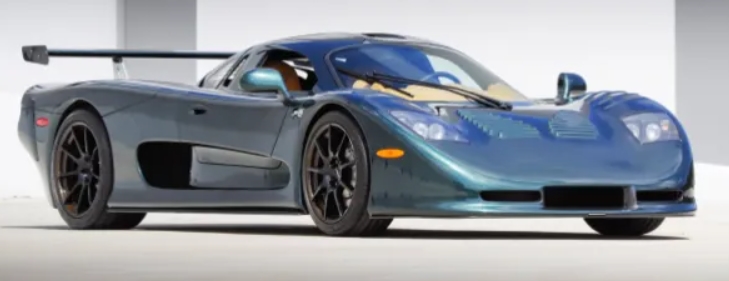
The Mosler MT900 stands as one of the most unique American supercars ever built. Developed by Mosler Automotive, the MT900 combined extreme lightweight construction, race-car engineering, and Corvette-derived power to create a vehicle capable of competing with exotic supercars from Europe. Produced between 2001 and 2011, the MT900 evolved through several variants, including road cars, track-focused racing models, and limited performance packages.
Although the MT900 was produced in extremely small numbers, it earned a strong reputation among enthusiasts and racers. With roughly 85 cars built in total across all versions, the MT900 remains one of the rarest American supercars ever produced.
This article explores the full evolution of the Mosler MT900, including its development history, production years, model variants, racing success, and long-term legacy.
Origins of the Mosler MT900
The MT900 was developed as the successor to the Mosler Raptor, the final evolution of Mosler’s earlier sports car line that began with the Consulier GTP in the late 1980s.
Development of the MT900 began in the late 1990s under the direction of Warren Mosler, the founder of Mosler Automotive. The car was designed by engineer Rod Trenne, who had previously worked on the Chevrolet Corvette C5 program.
The name “MT900” carried specific meaning:
- M – Mosler
- T – Trenne (the designer)
- 900 – the target weight in kilograms (approximately 1,984 pounds)
Mosler aimed to create a car that prioritized weight reduction and handling rather than sheer horsepower, following a philosophy similar to that of Lotus.
.
NO MORE dead batteries with this:

.
Production Overview (2001–2011)
The Mosler MT900 entered production in 2001 and remained in limited production until 2011, when Mosler Automotive closed its factory.
Key specifications included:
- Layout: Mid-engine, rear-wheel drive
- Body style: Two-door coupe
- Engine options: GM LS-series V8 engines (5.7-liter LS1, LS6, and later 7.0-liter LS7)
- Transmission: 6-speed manual
- Top speed: approximately 180–200 mph depending on variant
- 0–60 mph: roughly 3.1–3.5 seconds
The car’s structure used a carbon fiber and aluminum honeycomb monocoque, helping keep curb weight around 2,100–2,300 pounds depending on configuration.
Mosler MT900 Models and Variants
Over its production run, the MT900 evolved into several versions for both road and racing use. These models reflected Mosler’s continuous effort to improve performance and expand the car’s capabilities.
1. Mosler MT900 (2001–2005)
The original MT900 debuted in 2001 as the company’s new flagship supercar.
Production Years
2001–2005
Engine
- 5.7-liter LS1 V8 from General Motors
Performance
- Power: approximately 350 horsepower
- 0–60 mph: about 3.5 seconds
- Top speed: around 180 mph
The early MT900 emphasized lightweight engineering and aerodynamic efficiency. Its mid-engine layout and advanced suspension allowed exceptional handling compared with heavier supercars of the era.
Despite its strong performance, the original MT900 remained extremely rare, with only a small number of road cars produced during the early years.
2. Mosler MT900R (2001–2010)
Alongside the road car, Mosler introduced the Mosler MT900R, a racing version built specifically for motorsports.
Production Years
2001–2010
Purpose
- Professional racing
- Endurance racing
- GT championships
The MT900R debuted in competition at the 24 Hours of Daytona in 2001.
Over the following years, the racing version proved extremely competitive. Achievements included:
- Class victory at the 2003 24 Hours of Daytona
- Wins in the British GT Championship
- Success in the Spanish GT Championship
- Victories in the FIA GT Tourist Trophy
- Success in the International Open GT Championship
Approximately 30 racing versions were produced during the 2000s.
The MT900R helped establish Mosler as a serious competitor in GT racing despite its small size as a manufacturer.
3. Mosler MT900S (2005–2010)
The Mosler MT900S was introduced in 2005 as an improved road-going version of the MT900.
Production Years
2005–2010
Key Changes
The MT900S received several upgrades:
- More powerful LS6 V8 engine
- Improved aerodynamics
- Revised chassis tuning
- Updated interior features
Power increased to roughly 405–435 horsepower, while maintaining the car’s extremely low weight.
Performance
- 0–60 mph: about 3.3 seconds
- Quarter mile: about 12 seconds
In 2005, Mosler successfully obtained EPA and CARB certification, allowing the MT900S to be legally sold in the United States.
One of the first customers for the production MT900S was filmmaker George Lucas, who took delivery of one in 2006.
4. Mosler MT900S Photon (2006–2011)
The MT900S Photon was a lightweight performance package designed for maximum speed and reduced mass.
Production Years
2006–2011
Key Features
The Photon included numerous advanced components:
- Carbon fiber body panels
- Carbon fiber racing seats
- Titanium suspension springs
- Dymag carbon-magnesium wheels
- Hewland racing transmission
These modifications reduced the car’s weight to under 2,000 pounds, making it one of the lightest supercars ever built.
Only two examples of the Photon were reportedly built, making it one of the rarest Mosler vehicles.
5. Mosler MT900 GTR (2006–2008)
Another variant was the Mosler MT900 GTR, developed through collaboration between Mosler’s European operations and Mosler Deutschland.
Production Years
2006–2008
The GTR was essentially a road-legal version of the MT900R race car.
Key features included:
- 7.0-liter LS7 V8 engine
- approximately 600 horsepower
- racing suspension and brakes
- improved aerodynamics
Despite its racing roots, the GTR included practical features such as:
- air conditioning
- power windows
- central locking
This model allowed enthusiasts to own a street-legal car closely related to Mosler’s racing machines.
6. Mosler MT900 GTR XX (2008)
In 2008, Mosler introduced the Mosler MT900 GTR XX, a special performance edition celebrating the company’s anniversary.
Production Year
2008
Performance Upgrades
- Supercharged 7.0-liter LS7 V8
- around 620 horsepower
- lightweight components
- advanced racing suspension
The GTR XX was capable of:
- 0–62 mph in about 3.0 seconds
- extremely high track performance
This model was intended primarily for European buyers and track enthusiasts.
7. Mosler MT900M (2010)
The final racing evolution was the Mosler MT900M, developed for Japanese GT racing.
Production Year
2010
This version competed in the Super GT series.
Unlike earlier versions using Corvette engines, the MT900M used a 3.4-liter Judd V8, meeting the GT300 class regulations.
Racing Success
The Mosler MT900 became one of the most successful boutique racing cars of the 2000s.
Major achievements included:
- 2003 Daytona 24-hour class victory
- Multiple British GT Championship victories
- Championships in Spain and other European GT series
- Numerous endurance racing wins
The car’s combination of light weight, aerodynamic efficiency, and powerful engines made it extremely competitive in GT racing categories.
Production Numbers and Rarity
Production of the MT900 remained extremely limited throughout its life.
Estimated totals:
- Road cars: about 35
- Race cars: about 50
- Total production: roughly 85 vehicles across all variants.
This makes the MT900 significantly rarer than most other supercars of its era.
End of Production (2011)
Production of the Mosler MT900 ended in May 2011, when Mosler Automotive shut down its manufacturing operations.
The closure marked the end of one of the most unusual American supercar programs.
Several factors contributed to the end of production:
- financial challenges typical of boutique automakers
- limited demand for ultra-low-volume supercars
- increasing regulatory costs
Without new models or substantial investment, the company eventually ceased production.
Legacy and Impact
Although it was produced in tiny numbers, the Mosler MT900 achieved several important accomplishments:
- One of the lightest modern supercars
- Successful international GT racing platform
- Early use of carbon fiber construction
- Strong performance rivaling more expensive exotic cars
The car’s engineering philosophy emphasized lightweight design and race-car dynamics, which helped it achieve exceptional performance.
Future Outlook
Since Mosler Automotive ceased operations in 2011, there are currently no official plans to revive the MT900.
However, the car continues to enjoy recognition among collectors and racing enthusiasts. Well-maintained examples occasionally appear at auctions and collector events, where their rarity and racing pedigree make them highly desirable.
Because fewer than 100 cars were built, the MT900 has become an extremely rare piece of American supercar history.
The Mosler MT900 represents one of the most ambitious American supercar projects of the early 21st century. Produced between 2001 and 2011, the MT900 evolved from a lightweight road car into a successful racing platform with multiple high-performance variants.
Key versions included the original MT900, the racing MT900R, the improved MT900S, the ultra-light Photon, and several specialized racing and anniversary editions.
Despite its limited production numbers, the MT900 proved that a small American manufacturer could build a car capable of competing with the world’s best performance machines. Today, the Mosler MT900 remains a fascinating example of innovative engineering, racing success, and boutique supercar craftsmanship.