Shelby (Dodge) Charger: The Evolution of an 1980s Hot Hatch Icon
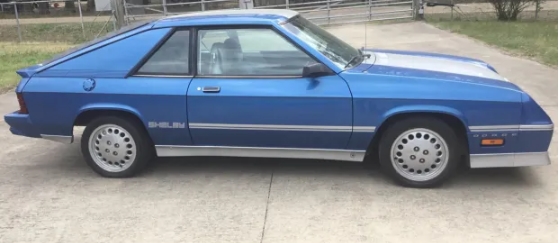
In automotive history, the name Shelby Charger represents a surprising chapter — a collaboration between performance legend Carroll Shelby and Dodge that took the Charger name into a new era. Unlike the classic muscle car Chargers of the 1960s and early 1970s, the Shelby Charger of the 1980s was a front-wheel-drive performance hatchback built on Dodge’s compact L-body platform. Produced from 1983 through 1987, it evolved through several stages — from mild sporty coupe to turbocharged flyer, and finally to an all-out Shelby American-modified GLHS special.
This article explores the complete evolution of the Shelby Charger, including all its available models, performance changes over the years,trim variants, production figures, cultural context, and future outlook.
Brief History: From Nameplate Legacy to 1980s Revival
The Dodge Charger name first gained iconic status in the 1960s as a classic muscle car. After a production gap in the late 1970s, Dodge revived the name in 1982 on its compact front-wheel-drive L-body coupe derived from the Dodge Omni/024 platform. This incarnation of the Charger was smaller, more fuel-efficient, and clearly a product of the 1980s era.
To inject performance credibility and excitement into the new Charger lineup — and to capitalize on the burgeoning interest in performance small cars — Dodge turned to Carroll Shelby. Shelby had become known in the 1980s for applying his performance expertise to Chrysler products, including the Omni GLH and later the Lancer and Dakota.
The result was the Shelby Charger — a sporty, more dynamic version of the Charger that carried Shelby branding and performance enhancements. Unlike traditional trim names like base or sport, the Shelby Charger designation became an entire performance model line through its production run.
.

.
1983: Shelby Charger Debut
First year of production: 1983
Platform: Dodge Charger (L-body), 3-door front-wheel-drive hatchback
Production: ~8,251 units
The 1983 Shelby Charger marked the launch of the Shelby-branded Charger. It was essentially a performance and styling upgrade over the standard Charger, not a full engine overhaul.
Key features of the 1983 Shelby Charger included:
- Engine tuning and compression increase to around 107 hp, improving responsiveness.
- Revised manual transmission ratios for a sportier driving feel.
- Suspension upgrades: shorter springs, stronger brakes, and quick-ratio steering.
- Exterior enhancements: a Shelby-styled front nose, distinctive racing stripes, and aero treatments.
The focus was on handling and style rather than raw power — a common theme in early 1980s performance cars when emissions and fuel economy constrained big engines.
1984: Optional Automatic & Refinements
Model year: 1984
Production: ~7,552 units
For 1984, the Shelby Charger saw incremental improvements. Most notably:
- An optional automatic transmission became available, making the Shelby Charger more accessible to a broader market.
- The high-output engine continued to improve marginally (reported up to ~110 hp), and these upgrades were also offered on some base Charger 2.2 and Turismo 2.2 models, which carried some of the Shelby Charger’s styling cues like ground effects and decals.
Trim variations in 1984 were essentially still the Shelby Charger as a single model, but changes in drivetrain options and appearances gave buyers more choice.
1985–1986: Turbo Power Arrives
Model years: 1985 and 1986
Production: ~7,709 units (1985), ~7,669 units (1986)
The biggest evolution in the Shelby Charger’s short life came with the introduction of turbocharging. In 1985, Dodge added the MPFI/Turbo I 2.2-liter engine — a turbocharged four-cylinder with about 146 hp — to the Shelby Charger.
Highlights of these years included:
- Turbocharged Power: The addition of a Garrett T3 turbocharger and Chrysler/Bosch multipoint fuel injection significantly boosted horsepower and torque over the earlier naturally aspirated engines.
- Exterior & Interior: Shelby Chargers retained bold two-tone paint combinations and signature striping schemes that helped them stand out. Available colors across the production run included Black with silver stripe, Santa Fe Blue with silver stripe, Silver with Santa Fe Blue stripe, and Garnett Red with silver stripe.
These turbocharged Chargers were competitive with other 1980s sport compacts and reflected the industry’s shift toward forced induction for performance.
1987: Final Year & Shelby GLH-S Evolution
Model year: 1987
Production: ~1,011 standard Shelby Chargers, plus ~1,000 modified into Shelby GLH-S specials
By 1987, production of the front-wheel-drive Charger was winding down. But this year introduced the most dramatic version of the Shelby Charger: the Shelby Charger GLH-S.
Standard 1987 Shelby Charger
The regular Shelby Charger continued with the turbocharged engine and typical Shelby styling, but production dropped dramatically as Dodge prepared to shift focus to new models.
Shelby Charger GLH-S
To end the model line on a high note, Shelby American purchased the last 1,000 Chargers built by Dodge and modified them at its Whittier, California facility, creating the 1987 Shelby Charger GLH-S (short for Goes Like Hell S’more).
The GLH-S represented the pinnacle of the Shelby Charger evolution and featured:
- Turbo II full-intercooler 2.2-liter engine producing about 175 hp and 175 lb-ft of torque, a significant jump over the standard Turbo I powerplant.
- Koni adjustable shocks and suspension upgrades for sharper handling.
- Performance-oriented tires and wheels along with exclusive Shelby badges and detailing.
- Distinctive all-black paint scheme (for most GLH-S cars) and interior touches including numbered dash plaques.
With these changes, the GLH-S could achieve 0–60 mph times in the mid-6-second range and a top speed exceeding 130 mph — impressive figures for a modest 1980s hatchback.
The GLH-S is often considered the true ultimate Shelby Charger, representing Shelby’s hands-on performance expertise applied to the end of the platform’s lifecycle.
Trim Levels & Variants Overview
Throughout its brief evolution, the Shelby Charger was largely a single trim model — the Shelby Charger — but its capabilities and equipment changed significantly:
1. Shelby Charger (1983–1984)
- Naturally aspirated engines with increased compression.
- Suspension and handling upgrades.
- Optional automatic by 1984.
2. Shelby Charger Turbo (1985–1986)
- Turbocharged 2.2-liter engine (Turbo I).
- Sport wheels, badges, and performance suspension.
3. Shelby Charger GLH-S (1987)
- Intercooled Turbo II engine (~175 hp).
- Shelby American-specific tuning and upgrades.
- Limited production, special aesthetic and performance features.
Although there were no “base” or “premium” trim levels in the conventional sense (all Chargers were Shelby versions), the transition from naturally aspirated to turbo and then to intercooled performance represented an evolution of capability.
Production Totals & Rarity
Over its five-year run, the Shelby Charger saw varied production numbers:
- 1983: ~8,251 units
- 1984: ~7,552 units
- 1985: ~7,709 units
- 1986: ~7,669 units
- 1987: ~1,011 regular units plus ~1,000 GLH-S specials
Total production across all Shelby Charger variants is estimated in the low tens of thousands, making well-preserved examples fairly rare today, especially GLH-S models.
Performance & Driving Characteristics
Although the Shelby Charger was never a high-horsepower muscle car by traditional standards, it was competitive within its context — the 1980s front-wheel-drive performance segment.
- The transition from a naturally aspirated ~107–110 hp engine to a turbocharged ~146 hp setup was significant, giving the Charger respectable acceleration and highway performance.
- The GLH-S’s ~175 hp intercooled turbo made it genuinely quick for its time, with near-muscle-car-comparable acceleration against contemporary sport coupes.
- Handling was improved beyond the conventional Charger via Shelby tuning, including stiffer springs, quicker steering, stronger brakes, and aerodynamic ground effects.
Market Reception & Community Legacy
When new, the Shelby Charger appealed to enthusiasts who wanted style and performance without the fuel consumption and cost of big-block muscle cars. It competed with sporty compacts and hot hatches from imports and domestic rivals.
Today, Shelby Chargers are appreciated by collectors and nostalgia-driven enthusiasts, particularly the GLH-S variants for their rarity and performance enhancements. They frequently appear in classic car auctions and enthusiast gatherings, often prized for their connection to Carroll Shelby and 1980s performance culture.
Future Outlook & Collectibility
The Shelby Charger is firmly a product of its time — emblematic of 1980s performance trends that blended turbocharging with compact, efficient platforms. There are no modern productions or direct successors of the 1980s Shelby Charger nameplate, as the Charger badge has long since returned to its rear-wheel-drive, big-engine roots in the 2000s and beyond.
However, its collectibility continues to grow, especially as well-restored or original examples become scarcer. The GLH-S models, in particular, are among the most valuable due to limited numbers and Shelby American’s direct involvement.
Conclusion
The Shelby Charger may not be as universally famous as Shelby’s classic Cobras or Mustang variants, but it represents a fascinating chapter in American performance history. From its debut in 1983 as a Shelby-tuned sporty coupe to its final 1987 GLH-S evolution with a potent intercooled turbo, the Charger’s journey reflects broader trends in automotive engineering, market demands, and performance branding during the 1980s. Today, the Shelby Charger remains a cherished classic — a bridge between muscle heritage and front-wheel-drive performance innovation.