The Evolution of the Lifan 520: Lifan’s First Passenger Car and the Foundation of Its Automotive Lineup
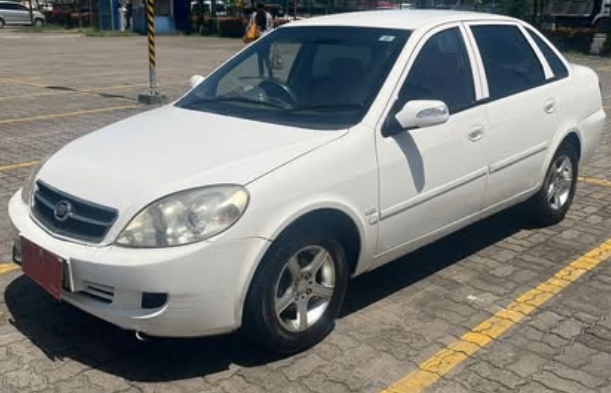
The Lifan 520 holds a special place in the history of Lifan Motors as the company’s first mass-produced passenger car. Introduced in the mid-2000s, it marked Lifan’s transition from a motorcycle manufacturer into the automotive industry. Built as an affordable subcompact sedan and hatchback, the 520 became the foundation for nearly all of Lifan’s early car development and export strategy.
Although modest in performance and technology, the Lifan 520 played a crucial role in establishing the company’s identity in both domestic and international markets. Its long production run, multiple body styles, and wide range of trims made it one of Lifan’s most globally recognized early vehicles.
Origins and Early Development
Lifan Motors began automobile production in the early 2000s after decades of manufacturing motorcycles. The company officially entered the car market by acquiring automotive manufacturing capability and rapidly developing its first passenger model.
The Lifan 520 was first introduced at the Beijing Auto Show in 2006, where it debuted as the company’s first independently developed sedan.
It entered production shortly afterward, marking Lifan’s official entry into the automotive industry. The vehicle was designed to be simple, inexpensive, and easy to produce, allowing the company to compete in China’s rapidly expanding subcompact car market.
.

.
Production Timeline
The Lifan 520 had a production run that lasted roughly six to seven years, with minor updates and export variations extending its lifecycle.
Production Years:
- 2006 – Start of production and domestic launch
- 2007–2010 – Expansion into export markets and higher production volumes
- 2011 – Minor facelift introduced
- 2012 – End of primary production in most markets
In some regions, assembly or sales continued under different branding or licensing arrangements slightly beyond this period, but the core production lifecycle ended in the early 2010s.
Platform and Engineering Foundation
The Lifan 520 was built on a licensed and heavily adapted platform based on the Citroën ZX, a compact hatchback originally produced in the 1990s. This approach allowed Lifan to accelerate development while keeping costs low.
Key Specifications:
- Body styles: 4-door sedan and 5-door hatchback (520i)
- Class: Subcompact car
- Layout: Front-engine, front-wheel drive
- Wheelbase: approximately 100 inches (2,540 mm)
- Length: approximately 172 inches (4,370 mm)
The hatchback version was marketed as the Lifan 520i, offering slightly more versatility for urban drivers.
Design and Styling
The design of the Lifan 520 was conservative but functional. It featured a simple sedan silhouette with a short front overhang, relatively upright proportions, and a practical rear trunk design.
While officially developed in-house with assistance from external design partners, the vehicle’s styling was often noted for resembling established compact sedans from European and Japanese manufacturers. This was common among early Chinese automakers, who frequently used familiar design cues to appeal to global buyers.
Despite its simplicity, the 520 was considered a major step forward for Lifan, as it represented the company’s first attempt at a fully passenger-focused automobile.
Powertrain and Mechanical Evolution
The Lifan 520 offered a small range of inline-four gasoline engines throughout its production life. These engines emphasized affordability and ease of maintenance.
Engine Options:
- 1.3-liter inline-four
- 1.5-liter inline-four
- 1.6-liter inline-four
Output Range:
- Approximately 87 to 105 horsepower depending on engine configuration
Transmission Options:
- 5-speed manual
- 5-speed automatic (available in later versions)
The engines were paired with simple transmissions and a basic suspension setup, reflecting the vehicle’s budget-focused design philosophy.
Models and Trim Levels
The Lifan 520 was offered in multiple trims across different markets, though naming conventions varied. Generally, the structure followed a three-tier system with incremental feature upgrades.
2006–2008: Initial Launch Trims
At launch, the Lifan 520 was available in basic and upgraded configurations.
Common Trim Levels:
- Standard
- Comfort
- Luxury
Feature Breakdown:
Standard Trim:
- Manual air conditioning
- Cloth upholstery
- Basic audio system
- Steel wheels
- Dual airbags
Comfort Trim:
- Alloy wheels
- Improved interior materials
- Power windows and mirrors
- Enhanced audio system
Luxury Trim:
- Leather seating surfaces
- Fog lights
- Parking sensors (in some markets)
- Upgraded interior trim
These trims helped position the 520 as a competitive entry-level sedan in emerging markets.
2009–2011: Export Expansion and Hatchback Introduction
During this period, the 520 gained broader international exposure. It was sold in markets such as Russia (often under the name Lifan Breez) and assembled in several overseas plants.
A key development was the introduction of the 520i hatchback, which expanded the lineup.
Updates During This Period:
- Improved interior equipment
- Expanded automatic transmission availability
- Minor styling refinements
- Increased export-focused configurations
Trim structure remained similar:
- Base
- Mid-range (Comfort)
- High-end (Luxury)
In some export markets, equipment levels were adjusted to meet local regulations, including safety and emissions requirements.
2011 Facelift
In 2011, the Lifan 520 received a minor facelift aimed at modernizing its appearance and improving market competitiveness.
Changes Included:
- Updated front grille design
- Revised headlights and bumpers
- Small interior improvements
- Enhanced build quality adjustments
This update helped extend the model’s lifecycle by making it visually more contemporary without requiring a full redesign.
Features and Interior Equipment
The Lifan 520 was never positioned as a technologically advanced vehicle, but it offered basic comfort features that were competitive for its price range.
Standard Equipment:
- Air conditioning
- Power windows
- Basic radio and CD player
- Dual front airbags
Higher Trim Features:
- Leather upholstery
- Rear parking sensors
- Electrically adjustable mirrors
- Improved dashboard materials
- Optional infotainment upgrades in later models
While limited by modern standards, these features were considered adequate for budget buyers in the mid-2000s.
Global Market Presence
One of the most important aspects of the Lifan 520 was its international reach. It was exported and assembled in multiple countries, helping Lifan establish a global footprint.
Key Markets:
- China
- Russia (as Lifan Breez)
- Vietnam (assembly operations)
- Ethiopia (CKD assembly under local branding)
- Middle East and parts of Eastern Europe
This global strategy allowed Lifan to grow rapidly despite its limited domestic market share.
Market Position and Target Buyers
The Lifan 520 was positioned as an entry-level subcompact sedan, aimed at cost-conscious buyers.
Target Customers:
- First-time car owners
- Taxi and fleet operators
- Budget-oriented families
- Export market consumers in developing regions
Its low price point was one of its strongest selling factors, often undercutting competitors significantly.
Sales Performance
The Lifan 520 saw its strongest sales during its early years.
- Peak sales occurred between 2007 and 2012
- Over 40,000 units annually in its best-performing years
- Sharp decline after 2013 as newer models replaced it
The decline was driven by increased competition and the aging platform.
Strengths and Weaknesses
Strengths:
- Very low purchase cost
- Simple mechanical design
- Wide global availability
- Easy maintenance
Weaknesses:
- Outdated platform even at launch
- Limited safety and technology
- Inconsistent build quality across markets
- Weak long-term competitiveness
Role in Lifan’s Development
The Lifan 520 was the foundation of Lifan’s automotive business. It enabled the company to transition from motorcycles into passenger cars and set the stage for later models such as the 620, 530, and X-series SUVs.
It also established key practices:
- Platform reuse
- Export-focused production
- Low-cost engineering strategies
Legacy and Industry Context
The 520 is widely regarded as one of the earliest examples of China’s emerging automotive industry in the 2000s. While not technologically advanced, it played a role in:
- Expanding Chinese automakers into global markets
- Demonstrating low-cost vehicle production scalability
- Establishing export networks for future models
It also reflects the broader trend of Chinese manufacturers rapidly learning and evolving during this period.
Future Outlook and Influence
The Lifan 520 itself is no longer in production, but its influence continues.
Key Developments After Discontinuation:
- Lifan expanded into SUVs and improved sedans
- Company restructuring in the 2020s
- Transition toward electric vehicle development under newer brands such as Livan Automotive
Industry Trend:
Modern successors to the 520 concept are expected to be:
- Fully electric
- More safety-focused
- Equipped with advanced connectivity features
- Built on dedicated EV platforms
The Lifan 520, produced from 2006 to approximately 2012, was the vehicle that launched Lifan Motors into the global automotive industry. Offered in sedan and hatchback forms and across multiple trims—from Standard to Luxury—it provided affordable transportation to a wide range of buyers across multiple continents.
While limited in refinement and technology, its importance lies in its role as Lifan’s first passenger car and a foundation for all later developments. The 520 represents an early stage in China’s automotive globalization story and remains a significant milestone in Lifan’s corporate history.