The Evolution of the Haval F5: From Concept Roots to a Transitional Compact SUV
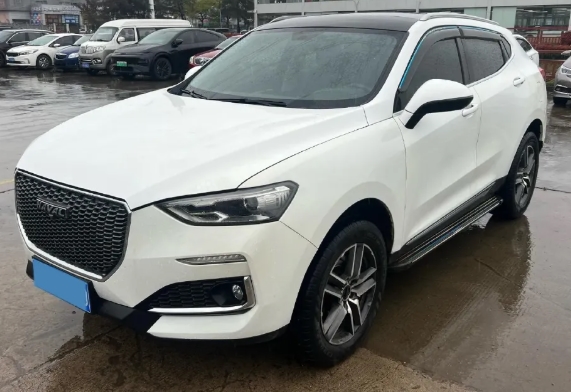
The Haval F5 is a compact crossover SUV produced by Great Wall Motor (GWM) under its Haval brand between 2018 and 2020. Although its production run was relatively short, the F5 played an important role in shaping Haval’s modern SUV lineup by bridging older “Red Label” design strategies with newer global platform engineering. It also served as a stepping stone toward later models such as the Haval Chitu, which effectively replaced it in China’s rapidly evolving compact SUV segment.
This article explores the full evolution of the Haval F5, including its production history, trim levels, powertrain changes, market positioning, and eventual phase-out.
Origins and Development Background
The Haval F5 originated from the Haval Concept R, a design study revealed at the 2015 Shanghai Auto Show. This concept was part of Haval’s dual-design strategy at the time:
- Concept R (Red Label): Sporty, youthful design direction
- Concept B (Blue Label): More conservative and family-oriented design
The Concept R eventually evolved into the production Haval F5, while Concept B influenced later versions of the Haval H6 lineup. This approach allowed Haval to target different customer groups using the same underlying engineering base.
The F5 was officially launched in China in 2018, positioned as a stylish, youth-oriented compact SUV designed for urban buyers seeking sportier aesthetics and modern technology at an affordable price.
.
THIS could come in handy for your auto garage (and everywhere else!):

.
Production Timeline
- Start of production: 2018
- End of primary production (China): 2020
- Export continuation (limited markets): briefly extended under local assembly or stock sales
- Successor model: Haval Chitu (introduced in 2021)
The vehicle was assembled primarily in Tianjin, China, at Great Wall Motor’s manufacturing facilities.
While some sources list production as continuing beyond 2020 in limited contexts, the widely accepted mainstream production lifecycle of the first-generation F5 ended in 2020.
Platform and Engineering
The Haval F5 was built on the same modular architecture used by several other Great Wall Motor products of the era, including:
- Haval H6 (second generation)
- WEY VV5
This shared platform allowed cost efficiency and faster development cycles while maintaining acceptable structural rigidity and safety standards.
Key engineering characteristics:
- Layout: Front-engine, front-wheel drive (FF)
- Body style: 5-door compact SUV
- Platform: Shared GWM modular SUV architecture
- Transmission: 7-speed dual-clutch automatic (DCT)
The F5 was designed with a coupe-like SUV profile, giving it a sportier appearance compared to more traditional compact SUVs.
Dimensions and Design
The Haval F5 sits in the subcompact-to-compact SUV segment, depending on classification.
Key dimensions:
- Length: 176.0 inches (4,470 mm)
- Width: 73.1 inches (1,857 mm)
- Height: 64.5 inches (1,638 mm)
- Wheelbase: 105.5 inches (2,680 mm)
These proportions gave it a stable stance while maintaining maneuverability in urban environments.
Exterior design
The F5 featured a distinctive design language for its time:
- Sloped roofline resembling a coupe SUV
- Large grille with chrome or black accents
- Sharp, angular headlights
- Sport-oriented body kit on higher trims
Its styling was aimed primarily at younger buyers, differentiating it from more conservative rivals in the Haval lineup.
Powertrain Evolution
The Haval F5 had a relatively simple but evolving engine lineup during its short production life.
2018–2019: Initial Launch Powertrain
At launch, the F5 was equipped with a 1.5-liter turbocharged gasoline engine:
- Engine code: GW4B15A
- Power output: approximately 169 horsepower
- Torque: about 285 Nm
- Transmission: 7-speed wet dual-clutch (DCT)
This configuration provided competitive performance for the compact SUV segment in China at the time.
2020 Update: Revised Engine Option
In 2020, Haval introduced a revised and slightly detuned version of the engine for certain trims:
- Engine code: GW4G15K
- Power output: approximately 150 horsepower
- Torque: around 220 Nm
This change was primarily driven by:
- Emissions compliance updates
- Cost optimization
- Market segmentation between base and premium trims
Both engine versions were front-wheel drive only.
Trim Levels and Model Structure
The Haval F5 was offered in multiple trims that evolved slightly over its production run.
2018 Launch Trims
At launch, the F5 typically included three main trims:
- Comfort (Base Trim)
- Standard turbo engine
- Basic infotainment system
- Fabric interior materials
- Essential safety features
- Elite (Mid Trim)
- Upgraded infotainment screen
- Improved interior finishes
- Additional driver assistance features
- Ultra / Sport (Top Trim)
- Sport styling package
- Full technology suite
- Premium interior materials
- Enhanced connectivity features
2019–2020 Updated Trims
As the model matured, trim structures were refined:
- Entry Trim (Comfort / Base)
- Detuned engine option in some markets
- Simplified equipment list
- Standard Trim
- Balanced equipment and performance
- Most popular configuration
- Premium Trim
- Full infotainment package
- Advanced safety and comfort features
- Sport Trim
- Cosmetic enhancements
- Retuned driving feel (styling-focused rather than mechanical changes)
Unlike some competitors, the F5 did not undergo major structural trim redesigns, instead receiving incremental updates.
Interior and Technology
The Haval F5 was considered relatively modern for its time in the Chinese compact SUV segment.
Interior features included:
- Large central touchscreen infotainment system
- Digital instrument cluster (higher trims)
- Flat-bottom steering wheel in sport versions
- Smartphone connectivity
- Voice control system (basic version)
Comfort and convenience features:
- Automatic climate control
- Keyless entry and push-button start
- Panoramic sunroof (select trims)
- Rear parking camera and sensors
While not as advanced as later Haval models, the F5 offered competitive technology for its price range.
Safety and Driver Assistance
The F5 included a basic but modern set of safety features for its segment:
- ABS and electronic stability control
- Traction control system
- Multiple airbags
- Rear parking assist
- Lane-related warning systems (higher trims)
Advanced driver assistance systems were limited compared to later Haval vehicles such as the Jolion or Chitu.
Market Position and Competition
The Haval F5 was positioned as a youth-focused compact SUV, sitting below larger models like the Haval F7 and H6.
Key competitors included:
- Geely Boyue (Atlas)
- Changan CS55
- Roewe RX5
- MG HS (in export comparisons)
Strengths:
- Stylish coupe-like design
- Competitive pricing
- Solid turbocharged performance (early models)
- Strong brand recognition in China
Weaknesses:
- Short production lifecycle
- Rapid internal overlap with newer Haval models
- Limited export success
- Basic driver assistance systems compared to newer rivals
Sales Performance and Replacement
The F5 experienced moderate success but was quickly overshadowed by newer models.
Sales trajectory:
- Strong initial demand in 2018–2019
- Declining relevance by 2020 due to internal competition
- Replacement by the Haval Chitu in 2021
The Chitu effectively replaced the F5 by offering:
- Updated styling
- Improved engines
- Hybrid options
- More modern interior technology
Role in Haval’s Lineup Evolution
The F5 played an important transitional role within Haval’s SUV strategy:
- It modernized the brand’s compact SUV design language
- It tested coupe-inspired SUV styling in the mainstream segment
- It helped refine turbocharged 1.5-liter engines used in later models
- It served as a foundation for successor models like the Chitu
Although short-lived, it contributed to the evolution of GWM’s compact SUV architecture.
Future Outlook and Legacy
The Haval F5 is no longer in production, and no direct successor carries its name. However, its influence continues through:
- The Haval Chitu
- Later Haval Jolion and H6 updates
- Continued use of the 1.5-liter turbo engine family
Its coupe-SUV styling philosophy also became more common across Haval’s lineup in later years.
The Haval F5 was a short-lived but strategically important compact SUV in Great Wall Motor’s lineup. Produced between 2018 and 2020, it introduced a sporty design language, modern turbocharged engines, and a youthful brand direction that helped reshape Haval’s identity in the compact SUV market.
While it was eventually replaced by more advanced models like the Chitu, the F5 played a key role in bridging older design philosophies with the newer, globally oriented Haval product strategy. Today, it remains a transitional model that helped define the foundation for Haval’s modern SUV success.