The Evolution of the Škoda Octavia: From 1959 Pioneer to Global Best-Selling Family Car
The Škoda Octavia is one of the most important vehicles in modern European automotive history. As Škoda’s best-selling model, the Octavia has defined the brand’s identity for decades, combining practicality, affordability, and increasingly sophisticated technology. Since its original debut in 1959 and its revival in 1996, the Octavia has evolved through multiple generations, offering a wide range of trim levels, body styles, and powertrains.
This article explores the full evolution of the Octavia, including its production history, trim structures, technological development, and future outlook.
Origins: The First Octavia (1959–1971)
The Octavia name first appeared in 1959, marking the eighth model produced by Škoda after World War II.
Production Overview
- Production years: 1959–1971
- Body styles: Sedan and Combi (estate, introduced in 1961)
Characteristics
The original Octavia featured:
- Independent suspension on all wheels
- Rear-wheel drive layout
- Inline petrol engines
- Durable construction suited to varied road conditions
Though trim levels were not structured in the modern sense, variants included:
- Standard Octavia
- Octavia Super (more powerful version)
- Octavia TS (sport-oriented variant with motorsport success)
The Octavia gained international recognition through rally success, including class victories at the Monte Carlo Rally in the early 1960s.
Production ended in 1971, and the nameplate disappeared for 25 years.
.
THIS is GOOD stuff if your car is in need:

.
Revival: First Modern Generation (1996–2010)
After Škoda joined the Volkswagen Group in 1991, the Octavia returned in 1996 as a completely new model.
Overview
- Generation: Mk1 (Type 1U)
- Production years: 1996–2010 (including Octavia Tour continuation)
- Body styles: Liftback (hatchback) and Combi (estate, from 1998)
Trim Levels
Typical trims across markets included:
- LX / Classic
- GLX / Ambiente
- SLX / Elegance
- Laurin & Klement (luxury trim)
Key Developments
- Built on Volkswagen Group platform (shared with Golf)
- Introduction of all-wheel drive (1999)
- Launch of Octavia RS (2000) performance model
The RS variant marked the beginning of a performance sub-brand that continues today.
Impact
The first modern Octavia became a major success thanks to:
- Large interior and cargo space
- Competitive pricing
- Reliable VW-derived technology
Second Generation (2004–2013)
The second-generation Octavia refined the formula and expanded the model’s appeal.
Overview
- Generation: Mk2 (Type 1Z)
- Production years: 2004–2013
- Body styles: Liftback and Combi
Trim Levels
Common trims included:
- S
- SE
- Elegance
- Laurin & Klement
- Ambiente (in some markets)
- Scout (raised AWD estate variant)
- GreenLine (efficiency-focused model)
Key Innovations
- Improved interior quality and space
- Introduction of DSG dual-clutch transmissions
- Wider range of petrol and diesel engines
- Expansion of RS lineup (including diesel RS variants)
Market Success
This generation achieved major global success, with millions of units produced and strong fleet sales.
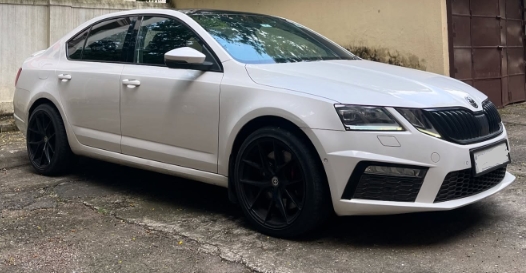
Third Generation (2012–2020)
The third-generation Octavia marked a major leap in design, technology, and efficiency.
Overview
- Generation: Mk3 (Type 5E)
- Production years: 2012–2020
- Platform: Volkswagen MQB
Trim Levels
Trim structures became more standardized:
- S
- SE
- SE L
- Laurin & Klement
- SportLine
- Scout (estate only)
- vRS (performance variant)
Key Developments
- Larger dimensions and improved practicality
- Advanced infotainment and connectivity
- Introduction of modern driver assistance systems
- Digital cockpit (post-2017 facelift)
2017 Facelift
The facelift introduced:
- Split-headlight design
- Updated infotainment systems
- Enhanced safety features
Performance and Efficiency
- vRS models reached up to ~245 hp
- Continued availability of diesel, petrol, and CNG engines
This generation cemented the Octavia’s reputation as a class leader in practicality and value.
Fourth Generation (2019–Present)
The latest generation represents the most advanced Octavia to date.
Overview
- Generation: Mk4 (NX)
- Production years: 2019–present
- Sales start: 2020 (delayed due to pandemic)
Body Styles
- Liftback
- Combi (estate)
Trim Levels
Modern trims vary by market but commonly include:
- Active / Essence (entry-level)
- Ambition / Selection
- Style
- SportLine
- Laurin & Klement
- RS (performance variant)
Powertrain Options
- Petrol (TSI)
- Diesel (TDI)
- Mild hybrid (eTSI)
- Plug-in hybrid (Octavia iV)
Key Features
- Fully digital cockpit
- Advanced driver assistance systems
- Improved aerodynamics and efficiency
- MQB Evo platform shared with Golf and Audi A3
2024 Facelift
- Updated styling and lighting
- Enhanced infotainment and safety systems
Performance Models: Octavia RS Evolution
The Octavia RS (vRS) has been a consistent part of the lineup since 2000.
Highlights Across Generations
- 2000 (Mk1): 180 hp turbocharged petrol
- Mk2: Expanded engine options, including diesel
- Mk3: Up to ~245 hp
- Mk4: Includes plug-in hybrid RS iV variant
The RS has evolved from a niche sporty version into a core part of the Octavia lineup.
Body Style Evolution
The Octavia has consistently offered versatile body configurations:
- 1959–1971: Sedan and estate
- 1996–present: Liftback and Combi
The Combi estate has been particularly successful in Europe, often outselling the hatchback version.
Design Evolution
1. Classic Era (1959–1971)
- Simple, functional design
- Emphasis on durability
2. Early Modern Era (1996–2004)
- Conservative styling
- Focus on practicality
3. Expansion (2004–2012)
- More refined and modern appearance
4. Modernization (2012–2020)
- Sharper lines and improved aerodynamics
5. Current Generation (2019–)
- Sleek, technology-focused design
- Digital-first interior
Technological Progress
Safety
- Early ABS and airbags → modern autonomous systems
- Lane assist, adaptive cruise control, emergency braking
Infotainment
- Basic radios → touchscreen systems → fully digital cockpits
Powertrains
- Carbureted engines → turbocharged petrol/diesel → hybrid systems
Market Position and Competitors
The Octavia competes in the compact/mid-size segment against:
- Volkswagen Golf
- Ford Focus
- Toyota Corolla
Its key strengths include:
- Exceptional interior space
- Strong value for money
- Wide range of trims and powertrains
Trim Philosophy: From Simplicity to Complexity
Across its generations, the Octavia’s trim structure has evolved:
- Early models: Basic trims (LX, GLX)
- 2000s: S, SE, Elegance, L&K
- Modern era: Multi-tier trims including SportLine and RS
The Laurin & Klement trim consistently represents the luxury flagship, while RS/vRS represents performance.
Sales and Global Impact
The Octavia is Škoda’s best-selling model, with over 7 million units sold since 1996.
It is:
- A top seller in multiple European countries
- Popular with fleet and family buyers
- Central to Škoda’s global success
Future Outlook
The future of the Octavia is expected to follow broader automotive trends.
Key Developments
- Electrification
- Expansion of plug-in hybrid systems
- Potential fully electric successor
- Concept Direction
- The Vision O concept hints at a future electric estate version
- Digital Innovation
- Continued improvements in software and connectivity
- Sustainability
- Increased use of eco-friendly materials
Despite the rise of SUVs, the Octavia remains a cornerstone of Škoda’s lineup.
From its origins in 1959 to its modern, technologically advanced form, the Škoda Octavia has undergone a remarkable evolution. Across four modern generations and multiple trim structures, it has consistently delivered practicality, innovation, and value.
As the automotive industry transitions toward electrification and digitalization, the Octavia is poised to adapt once again—ensuring its continued role as the backbone of Škoda’s success well into the future.