The Evolution of the Škoda Superb: From 1930s Flagship to Modern Executive Benchmark
The Škoda Superb stands as one of the most significant vehicles in Škoda’s history, embodying the brand’s transformation from a regional European manufacturer into a global automotive contender. Spanning nearly a century of intermittent production, the Superb has evolved through multiple generations, adapting to technological progress, market demands, and changing ownership under the Volkswagen Group.
This article explores the full evolution of the Škoda Superb—from its origins in the 1930s to its modern iterations—detailing production years, trim levels, and major developments across each generation.
Origins: The Original Superb (1934–1949)
The Superb nameplate first appeared in 1934, with full production beginning in 1935. These early models were positioned as Škoda’s flagship luxury vehicles.
Key Characteristics
- Production years: 1935–1949
- Backbone chassis with independent suspension
- Hydraulic brakes and 12V electrical system
- Inline-six and V8 engine options
- Available in multiple body styles, including sedans and open-top variants
The original Superb was advanced for its time, offering high levels of comfort and engineering sophistication. Approximately 890 passenger cars and over 1,600 military derivatives were produced before the model was discontinued after World War II.
Following 1949, the Superb name disappeared for over 50 years as Škoda focused on more affordable vehicles.
.
THIS is GOOD stuff if your car is in need:

.
Revival: First Modern Generation (2001–2008)
After joining the Volkswagen Group in 1991, Škoda began moving upmarket. This culminated in the reintroduction of the Superb in 2001.
Overview
- Generation: First modern (B5 / Type 3U)
- Production years: 2001–2008
- Body style: Sedan
Built on a stretched Volkswagen Passat platform, the Superb emphasized interior space and value.
Trim Levels (Typical Global Range)
Trim levels varied by market but commonly included:
- Classic
- Comfort
- Elegance
- Laurin & Klement (range-topping luxury trim)
Key Features
- Exceptional rear legroom
- Petrol and diesel engines, including a 2.8L V6
- Early adoption of premium features like xenon headlights
This generation re-established the Superb as a practical yet upscale alternative to more expensive executive cars.
Second Generation (2008–2015)
The second-generation Superb marked a major leap forward in versatility and innovation.
Overview
- Generation: B6 / Type 3T
- Production years: 2008–2015
- Body styles: Hatchback (liftback) and Combi (estate)
This was the first time the Superb was offered as a wagon, significantly increasing its appeal.
Trim Levels
Common trims included:
- S
- SE
- SE Plus
- Elegance
- Laurin & Klement
- GreenLine (efficiency-focused variant)
Notable Innovation: TwinDoor System
The liftback model introduced the “TwinDoor” system, allowing the rear to open either as a trunk lid or a full hatch.
2013 Facelift
A major update in 2013 brought:
- Revised front and rear styling
- New safety features (Driver Activity Assistant, adaptive lighting)
- Updated infotainment systems
The second generation significantly expanded the Superb’s global presence and practicality.
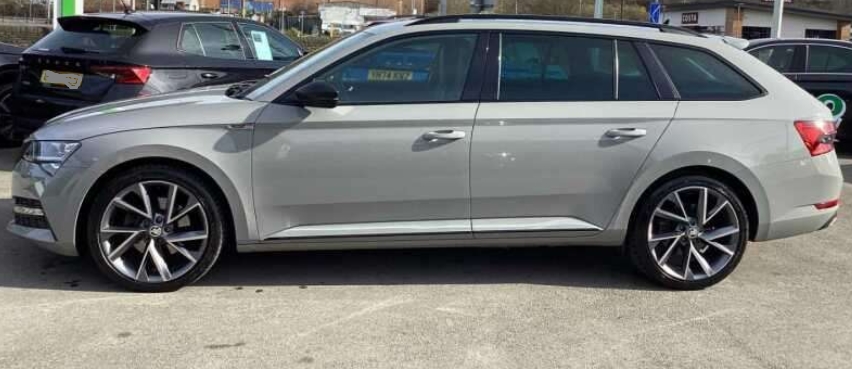
Third Generation (2015–2023)
The third-generation Superb represented a transformation into a truly modern executive vehicle.
Overview
- Generation: B8 / Type 3V
- Production years: 2015–2023
- Platform: Volkswagen MQB
Body Styles
- Hatchback (liftback)
- Combi (estate)
Trim Levels
Trim structures became more refined and performance-oriented:
- S
- SE
- SE L
- SportLine
- Laurin & Klement
- Scout (raised, off-road-inspired estate)
Key Developments
- Introduction of MQB platform technology
- Advanced driver assistance systems
- Digital cockpit and infotainment upgrades
- Improved efficiency and performance
Electrification (2019)
A major milestone came with the introduction of the Superb iV plug-in hybrid:
- Combined petrol-electric powertrain
- Significant electric-only driving capability
This marked Škoda’s entry into electrified executive vehicles.
Market Success
The third generation became the most successful Superb to date, with over 800,000 units sold globally.
Fourth Generation (2023–Present)
The latest Superb represents the most advanced iteration yet, combining traditional strengths with modern electrification.
Overview
- Generation: B9
- Production years: 2023–present
- Body styles: Hatchback and Combi
Powertrain Options
- Petrol (TSI)
- Diesel (TDI)
- Mild hybrid
- Plug-in hybrid (iV)
Plug-in hybrid versions offer up to approximately 120 km (75 miles) of electric range.
Trim Levels
While trim structures vary by market, the modern lineup generally includes:
- Essence (entry-level)
- Selection
- SportLine
- Laurin & Klement (flagship luxury trim)
Key Features
- Advanced infotainment with large touchscreen
- “Smart Dials” control interface
- Enhanced driver assistance systems
- Sustainable interior materials
The fourth generation continues the Superb’s focus on practicality, comfort, and value.
Design Evolution
Over its generations, the Superb has undergone significant design transformation:
1. Early Modern Era (2001–2008)
- Conservative sedan styling
- Emphasis on interior space
2. Expansion Phase (2008–2015)
- Introduction of liftback and estate
- More expressive design language
3. Modernization (2015–2023)
- Sharper lines and “crystalline” design
- Improved aerodynamics
4. Current Generation (2023–)
- Sleeker proportions
- Greater focus on efficiency and sustainability
Technological Progress
The Superb has consistently integrated new technologies:
Safety and Assistance
- Adaptive cruise control
- Lane assist and emergency braking
- Driver fatigue detection
Infotainment
- Early navigation systems → modern touchscreen interfaces
- Smartphone integration and OTA updates
Electrification
- Transition from traditional ICE engines to hybrid systems
- Expansion of plug-in hybrid capability
Market Position and Competitors
The Superb competes in the mid-size/executive segment against models such as:
- Volkswagen Passat
- Ford Mondeo
- Toyota Camry
Its primary strengths include:
- Exceptional interior space
- Strong value proposition
- Wide range of body styles and powertrains
Trim Philosophy: Laurin & Klement
Across multiple generations, the Laurin & Klement trim has remained the flagship variant.
Named after Škoda’s founders, it typically includes:
- Premium leather interiors
- Advanced technology features
- Unique exterior styling elements
This trim represents the pinnacle of the Superb lineup.
Future Outlook
The future of the Superb is closely tied to electrification and evolving consumer demands.
Key Trends
- Increased Electrification
Expansion of plug-in hybrid and potential full-electric variants. - Sustainability
Greater use of recycled materials and efficient powertrains. - Digital Integration
Continued advancement in infotainment and autonomous driving features. - Global Strategy
Continued importance as Škoda’s flagship sedan and estate.
Despite the rise of SUVs, the Superb remains a key model, particularly in Europe where estate cars are highly valued.
The Škoda Superb has evolved from a pre-war luxury car into a modern executive vehicle that balances practicality, technology, and affordability. From its early innovations in the 1930s to today’s hybrid-powered, digitally advanced models, the Superb has consistently represented the best of Škoda’s engineering.
With four modern generations and a legacy spanning nearly 90 years, the Superb continues to adapt to changing automotive landscapes. Its future—likely shaped by electrification and digital innovation—ensures that it will remain a cornerstone of Škoda’s lineup for years to come.