The History of Berger Chevrolet
West Michigan’s Muscle Car Powerhouse
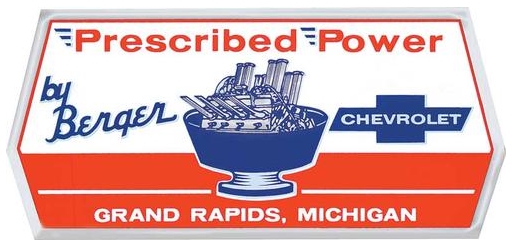
Few dealership names carry the weight in American muscle car history that Berger Chevrolet does. While not a manufacturer in the traditional sense, Berger Chevrolet became nationally famous during the 1960s and 1970s for creating high-performance, dealer-modified Chevrolets that rivaled factory special editions. From its partnership with drag racing legend Dick Harrell to its role in the legendary COPO Camaro program, Berger Chevrolet helped define what a performance dealership could be.
Operating continuously since 1925 in Grand Rapids, Michigan, Berger Chevrolet has survived the rise and fall of the muscle car era, emissions crackdowns, fuel crises, and industry restructurings. Its history is inseparable from the golden age of American horsepower.
Founding and Early Years (1925–1950s)
Berger Chevrolet was founded in 1925 by William E. Berger in Grand Rapids, Michigan. William Berger entered the automobile business during the rapid expansion of personal car ownership in the early 20th century. Like many early Chevrolet dealers, Berger built his business on customer service, mechanical expertise, and strong ties to the local community.
From its inception, Berger Chevrolet operated as a franchised dealer of Chevrolet, a division of General Motors (founded in 1908). Berger Chevrolet was never an independent manufacturer; instead, it enhanced and modified factory-built Chevrolets.
Through the 1930s, 1940s, and 1950s, Berger Chevrolet functioned as a conventional dealership. However, by the late 1950s, performance culture was accelerating in America. Hot rodding, drag racing, and V8 engine development created opportunities for dealers willing to push boundaries.
Enter the Muscle Car Era (1960s)
The 1960s marked a turning point. Chevrolet began producing factory performance vehicles like the Super Sport models (such as the Chevrolet Impala SS) and high-output small- and big-block V8 engines. Berger Chevrolet recognized the demand for even more power.
What set Berger apart was its willingness to collaborate with racers and performance engineers. This culminated in one of the most significant partnerships in dealership muscle car history: its alliance with Dick Harrell.
The Dick Harrell Connection
Dick Harrell was a championship drag racer and high-performance specialist. In the mid-1960s, Berger Chevrolet partnered with Harrell to create dealer-modified high-performance Chevrolets.
Together, they developed enhanced versions of:
Harrell’s racing credibility gave Berger national exposure. Berger-backed cars competed successfully in NHRA events and match races across the country.
This collaboration helped establish Berger Chevrolet as more than a dealership — it became a performance brand.
The COPO Camaro and 1969 Milestone
Perhaps Berger Chevrolet’s most famous accomplishment came in 1969 with the COPO Camaro program.
COPO (Central Office Production Order) allowed dealers to special-order vehicles outside normal factory configurations. Berger Chevrolet worked with Chevrolet’s Central Office to order Camaros equipped with the 427 cubic-inch L72 big-block engine — an engine typically reserved for the Corvette and full-size cars.
The result: the 1969 Berger COPO Camaro.
These cars were factory-built at Chevrolet assembly plants but ordered through Berger Chevrolet and often modified further at the dealership. Berger-branded COPO Camaros became legendary for their straight-line performance.
Performance Specs (1969 COPO Camaro L72)
- 427 cubic-inch V8
- Factory-rated at 425 horsepower (widely believed to produce more)
- Quarter-mile times in the low 13-second range in stock form
The Berger COPO Camaro is widely considered one of the most desirable Camaros ever built.
Three Notable Berger Performance Models
Although Berger Chevrolet did not manufacture vehicles independently, it became strongly associated with several dealer-modified models:
1. 1969 Berger COPO Camaro (Most Famous)
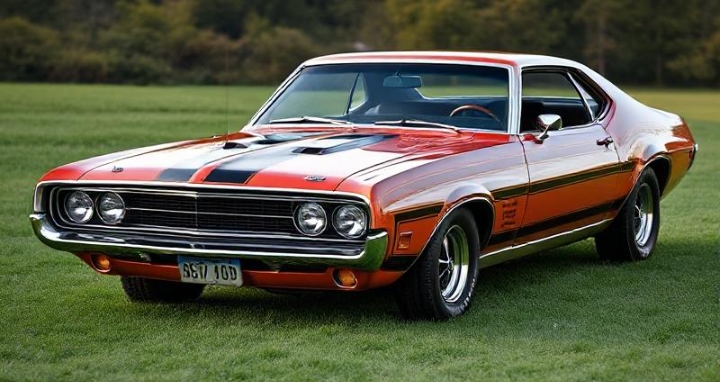
The Berger COPO Camaro is the dealership’s most iconic vehicle. Approximately 69 COPO Camaros were delivered through Berger in 1969 (exact figures vary by documentation), making them rare and highly collectible.
Nationally, Chevrolet produced 69 COPO 9561 Camaros (L72 427) in 1969, many of which were delivered through performance dealerships like Berger.
This model is considered Berger’s most successful and most valuable creation. Today, documented Berger COPO Camaros command six- and seven-figure auction prices.
2. Berger Super Chevelle (Late 1960s–Early 1970s)
Berger offered high-performance Chevelle SS models, often equipped with upgraded big-block engines and dealer-installed performance components.
These cars benefited from:
- Engine blueprinting
- Carburetor tuning
- Performance exhaust systems
The Chevelle SS itself was one of America’s top-selling muscle cars nationally, with Chevrolet selling over 72,000 SS 396 Chevelles in 1969 in the United States. The Berger Chevelle just made them better.
3. Berger Nova (Late 1960s)
Berger also enhanced Chevrolet Novas, particularly with big-block swaps and high-performance packages that turned compact cars into drag-strip contenders.
These dealer-modified Novas were lighter and often extremely quick in quarter-mile racing.
It was hard back in the day to beat a Berger Nova at the track (or on the street).
Racing Programs and Drag Strip Dominance
Berger Chevrolet was deeply involved in drag racing during the late 1960s. Through Dick Harrell and other drivers, Berger-backed cars competed in NHRA Super Stock and other classes.
The dealership leveraged racing success as a marketing tool:
- Advertising quarter-mile times
- Promoting track victories
- Highlighting real-world performance results
This race-to-showroom strategy distinguished Berger from traditional dealerships focused solely on transportation.
Marketing Strategy
Berger Chevrolet embraced bold, performance-driven advertising.
Key strategies included:
- National magazine ads in performance publications
- Direct mail campaigns
- Prominent dealership branding on race cars
- Hosting high-performance promotional events
Unlike conservative dealership marketing, Berger emphasized horsepower, acceleration, and racing pedigree.
Hardships and Challenges (1970s)
The early 1970s brought significant challenges to performance dealerships.
1. GM Racing Ban (Early 1960s Impact Continuing)
General Motors had officially stepped away from factory-backed racing in 1963. Though performance continued, corporate support was limited.
2. Emissions Regulations (1970–1975)
Federal emissions standards reduced engine compression ratios and horsepower ratings. By 1972, horsepower ratings shifted from gross to net measurement, making numbers appear significantly lower.
3. 1973 Oil Crisis
Gas shortages and rising fuel prices dramatically reduced demand for large-displacement muscle cars.
As insurance premiums soared and public sentiment shifted, the muscle car era declined.
Berger adapted by:
- Scaling back high-performance offerings
- Continuing as a full-service Chevrolet dealership
- Maintaining customer loyalty through service and reliability
Unlike some performance dealers that disappeared, Berger survived by returning to core dealership operations.
Later High-Performance Revivals (1990s–2000s)
Berger Chevrolet re-entered the performance spotlight in the 1990s and 2000s with limited-edition Camaros and Corvettes.
Notable modern creations include:
- Berger SS Camaro (2000)
- Berger 427 Camaro (2010)
- Berger COPO tribute models
These cars were built in collaboration with specialty builders and Chevrolet Performance, blending modern engineering with classic branding.
The 2000 Berger SS Camaro, for example, was a limited run of 100 units based on the fourth-generation Camaro SS, producing approximately 381 horsepower.
Factory Operations and Modification Process
Berger Chevrolet has never operated a manufacturing plant. Its performance vehicles were created through:
- Ordering special factory configurations via GM.
- Installing dealer-level performance modifications.
- Partnering with performance engineering firms for specialty builds.
All vehicles retained factory VINs and Chevrolet manufacturing origins.
Consumer Reception in the United States
During the 1960s, Berger’s performance cars were highly sought after by enthusiasts.
Consumers appreciated:
- Access to race-level performance
- Dealer-backed credibility
- Proven track results
Today, collector demand for documented Berger cars remains extremely strong.
What Made Berger Chevrolet Different
- Dealer-Level Performance Authority
Berger blurred the line between dealership and performance shop. - Direct Factory Ordering via COPO
Berger leveraged Chevrolet’s internal systems to access engines others could not. - Racing-Driven Branding
Real competition success validated its offerings. - Longevity
Unlike many muscle-era specialty dealers, Berger survived into the modern era.
Sales Figures and Market Impact
Because Berger vehicles were dealer-modified, exact production totals are limited.
However:
- National Chevrolet Camaro sales in 1969 exceeded 243,000 units in the U.S.
- COPO Camaro production totaled approximately 69 units for the L72 variant.
- Berger handled a significant portion of these rare vehicles.
Globally, Camaro exports during this era were limited, making most Berger cars U.S.-market vehicles.
The single most popular Berger-associated vehicle remains the 1969 COPO Camaro due to rarity, performance, and collector demand.
Mergers, Ownership, and Business Continuity
Berger Chevrolet has remained a franchised Chevrolet dealership since 1925. It has not been acquired by another major automotive manufacturer. It has remained locally owned and operated in Grand Rapids, Michigan.
Unlike Pontiac (discontinued by GM in 2010), Chevrolet has continued uninterrupted, helping ensure Berger’s survival.
Current Status and Outlook
As of today, Berger Chevrolet remains in business in Grand Rapids, Michigan.
It continues:
- Selling new Chevrolet vehicles
- Offering service and maintenance
- Producing limited-edition performance collaborations
The modern performance market — including factory supercharged Camaros and Corvettes — aligns well with Berger’s heritage.
Collector demand for vintage Berger muscle cars remains strong, reinforcing the dealership’s legacy.
Conclusion: A Dealership That Became a Legend
Berger Chevrolet was never a traditional automaker. It did not design platforms or operate assembly lines. Yet during the golden age of American muscle, it became one of the most influential performance dealerships in the country.
From its founding in 1925 by William E. Berger to its partnership with Dick Harrell in the 1960s, and from the legendary 1969 COPO Camaro to modern limited-edition Camaros, Berger Chevrolet has maintained a rare continuity in American automotive culture.
Its most iconic creation — the 1969 Berger COPO Camaro — remains one of the most coveted muscle cars ever produced.
Berger Chevrolet represents something uniquely American: entrepreneurial spirit applied to horsepower. In doing so, it carved out a permanent place in muscle car history — not as a manufacturer, but as a performance institution.