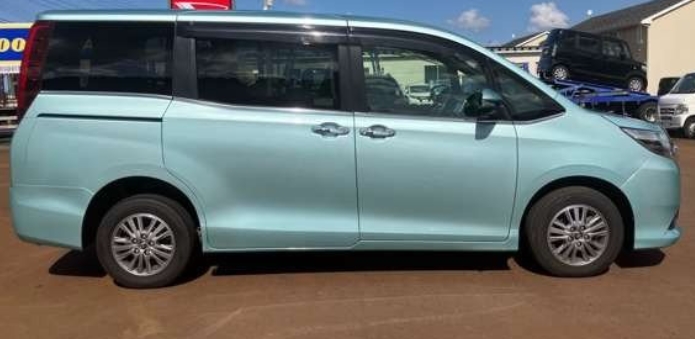
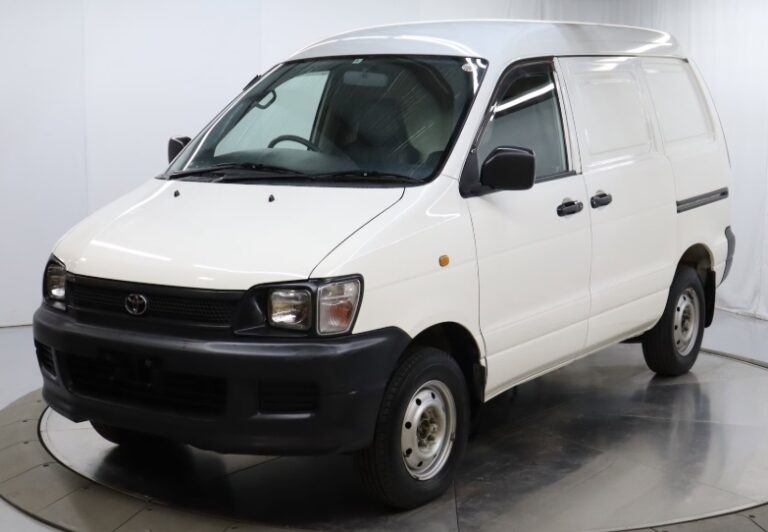
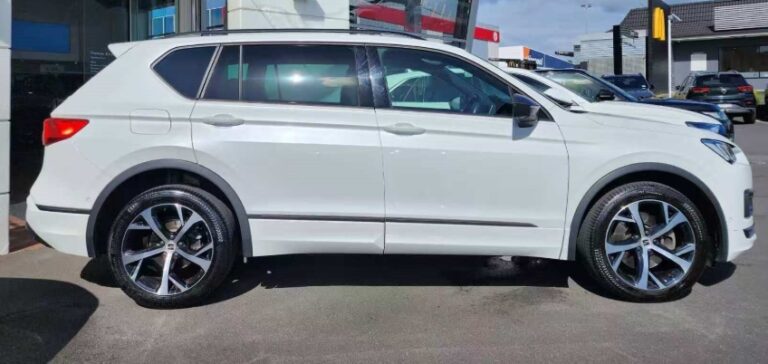
The Toyota Esquire: A Versatile Station Wagon for the Modern Family
In the ever-evolving automotive landscape, station wagons have carved out a niche as practical, family-friendly vehicles that blend utility with a touch of sophistication. Among these, the Toyota Esquire stands out as a Japanese-market stalwart, offering versatility, reliability, and a dynamic design that appeals to those seeking a balance between sedan comfort and wagon functionality. From its debut in 1997 to its current iteration, the Esquire has evolved significantly, adapting to shifting consumer needs and technological advancements. This article explores the history, models, trim levels, and future of the Toyota Esquire, highlighting its enduring appeal in a competitive segment.
History and Development
The Toyota Esquire was introduced in 1997 as a counterpart to the popular Corolla Fielder (sold internationally). Unlike the Fielder, which emphasized rugged, wagon-like utility, the Esquire leaned into a more upscale, family-oriented design. Its launch positioned it as a premium alternative to the standard Corolla sedan, combining comfort with the practicality of a rear-hatch design. Over the years, the Esquire has undergone three major redesigns, each reflecting Toyota’s commitment to innovation while maintaining its core identity as a versatile, reliable vehicle.
First Generation (1997–2005): Laying the Foundation
Produced from 1997 to 2005, the first-generation Esquire was based on the 10th-generation Corolla platform. It featured a sleek, aerodynamic profile and a focus on comfort, making it ideal for daily commuting and long road trips.
Key Models and Trim Levels
- 1.6TL: The base model, powered by a 1.6L 1ZZ-FE inline-four engine (120 horsepower) paired with a 5-speed manual or 4-speed automatic transmission.
- 1.6SL: A mid-tier trim offering enhanced luxury with standard upgrades like air conditioning, electric windows, and a more premium infotainment system.
- 1.6GL (XLE equivalent): The top-tier model, featuring leather upholstery, a premium sound system, and advanced safety features for its time.
Design and Features
The first Esquire emphasized a driver-focused cockpit with ergonomically designed seats and intuitive controls. Its 168 mm of ground clearance lifted it slightly above the standard Corolla, improving its practicality for uneven roads. Despite its wagon silhouette, the Esquire retained a compact footprint, ensuring city maneuverability.
Market Reception
The first-generation Esquire was praised for its fuel efficiency (approximately 25–30 mpg combined) and reliability, with minimal mechanical issues reported over the years. However, its conservative design and limited availability outside Japan kept it from achieving global recognition.
.
NO MORE dead batteries with this:

.
Second Generation (2005–2018): Modernization and Hybrid Innovation
In 2005, Toyota overhauled the Esquire to align it with the 11th and 12th-generation Corollas. This generation introduced a more contemporary aesthetic, including sharper lines, chrome accents, and a sportier demeanor.
Key Models and Trim Levels
- 1.8TL: The base model, upgraded with a 1.8L 2ZZ-GE engine (130 horsepower) and a 5-speed manual or 4-speed automatic transmission.
- 1.8SL: Mid-tier trim with added convenience features like heated mirrors, a sunroof, and a rearview camera.
- 1.8GL (XLE): The flagship model, offering upgraded suspension, bi-color alloy wheels, and an optional Hybrid package.
Hybrid and Special II Editions
- Hybrid: Introduced in 2009, this model combined the 1.5L 1NZ-FXE engine with an electric motor, delivering an impressive 47 mpg combined. The Hybrid version emphasized eco-conscious driving while retaining the Esquire’s practicality.
- Special II (2009–2010): A limited-edition luxury variant featuring dual-zone climate control, upgraded audio systems, and chrome-tipped exhausts.
Design and Features
The second-generation Esquire adopted a more upright, boxy design for improved cargo space (now 51 cubic feet). A 176 mm ground clearance allowed for better handling of rough terrain, and available 16-inch alloy wheels gave it a bolder stance. The interior saw significant upgrades, including a driver-centric dashboard and high-quality plastics.
Market Success
This generation solidified the Esquire’s reputation as a fuel-efficient, comfortable family wagon. The Hybrid version also positioned it as a green alternative to larger sedans, appealing to environmentally conscious buyers. Despite its strengths, the rise of crossovers began to challenge the station wagon’s popularity.
Third Generation (2018–Present): A High-Riding Evolution
The 2018 redesign marked the Esquire’s transformation into a high-riding station wagon, drawing inspiration from the Toyota Highlander crossover. This iteration addressed shifting consumer preferences for elevated, rugged designs.
Key Models and Trim Levels
- 1.2TL: The base model with a 1.2L 3NR-VE three-cylinder engine (88 horsepower) and a CVT automatic transmission.
- 1.8TL: A mid-range option featuring the 1.8L 2ZR-FAE four-cylinder engine (139 horsepower) paired with a 6-speed CVT.
- 1.8GL (XLE): The top trim, offering leather seats, lane departure warnings, and a touchscreen infotainment system.
Allgrade Variant (2018–Present)
A standout among the third-generation models, the Esquire Allgrade features a raised suspension (204 mm ground clearance), 18-inch alloy wheels, and an off-road-oriented design. Despite its rugged look, it retains the wagon’s practicality, with best-in-class cargo space (59 cubic feet).
Design and Technology
The third-generation Esquire boasts a bold, modern exterior with hexagonal headlights and a dual-tone roof. Inside, it offers a high-tech cockpit with Toyota’s Entune 3.0 infotainment system, Apple CarPlay, and Android Auto. Safety features like Toyota Safety Sense (pre-collision system, lane-keeping assist, and adaptive cruise control) are now standard on higher trims.
Market Positioning
This generation has reinvigorated the Esquire, appealing to buyers seeking a crossover’s elevation and style without sacrificing the benefits of a station wagon. The Allgrade variant, in particular, has been well-received in off-road enthusiast circles.
Future Outlook
As the automotive industry shifts toward electrification, the Toyota Esquire could evolve further to stay competitive. Toyota’s 2030 electrification goals, which include 70% of global sales being BEVs, hybrids, or hydrogen vehicles, suggest the Esquire might adopt plug-in hybrid or electric variants. A bZ-based electric Esquire (drawing from Toyota’s bZ3 electric sedan) could offer zero-emission driving while retaining the wagon’s versatility.
Additionally, the rising popularity of premium wagons (e.g., the Volvo V60 Recharge) positions the Esquire for potential expansion into overseas markets. Toyota might also explore subcompact wagon niches, where the Esquire’s compact size and fuel efficiency could appeal to urban buyers.
The Toyota Esquire has remained a testament to the enduring appeal of station wagons. From its early days as a family-friendly Corolla variant to its current high-riding, tech-packed iteration, the Esquire has continually adapted to meet the needs of modern consumers. While the future may see it embrace electrification and global expansion, its core identity as a practical, reliable, and stylish wagon will ensure its place in Toyota’s lineup for years to come.