The Last Hurrah: How the Morris Ital Became a Symbol of British Industrial Transition
In the grand tapestry of automotive history, few vehicles embody the chaotic, transitional period of the British motor industry in the late 1970s and early 1980s quite like the Morris Ital. It was a car born not of radical innovation, but of necessity—a facelifted version of the venerable Morris Marina, designed to keep the Austin-Morris division of British Leyland (BL) afloat during a tumultuous era of strikes, quality control issues, and shifting market demands.
Produced from 1980 to 1984, the Morris Ital was the last vehicle to bear the iconic Morris badge before the marque was retired in favor of the Austin brand. It represents the end of an era: the final rear-wheel-drive, body-on-frame saloon produced by the group before the industry fully embraced front-wheel-drive, monocoque construction. This article explores the evolution of the Morris Ital, detailing its models, trim levels, and its place in the history of British motoring.
The Genesis: A Facelift Born of Necessity
To understand the Ital, one must first understand its predecessor, the Morris Marina. Launched in 1971, the Marina was designed as a stop-gap measure to compete with the Ford Cortina and Vauxhall Vauxhall. By the late 1970s, however, the Marina was aging rapidly. The British Leyland (BL) management, facing financial strain and the impending launch of the revolutionary Austin Metro, needed a cost-effective way to update the Marina to keep it competitive until the new front-wheel-drive platform (which would eventually become the Maestro/Montego) was ready.
The solution was a significant facelift. Designers at the BL Design Centre, led by Harris Mann, were tasked with modernizing the Marina’s exterior and interior while keeping the mechanical components largely unchanged. The result, unveiled in October 1980, was the Morris Ital.
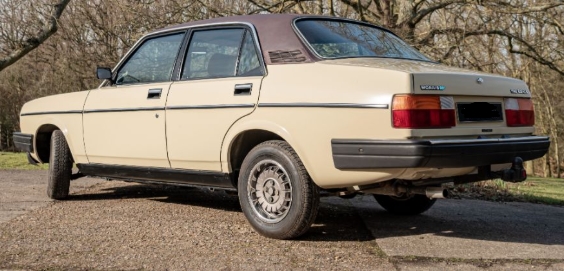
The “Ital” name was chosen to evoke a sense of style and European flair, capitalizing on the British public’s fascination with Italian design. While the underlying chassis and suspension geometry remained identical to the Marina, the visual changes were comprehensive. The front end featured a new, wider grille with vertical bars (resembling the contemporary Rover SD1) and rectangular headlamps, replacing the Marina’s round units. The rear was completely reworked with a black plastic panel connecting rectangular taillights, giving the car a wider, more modern stance. Even the doors were new, featuring frameless glass—a first for a BL saloon—which improved the side profile but introduced potential sealing issues in later years.
.

.
The Range: Engines and Body Styles (1980–1984)
When the Morris Ital launched in late 1980, it was offered in a traditional British hierarchy of trim levels, catering to everyone from the budget-conscious family to the aspiring executive. The range consisted primarily of four-door saloons and two-door coupés (marketed as the “Ital 2.0” or “Ital GS” in some contexts), alongside a van variant for commercial use.
1. The Base Models: 1.3L and 1.7L The entry-level models were powered by the A-series engine (1.3 liters) and the B-series engine (1.7 liters). These were the workhorses of the range.
- Ital 1.3: This was the volume seller. It offered decent fuel economy and adequate performance for city driving. It came with basic specifications, including vinyl upholstery, a heater, and minimal chrome trim.
- Ital 1.7: Slightly more upscale, the 1.7 offered more torque, making it a better cruiser. It featured better interior trim, including cloth seats in higher specifications, and often included a tachometer as standard.
2. The Sports Models: The Ital 2.0 The most famous and desirable variant of the Ital was the 2.0-liter model. This car utilized the 1974cc O-series engine, which provided significantly more power (around 100 bhp in twin-carburetor form) than the smaller units.
- Ital 2.0: Launched alongside the base models, the 2.0 was the performance flagship. It featured a twin-carburetor setup, a close-ratio gearbox, and uprated suspension. Visually, it was distinguished by a blacked-out grille, sports wheels, and often a vinyl roof (a popular accessory of the era).
- Ital GS (Grand Sport): In certain markets, the 2.0 was marketed as the “GS.” This trim level included additional cosmetic enhancements such as body-colored mirror housings, spotlamps, and interior wood veneer trim. The GS was BL’s attempt to capture the “boy racer” market that flocked to the Ford Capri and Vauxhall Cavalier.
3. The Luxury Trim: The Ital 1.3 HLS and 1.7 HLS To compete with the higher-end Ford Cortina L and GL models, BL introduced the HLS (High Luxury Specification) trim.
- HLS Features: This trim level was defined by its exterior chrome work. It featured bright window surrounds, a chrome grille insert (distinct from the black sports grille), and vinyl roof coverings as standard. Inside, the HLS offered velour upholstery, wood-effect dashboards, and upgraded sound insulation. The HLS was popular with sales representatives and older drivers who preferred the traditional rear-wheel-drive feel.
4. The Van BL also produced the Ital Van, which deleted the rear seats and featured a flat load floor. It was powered by the 1.3L or 1.7L engines and was a common sight on British roads well into the late 1980s, valued for its rugged simplicity.
Mechanical Evolution and Engineering
While the Ital looked newer, its engineering was rooted in the 1960s. The chassis was a simple ladder frame with a separate body, a construction method that was cheap to produce but offered inferior handling and road noise isolation compared to the monocoque Ford Escort or VW Golf.
However, the Ital did see some mechanical improvements over the Marina:
- Brakes: The Ital featured front disc brakes as standard across the range (the Marina had optional discs), improving stopping power.
- Steering: Rack-and-pinion steering was standard, with power assistance available on the 2.0 models.
- Engine Updates: The O-series engine in the 2.0 models was relatively modern for BL, offering decent torque. However, the A-series and B-series engines were aging designs that required regular maintenance.
One of the most significant engineering changes was the introduction of the “Hydragas” suspension system on later models. While the Marina had used Hydragas (a fluid-based suspension system providing a soft ride), the Ital initially retained coil springs on the rear to cut costs. By 1982, due to customer feedback regarding ride quality, BL reintroduced Hydragas suspension to the rear of the saloon range, significantly improving comfort.
The Market Context: A Car Out of Time
The Morris Ital entered the market in 1980, a time when British Leyland was in crisis. The “Winter of Discontent” (1978–1979) had crippled the UK economy, and Japanese imports (Toyota, Datsun/Nissan, and Honda) were rapidly gaining market share due to their superior reliability and build quality.
The Ital was marketed as a “new” car, but automotive journalists of the time were quick to point out its age. Autocar and Motor magazines praised the car’s comfortable ride and spacious interior but criticized the vague steering, heavy weight, and dated mechanicals. The build quality, a notorious BL weakness, was inconsistent. While the exterior panels were well-aligned (a result of improved press tools at the Cowley plant), interior trim often rattled, and electrical gremlins were common.
Despite this, the Ital sold reasonably well in the UK, particularly to fleet buyers and loyal BL customers. It offered a lot of space for the money, and the 2.0-liter model was genuinely quick by contemporary standards, capable of reaching 105 mph.
The End of the Line: 1984 and Beyond
By 1983, the automotive world had moved on. The Austin Maestro was in development, promising a modern hatchback design with transverse engines and front-wheel drive. The Ital, despite its facelift, was fundamentally a 1960s design. Sales began to decline as the novelty wore off and reliability issues persisted.
Production of the Morris Ital ceased in 1984. The final cars rolled off the line at the Cowley plant in Oxford, marking the end of rear-wheel-drive saloon production for the Austin-Morris division (until the rear-wheel-drive Rover SD1 and Jaguar XJ-S continued the lineage).
Interestingly, the Morris nameplate did not disappear immediately. In some export markets, the Austin Metro was sold as the “Morris Metro,” and later, the Austin Maestro was badged as the “Morris Maestro” in certain countries. However, the Ital remains the last true “Morris” saloon built in Britain.
Legacy and Future Outlook
Today, the Morris Ital is a rare sight on British roads. Like many British cars of the 1970s and 80s, it fell victim to rust, scrappage schemes, and the harsh economics of the 1980s. However, among classic car enthusiasts, the Ital has found a cult following.
The Classic Scene The Ital is now a popular classic, primarily because of its affordability and parts availability. The 2.0-liter GS models are particularly sought after, often modified for historic rally or sprint use. The simple mechanics mean that home mechanics can easily maintain them, and the abundance of Marina/Ital parts in scrapyards (though dwindling) keeps them on the road.
Future Value While the Ital will likely never reach the investment heights of contemporaries like the Ford Capri or the Mini, its value is steadily rising. As the “youngtimer” market (cars from the 1980s) matures, the Ital is recognized for what it is: the last stand of the old British motor industry. It represents a rugged, uncomplicated era of motoring before the digital revolution took hold of the automotive world.
Restoration Potential For those looking to restore an Ital today, the challenge is primarily rust. The separate body-on-frame construction means that rot can occur in the sills, wheel arches, and floor pans. However, the mechanical components are robust if maintained. The O-series engine is known for its longevity, and the Hydragas suspension, when serviced, provides a ride quality that modern cars struggle to match.
Conclusion
The Morris Ital was never the best car in its class. It was outperformed by the Ford Cortina, out-handled by the VW Passat, and out-reliability-tested by the Toyota Carina. Yet, the Ital holds a special place in automotive history. It was a product of its time—a desperate, pragmatic attempt by a struggling giant to stay relevant.
It bridged the gap between the post-war era of body-on-frame saloons and the modern era of monocoque hatchbacks. For four short years, the Morris Ital carried the torch for a brand that had once revolutionized the motoring world. Today, it serves as a fascinating reminder of the British motor industry’s resilience and its turbulent transition into the modern age. Whether viewed as a stop-gap failure or a rugged survivor, the Morris Ital remains an indelible part of the British motoring landscape.