The Evolution of the 2000 -2002 GMMG Berger Camaro SS: A Rare American Performance Car
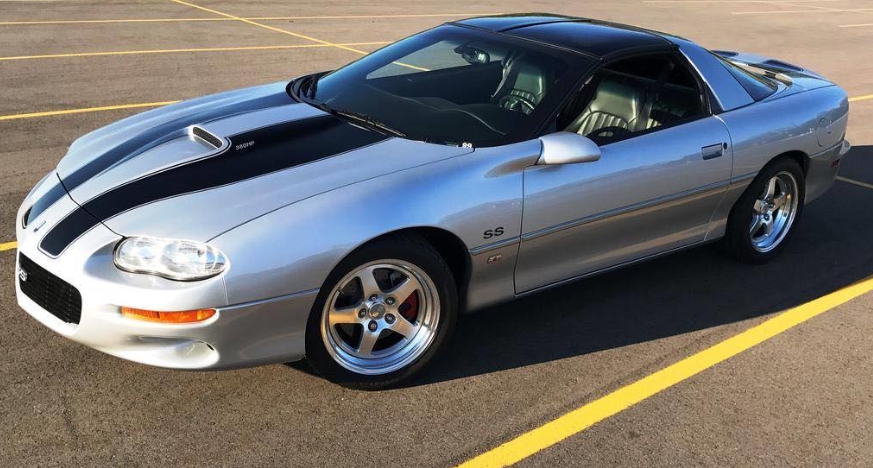
The 2002 GMMG Berger Camaro SS occupies a unique—and often misunderstood—corner of Camaro history. It isn’t a regular production Chevrolet model; rather, it’s part of a very limited, dealership-special, performance-oriented series of fourth-generation Camaros (1993–2002) built for enthusiasts by GMMG in collaboration with Berger Chevrolet, a Michigan dealership with a storied performance legacy. Over three model years (2000–2002), just 104 Berger SS cars were produced, with 43 of those built in 2002—the final year for this rare special edition.
This article chronicles the evolution of the Berger Camaro SS, with a particular focus on the 2002 model year: its origins, technical characteristics, trims and performance options offered, and its place in Camaro lore.
Origins: GMMG and Berger Chevrolet’s Special Camaro Program
In the late 1990s, fourth-generation Camaros were nearing the end of their production run. With steady demand from enthusiasts and a rising aftermarket scene, performance dealers began creating enhanced versions of the SS—most notably *GMMG, Inc. **(General Motors Motorsport Group), based in Marietta, Georgia. GMMG had built a reputation modifying GM vehicles for increased performance and handling, often in partnership with Chevrolet dealerships that wanted something beyond factory options.
Berger Chevrolet in Michigan, one of the nation’s oldest and best-known dealers, decided to celebrate its performance heritage by commissioning a limited run of special Camaro SS models. This effort was designed not only to offer something more potent and exclusive than the standard SS, but also to commemorate Berger’s history as a performance-focused Chevrolet dealer.
The result was the Berger SS Camaro: a fourth-generation Camaro SS that bore dealer-specific badges, performance and appearance enhancements, and limited production numbers. These cars were hand-built or modified under GMMG’s supervision and released in three model years: 2000, 2001, and 2002.
.

.
2000–2002: The Three-Year Production Timeline
It’s important to understand the broader timeline for the Berger SS program:
2000: The Debut Year
- Production began as part of Berger Chevrolet’s 75th anniversary celebration.
- 30 Berger SS cars were built, plus a prototype.
- These early models were based on the Camaro SS and came primarily with a 375 hp performance package, dealer-installed upgrades including revised suspension, exhaust, and cosmetic enhancements.
2001: Expansion and Performance Options
- 27 Berger SS cars were built in 2001 (again with one prototype).
- Performance upgrades expanded to include Phase 1 and Phase 2 packages (from approximately 380 hp up to 435 hp) available from GMMG.
- These cars typically featured T-tops or convertible tops, unique wheels, and Berger badging.
2002: Final Year and Largest Production
- 43 production Berger SS cars were built for the 2002 model year, plus one white prototype T-Top model and a special #000 car for Matt Berger himself.
- This final year saw the widest variety of performance and cosmetic options available directly from GMMG, including Phase 1 and Phase 2 engine packages.
- The 2002 Berger SS models represented the culmination of the dealership’s special-edition efforts before the fourth-generation Camaro ended production.
What Made the 2002 Berger SS Special?
The 2002 Berger Camaro SS was not a single trim level in the traditional sense like the factory SS or Z28. Rather, it was a limited, dealer-enhanced series of vehicles based on the SS platform with specific enhancements:
Performance Packages
Berger SS cars could be ordered with different performance upgrades from GMMG:
- Phase 1 – Typically around 380 hp, involving intake/exhaust and calibration improvements.
- Phase 2 – Increased to around 435 hp with more aggressive camshafts, ported heads, and other performance parts.
- Some owners later sent Berger SS cars back to GMMG for Phase 3 upgrades involving 427 cubic-inch engines up to ~600 hp, though these weren’t standard factory configurations.
The 2002 Berger SS cars were usually equipped with:
- Six-speed manual transmissions (standard for performance focus)
- Upgraded suspension and brakes
- Unique wheels (often Fikse 17×9.5 wheels)
- Berger-specific badging and trim
- Optional convertible or T-Top configurations
Many 2002 Berger SS cars were painted in unique or custom colors (Daytona Yellow, Hugger Orange, Rallye Green, LeMans Blue, Electron Blue, Chrome Illusion) alongside more common choices like Arctic White and Navy Blue Metallic.
Model Variants and Trim Configurations
Because these were not factory trims in Chevrolet’s lineup, the term “trim levels” for Berger SS cars refers more to the combination of performance packages and body configurations than discrete SKU-style trims. Across 2002 builds:
Configuration Types
- Coupe with T-Top
- Convertible (soft top)
- Hardtop coupe (rare)
Most built were T-top coupes and convertibles; only a handful of hardtops exist.
Performance Levels
- Phase 1 (380 hp) – Base Berger SS upgrade.
- Phase 2 (435 hp) – Mid-level performance upgrade (fewer than Phase 1 units).
- Phase 3X or custom 427 builds – Post-sale conversions by GMMG or owners seeking maximum power; not original 2002 production but tied to the Berger SS heritage.
Other special editions, such as the Hot Rod Magazine Edition Berger Camaro, also appeared in 2002. These were tied to collaboration with Hot Rod Magazine celebrating Camaro heritage, and produced in very limited numbers (~38 cars). While distinct from the standard Berger SS line, they represent the diversity of special Camaros built by GMMG for Berger in that same final year.
Cultural and Historical Impact
The Berger SS program was an enthusiast-driven, low-volume project that stands apart from factory Camaro trims:
- It showcased what could be done with dealer-led performance enhancements at the end of the fourth-generation Camaro’s production run, before the model was discontinued in 2002.
- With only 100 production cars, plus a few prototypes, it became an instant collectible among Camaro fans.
- Many of the performance elements seen on later GMMG builds (and even in limited ZL1 Supercar series) trace development roots back to experiments in Berger SS cars.
Collectors prize these cars for their rarity and connection to the final chapter of the Gen IV Camaro era. Condition, originality, and documented GMMG packages significantly impact value.
Future Outlook for the 2002 Berger Camaro SS
Looking ahead, the 2002 Berger SS is unlikely to ever be forgotten in the collector car world. Its rarity, combined with its dealer-specific pedigree and performance potential, gives it a niche appeal that general Camaro SS buyers do not enjoy. As more enthusiasts recognize the historical context of this limited series, demand among collectors could grow, particularly for:
- Original Phase 1 and Phase 2 examples
- Cars with rare colors or configurations
- Vehicles with documented provenance and original performance packages
Because these are not factory designations, their valuation sits outside typical Camaro SS pricing charts and instead hinges on rarity, build specification, and presentation in the collector market.
The 2002 GMMG Berger Camaro SS represents the apex of a three-year, enthusiast-focused endeavor to elevate the fourth-generation Camaro SS beyond factory limits. With just 43 production cars built in that final year—each featuring dealer performance upgrades, unique styling elements, and a strong connection to Chevrolet performance culture—it stands as a testament to what passionate dealerships and independent performance groups can achieve.
From special color schemes and Phase 1 / Phase 2 upgrades to custom builds performed by GMMG after the fact, the Berger SS remains a rare and highly collectible piece of Camaro history—especially as the car that helped close the fourth generation with style and power.