The Evolution of the Lifan 320: China’s Controversial “Mini-Inspired” Supermini
The Lifan 320 is one of the most recognizable early subcompact cars produced by Lifan Motors, largely due to its distinctive styling, global export strategy, and controversial resemblance to the classic Mini Cooper. Introduced in the late 2000s, the 320 became a symbol of China’s rapid entry into the small-car segment, especially in emerging markets where affordability mattered more than brand prestige.
Produced for roughly a decade, the Lifan 320 was sold under several names worldwide and even received a related upscale variant. While it was never a technological leader, it played an important role in establishing Lifan as an international automaker.
Origins and Development
The Lifan 320 was first revealed at the Beijing Auto Show in 2008, where it appeared as a production-ready supermini aimed at urban buyers.
At the time, Lifan was still a relatively young automotive manufacturer, transitioning from motorcycles into passenger cars. The 320 was part of a broader strategy to quickly expand its lineup with small, inexpensive vehicles that could be exported to developing markets.
Sales began in 2009, marking the official market launch.
From the beginning, the 320 was positioned as a budget-friendly city car, designed to be easy to manufacture, easy to maintain, and visually appealing to younger buyers.
.

.
Production Timeline
The Lifan 320 had a long production life for a subcompact car in its class, with multiple regional variations.
Production Years:
- 2008–2018 – China production lifecycle
- 2011–2018 – Russian production and assembly continued longer
- Model years generally ranged from 2009 through 2018
Assembly Locations:
- China (Chongqing)
- Russia (Cherkessk via Derways plant)
- Azerbaijan (Nakhchivan)
- Uruguay (San José)
This international assembly strategy helped Lifan reduce costs and enter multiple regional markets without building large overseas factories.
Platform, Design, and Concept
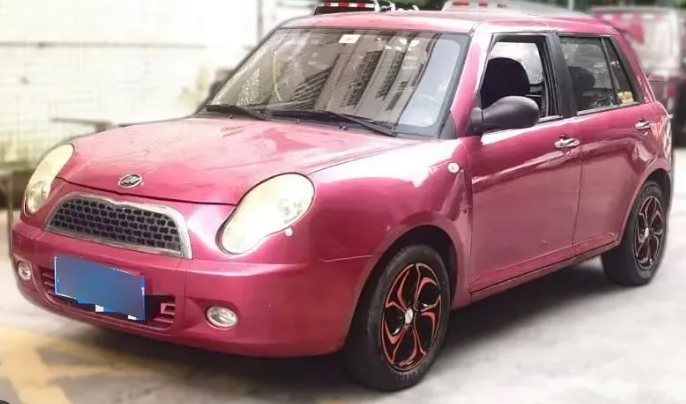
The Lifan 320 was a five-door supermini hatchback, though it was often described as a compact city car due to its size.
Key Dimensions:
- Length: about 147 inches (3,745 mm)
- Width: about 64 inches (1,620 mm)
- Height: about 56 inches (1,430 mm)
Layout:
- Front-engine, front-wheel drive
- Five-door hatchback body
- Four- to five-passenger seating
The design of the 320 became widely discussed because of its strong visual similarity to the first-generation Mini Cooper, especially in its rounded headlights, compact proportions, and two-tone styling cues. This resemblance sparked debate and criticism in automotive circles, though it also helped the car attract attention in crowded budget markets.
Despite the controversy, Lifan defended the design and continued using similar styling language in early production years.
Powertrain and Mechanical Setup
The Lifan 320 used a simple and economical drivetrain designed for low cost and easy servicing.
Engine:
- 1.3-liter inline-four gasoline engine
Output:
- Around 88 to 94 horsepower depending on market version
Transmission Options:
- 5-speed manual
- Continuously variable transmission (CVT) introduced in later years
Performance:
- Top speed: roughly 95 to 100 mph range depending on configuration
- 0 to 60 mph: approximately 14 to 15 seconds
The engine was based on a simple, durable design and shared characteristics with older Toyota-sourced architectures, which helped with maintenance simplicity in export markets.
Models and Trim Levels
The Lifan 320 lineup evolved gradually over its lifecycle, but it remained relatively simple compared to global competitors. Trim names and availability varied by country, but the structure generally followed a consistent pattern.
2009–2012: Early Production Models
During the initial production phase, the Lifan 320 was offered in a straightforward trim structure.
Common Trim Levels:
- Base (Standard)
- Comfort
- Luxury
Feature Breakdown:
Base Trim:
- Manual air conditioning
- Basic audio system with CD/USB support
- Steel wheels
- Dual front airbags (in many markets)
Comfort Trim:
- Power windows and mirrors
- Alloy wheels
- Improved interior trim materials
- Central locking system
Luxury Trim:
- Air conditioning upgrades (automatic or improved systems in some regions)
- Fog lights
- Parking sensors (market-dependent)
- Enhanced upholstery and styling details
Even base models were relatively well equipped for an entry-level city car in emerging markets.
2013 Facelift and Expansion
A major update arrived in 2013, marking the most important evolution of the model. At the same time, Lifan introduced a more upscale variant called the Lifan 330, which was sold alongside the 320.
2013 Updates Included:
- Redesigned front fascia
- Updated headlights and grille
- Improved interior dashboard layout
- Slight mechanical refinements
The facelift helped modernize the vehicle’s appearance while keeping production costs low.
Lifan 330 Variant
The Lifan 330 was introduced as a more refined version of the 320 rather than a full replacement.
Key Differences:
- More modern front-end styling
- Improved interior materials
- Additional comfort and convenience features
It targeted slightly more upscale buyers while the 320 remained the budget option.
2014–2018: Late-Stage Production
In its later years, the Lifan 320 continued largely unchanged, especially in core markets.
Key Developments:
- Continued use of 1.3-liter engine
- CVT availability expanded in select regions
- Minor interior and safety updates depending on export requirements
Trim structure remained similar:
- Base
- Comfort
- Luxury
However, some markets simplified the lineup due to declining demand and the introduction of newer Lifan models.
Features and Equipment Evolution
Across its lifecycle, the Lifan 320 gradually improved its equipment levels.
Standard Features (Later Models):
- Air conditioning
- Power windows
- Basic infotainment system
- Dual airbags
Higher Trim Features:
- Alloy wheels
- Central locking with remote entry
- Parking sensors
- Upgraded upholstery
- Optional infotainment enhancements (Bluetooth in some markets)
While basic by modern standards, these features were competitive for its price class during the late 2000s and early 2010s.
Global Market Presence
The Lifan 320 was widely exported and sold under different names.
Export Name:
- Lifan Smily (Russia)
Key Markets:
- China
- Russia
- Latin America
- Eastern Europe
- Parts of Africa and Central Asia
Local assembly operations helped Lifan keep costs low and adapt to regional regulations.
Market Position
The Lifan 320 was positioned as an ultra-budget supermini, competing in one of the most price-sensitive automotive segments.
Target Buyers:
- First-time car owners
- Urban commuters
- Fleet and taxi operators in developing markets
Its low price was one of its strongest advantages, often undercutting competitors significantly.
Safety and Criticism
Despite its affordability, the Lifan 320 faced criticism regarding safety and build quality.
Crash testing in some Latin American assessments resulted in very poor ratings, highlighting structural weaknesses and limited safety equipment in early versions.
This became one of the model’s major drawbacks, especially as global safety standards increased.
Strengths and Weaknesses
Strengths:
- Very low purchase price
- Simple mechanical design
- Wide availability in export markets
- Easy maintenance and repair
Weaknesses:
- Weak safety performance in early models
- Outdated design by late production years
- Limited refinement and noise isolation
- Heavy reliance on older platform engineering
Legacy and Industry Impact
The Lifan 320 represents an important phase in early Chinese automotive exports. It showed how manufacturers could rapidly develop low-cost vehicles and enter global markets.
However, it also highlighted challenges in:
- Design originality
- Safety engineering
- Long-term competitiveness
The model helped Lifan establish international distribution networks that would later support more advanced vehicles.
Future Outlook
The Lifan 320 was discontinued around 2018, as Lifan shifted toward newer SUVs and later toward electrification under restructuring efforts.
Industry Transition:
- Movement away from low-cost gasoline city cars
- Focus on SUVs and electric vehicles
- Development of new brands and partnerships such as Livan Automotive
Future successors in its segment are expected to be:
- Fully electric
- Safer and more connected
- Built on modern modular EV platforms
The Lifan 320, produced from 2008 to 2018, remains one of the most distinctive early Chinese superminis. Offered in Base, Comfort, and Luxury trims, and later joined by the Lifan 330 variant, it provided an affordable urban mobility solution across multiple continents.
While it faced criticism for safety and design choices, its role in Lifan’s global expansion is undeniable. The 320 helped establish the company’s presence in international markets and laid the groundwork for its later transition into larger and more modern vehicles.
In automotive history, the Lifan 320 stands as both a product of its time and a stepping stone toward China’s evolving automotive industry.