Wuling Starlight: The Evolution of a New-Energy Sedan Lineup
The SAIC-GM-Wuling Wuling Starlight represents a significant shift in the Chinese automaker’s strategy, marking its move from entry-level microcars and commercial vehicles into the competitive mid-size new-energy sedan segment. Introduced in 2023, the Starlight has rapidly evolved into a broader vehicle family that now includes sedans, SUVs, and MPVs, all under a unified naming strategy.
This article explores the full evolution of the Wuling Starlight, including its production timeline, trim levels, variants, and future outlook.
Origins and Background
Wuling, a brand under SAIC-GM-Wuling, has historically been known for affordable vehicles such as the Hongguang Mini EV. However, by the early 2020s, the company sought to reposition itself within China’s fast-growing new-energy vehicle (NEV) market.
The Starlight nameplate was introduced as part of this transformation. It was designed to appeal to families seeking larger, more refined vehicles while maintaining Wuling’s hallmark affordability.
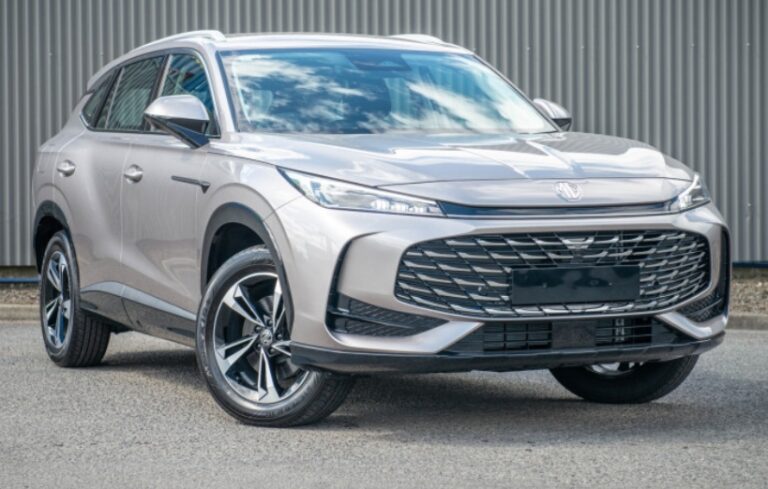
The Wuling Starlight sedan officially debuted in August 2023, becoming the brand’s first mid-size passenger car.
.

.
First Generation (2023–Present): Wuling Starlight Sedan
Launch and Production
- Production years: 2023–present
- Assembly locations: Liuzhou and Qingdao, China
- Platform: Tianyu D architecture
- Body style: 4-door mid-size sedan
The Starlight sedan was introduced as a plug-in hybrid (PHEV) and later expanded to include a battery electric vehicle (BEV) variant.
Design and Features
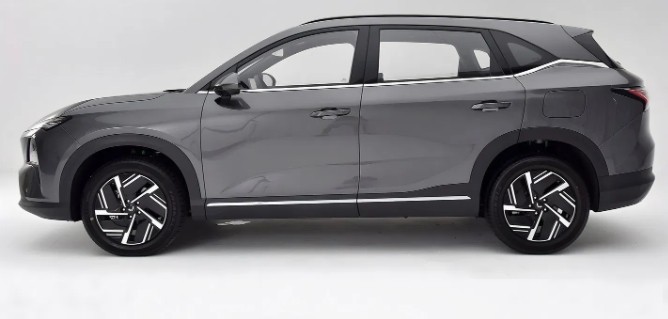
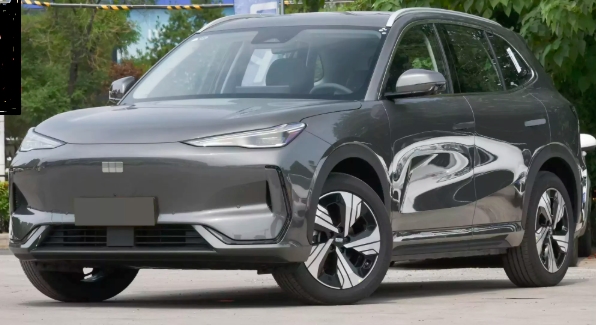
The design emphasized aerodynamic efficiency and futuristic styling, with:
- Slim roofline and flowing body contours
- Distinctive LED lighting signatures
- Spacious interior with 14 storage compartments totaling 33 liters
- Large central touchscreen and minimalist cabin layout
Powertrain Options
Plug-in Hybrid (PHEV)
- 1.5L naturally aspirated engine (106 hp)
- Electric motor combined output up to 150 kW (later models)
- Electric-only range: 50–105 km (CLTC)
- Total range: ~1,100 km
Battery Electric Vehicle (EV)
- Single front-mounted motor (100–150 kW)
- Battery options: 41.9 kWh or 54.3 kWh
- Range: 410–510 km (CLTC)
Trim Levels and Variants by Year
2023 (Initial PHEV Launch)
The Starlight debuted with two primary trims:
- 70 Standard
- 9.5 kWh battery
- ~50 km EV range
- 150 Advance
- 20.5 kWh battery
- ~105 km EV range
These trims focused on affordability and efficiency, with pricing starting under 90,000 yuan.
2024 (Expansion to EV Models)
Wuling expanded the lineup with fully electric variants:
- 410 Standard (EV)
- 41.9 kWh battery
- 410 km range
- 510 Advance (EV)
- 54.5 kWh battery
- 510 km range
These trims introduced higher performance and longer range while maintaining competitive pricing.
2025 (Updated Lineup and New Trims)
A refreshed lineup introduced improved performance and additional trim levels:
PHEV Trims (2025):
- 70 km Standard
- 150 km Advance
- 150 km Pilot
Enhancements included:
- Increased system output (up to 150 kW)
- Improved efficiency and updated design elements
- Expanded feature sets in higher trims
Model Update
The 2025 Starlight facelift introduced:
- Updated exterior styling
- Improved battery range (up to ~610 km in some EV configurations)
- Enhanced infotainment and intelligent features
Sales Performance and Market Reception
The Starlight quickly gained traction in China’s NEV market:
- Over 90,000 units sold shortly after launch
- 76,622 units sold in 2024 (combined EV and PHEV)
Its success can be attributed to:
- Competitive pricing
- Practical range and hybrid flexibility
- Spacious interior design
The PHEV variant proved especially popular due to its long combined driving range.
Expansion of the Starlight Nameplate
Following the sedan’s success, Wuling expanded the Starlight into a broader vehicle family.
1. Wuling Starlight S (2024–Present)
- Segment: Compact crossover SUV
- Launch: August 2024
- Trims:
- 5 total trims
- 3 PHEV variants
- 2 EV variants
Key features:
- “Star Wing Aesthetics” design language
- Advanced infotainment with OTA updates
- Drag coefficient of 0.277 Cd
2. Wuling Starlight 730 (2025–Present)
- Segment: Mid-size MPV
- Launch: 2025
- Trims:
- CE
- EX (each available as EV or PHEV)
The 730 expanded the Starlight brand into family-oriented multi-purpose vehicles.
3. Wuling Starlight 560 (2025–Present)
- Segment: Crossover SUV
- Launch: 2025
- Positioned as a larger SUV alternative within the Starlight lineup
Technology and Platform Strategy
All Starlight models are built on the Tianyu D architecture, a modular platform designed for:
- EV and PHEV compatibility
- Scalability across body styles
- Cost efficiency
Key technological highlights include:
- Lithium iron phosphate (LFP) batteries
- Fast-charging capability
- Integrated infotainment with OTA updates
- Advanced driver assistance systems (in higher trims)
Design Philosophy
The Starlight lineup introduced a more refined design language compared to earlier Wuling vehicles:
- Exterior: Clean lines, futuristic lighting, aerodynamic efficiency
- Interior: Minimalist layout with large digital displays
- User focus: Emphasis on storage, comfort, and practicality
This marked a clear shift from purely utilitarian vehicles toward lifestyle-oriented products.
Comparison Within the Wuling Portfolio
The Starlight sits above Wuling’s traditional offerings:
| Model Type | Example | Market Position |
|---|---|---|
| Entry-level EV | Hongguang Mini EV | Ultra-budget urban |
| Compact EV | Bingo | Affordable personal mobility |
| Mid-size sedan | Starlight | Family-oriented NEV |
| Premium sub-brand | Baojun models | Higher-end features |
The Starlight effectively bridges the gap between affordability and modern features.
Future Outlook
The Wuling Starlight lineup is expected to continue evolving in several key ways:
1. Global Expansion
While currently focused on China, models like the Starlight 730 have already begun entering international markets such as Indonesia and Hong Kong.
2. Electrification Growth
Wuling is likely to:
- Expand EV variants with longer ranges
- Improve battery efficiency and charging speeds
3. Technology Integration
Future models may include:
- Enhanced autonomous driving features
- More advanced connectivity ecosystems
4. Lineup Expansion
The Starlight nameplate may continue to grow into:
- Additional SUV sizes
- Possibly premium-oriented trims
Conclusion
Since its debut in 2023, the Wuling Starlight has evolved from a single mid-size sedan into a comprehensive vehicle family spanning multiple segments. Its rapid development reflects both the pace of innovation in China’s automotive industry and Wuling’s ambition to move beyond its budget roots.
With a combination of affordability, practicality, and expanding technology, the Starlight has positioned itself as a competitive player in the new-energy vehicle market. As the lineup continues to grow and potentially expand globally, it may play a central role in defining Wuling’s future identity in the automotive world.