The Evolution of the Foton Toano: China’s Modern Large Commercial Van
The Foton Toano became one of the most important commercial vans produced by Chinese automaker Foton Motor during the 2010s and 2020s. Designed as a large multipurpose van for cargo transport, passenger transportation, logistics fleets, and specialty commercial applications, the Toano represented Foton’s effort to compete directly with globally recognized vans such as the Mercedes-Benz Sprinter, Ford Transit, and Iveco Daily.
Since its introduction, the Toano has evolved through multiple updates, expanded trim levels, improved diesel powertrains, and new electric variants. The van also became one of Foton’s major export vehicles, appearing in markets throughout Asia, South America, Eastern Europe, Africa, and the Middle East. Over time, the Toano developed a reputation as one of the more advanced and internationally focused commercial vans produced by a Chinese manufacturer.
Origins of the Foton Toano
Foton Motor, founded in 1996, quickly became one of China’s largest commercial vehicle manufacturers. The company initially focused on trucks, buses, and utility vehicles before expanding into passenger-oriented commercial transportation. During the early 2010s, demand for modern large vans increased significantly in China and export markets as logistics, ride-sharing, tourism, and delivery industries expanded.
To compete in this growing segment, Foton introduced the Toano in 2015. The van was heavily inspired by the design and proportions of the Mercedes-Benz Sprinter, a fact frequently noted by automotive enthusiasts and reviewers. However, Foton positioned the Toano as a more affordable alternative offering flexible configurations and modern diesel technology.
The Toano was designed primarily for:
- cargo delivery,
- passenger transportation,
- executive shuttle service,
- ambulance conversion,
- camper conversion,
- and fleet operations.
Production Years
The Foton Toano entered production in:
- 2015
Production continues today in multiple global markets as of 2026.
The vehicle has undergone several updates and expanded trim offerings throughout its production life, but it has remained within its original generation platform.
Development and Engineering
The Toano was built using a traditional unibody commercial van structure designed for heavy-duty commercial use. Foton worked with several international suppliers during development to improve quality and reliability.
The van incorporated technologies and components associated with:
- Cummins diesel engines,
- ZF transmissions,
- Bosch electronics,
- and BorgWarner systems in selected configurations.
Foton marketed the Toano as a “European-style” commercial van with improved:
- ride comfort,
- fuel efficiency,
- cargo capacity,
- and passenger safety compared to older Chinese vans.
The Toano also became one of Foton’s first globally focused vans specifically designed for export markets.
.

.
Exterior Design Evolution
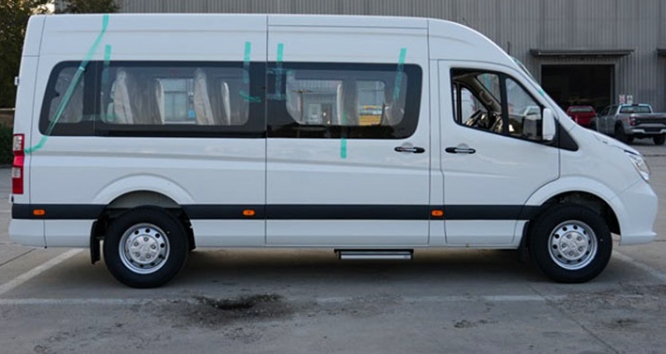
The Toano’s exterior design closely resembled contemporary European commercial vans, especially the Mercedes-Benz Sprinter. The tall roofline, large windshield, short front overhang, and vertical taillights contributed to its modern appearance. Online automotive discussions often compared the van directly to the Sprinter because of the overall body shape and proportions.
Throughout production, the Toano was offered in:
- low-roof,
- medium-roof,
- and high-roof configurations.
Wheelbase options included:
- short-wheelbase,
- medium-wheelbase,
- and long-wheelbase variants.
Dimensions varied significantly depending on configuration, but common versions measured approximately:
- 196–235 inches in length,
- 78 inches in width,
- and up to 110 inches in height.
Exterior updates over the years included:
- revised front grilles,
- LED lighting upgrades,
- redesigned bumpers,
- and updated wheel designs.
Higher-end trims added:
- chrome trim,
- fog lights,
- parking sensors,
- and alloy wheels.
Engines and Powertrains
The Toano lineup offered a wide variety of gasoline, diesel, and electric powertrains depending on market and intended use.
Diesel Engines
Diesel engines became the most common powerplants for the Toano.
Available diesel engines throughout production included:
- 2.5-liter turbo-diesel
- 2.8-liter Cummins turbo-diesel
- 2.0-liter diesel engines in later markets
One of the best-known engines was the:
- 2.8-liter Cummins ISF turbo-diesel,
- producing approximately 150 horsepower and 266 lb-ft of torque.
Diesel engines were valued for:
- strong low-end torque,
- durability,
- towing ability,
- and long-distance efficiency.
Gasoline Engines
Gasoline-powered versions were also available in some markets, particularly for passenger transport and lighter commercial applications.
Common gasoline options included:
- 2.0-liter turbocharged gasoline engines,
- and naturally aspirated four-cylinder units.
Electric Variants
As commercial EV demand increased, Foton introduced electric versions of the Toano.
The electric Toano lineup included:
- battery-electric cargo vans,
- passenger shuttle EVs,
- and logistics-focused delivery variants.
Electric versions targeted:
- urban delivery fleets,
- low-emissions zones,
- and government transportation programs.
Transmission Options
Throughout production, transmission choices included:
- 5-speed manual,
- 6-speed manual,
- 6-speed automatic,
- and automated manual transmissions depending on trim and market.
Rear-wheel drive remained standard across most configurations due to the van’s heavy commercial focus.
Trim Levels and Configurations
One of the Toano’s biggest strengths was its enormous variety of body styles and trim levels.
Early 2015–2017 Models
Initial configurations included:
- Cargo Van
- Passenger Van
- Business Van
- School Shuttle
- Ambulance
- Refrigerated Cargo Variant
Passenger capacity varied from:
- 2-seat cargo configurations,
- up to 17-seat passenger layouts.
Cargo Van
The Cargo Van became the most widely sold version.
Features included:
- large rear cargo area,
- dual rear doors,
- sliding side doors,
- reinforced suspension,
- and simplified interiors for commercial durability.
Cargo variants became especially popular among:
- delivery companies,
- logistics operators,
- and tradespeople.
Passenger Van
Passenger-oriented versions focused on:
- tourism transportation,
- airport shuttles,
- and employee transportation.
These trims added:
- rear air conditioning,
- upgraded seating,
- power windows,
- and multimedia systems.
Business Van
The Business Van trim targeted executive transportation markets.
Features often included:
- leather seating,
- conference-style seating layouts,
- premium sound systems,
- ambient lighting,
- larger infotainment displays,
- and luxury interior trim.
Ambulance and Specialty Conversions
The Toano platform also became widely used for:
- ambulances,
- police vehicles,
- mobile workshops,
- and camper conversions.
Its tall roof and spacious interior made it highly adaptable for specialty industries.
Interior Evolution
Early Toano interiors were relatively basic and commercial-focused. Over time, Foton significantly improved cabin quality and technology.
Features added throughout production included:
- touchscreen infotainment systems,
- Bluetooth connectivity,
- reversing cameras,
- navigation systems,
- digital instrument displays,
- USB charging ports,
- automatic climate control,
- and improved dashboard materials.
Higher trims introduced:
- leather upholstery,
- multifunction steering wheels,
- advanced multimedia systems,
- and upgraded insulation for quieter cabins.
The van’s interior flexibility remained one of its strongest selling points.
Safety and Technology
As export regulations became stricter, Foton continuously improved the Toano’s safety equipment.
Features introduced throughout production included:
- ABS braking,
- electronic stability control,
- traction control,
- hill-start assist,
- lane departure warning,
- rear parking sensors,
- reversing cameras,
- tire-pressure monitoring,
- and autonomous emergency braking in some newer variants.
The use of Bosch safety electronics helped improve the van’s acceptance in export markets.
Global Market Expansion
The Toano became one of Foton’s most internationally successful vans.
The model was exported to:
- South America,
- Eastern Europe,
- Southeast Asia,
- the Middle East,
- and Africa.
In many developing markets, the Toano gained popularity because it offered:
- modern styling,
- large cargo capacity,
- and advanced features
at a lower price than European commercial vans.
Fleet operators particularly appreciated the van’s affordability and mechanical simplicity.
Market Reception and Reliability
The Toano received mixed but steadily improving reviews over time.
Owners and reviewers often praised:
- spacious interiors,
- strong diesel torque,
- low operating costs,
- and flexible configurations.
Online automotive communities frequently described the Toano as a budget-friendly alternative to the Mercedes-Benz Sprinter. Some discussions criticized the van’s styling similarities, while others acknowledged that Chinese commercial vehicle quality had improved considerably during the 2020s.
As Foton expanded internationally, improvements in:
- assembly quality,
- drivetrain reliability,
- and parts support
helped strengthen the Toano’s reputation.
Future Outlook
The future of the Foton Toano appears relatively strong as commercial transportation continues evolving.
Potential future developments may include:
- expanded electric van variants,
- plug-in hybrid models,
- autonomous fleet technologies,
- upgraded infotainment systems,
- and improved driver-assistance systems.
Foton has already demonstrated strong interest in electrified commercial transportation, making electric Toano variants increasingly important for the company’s future.
The Toano represents a major step in the globalization of Chinese commercial vehicles. While early Chinese vans were often viewed as inexpensive alternatives to Japanese and European products, vehicles like the Toano showed how rapidly Chinese manufacturers improved in:
- engineering,
- technology,
- safety,
- and export competitiveness.
Although it still competes against more established commercial vans globally, the Foton Toano has secured a lasting role as one of China’s most recognizable modern commercial vehicle platforms.