The Evolution of the Haval H2: A Comprehensive History of Great Wall’s Compact SUV
The Haval H2 represents an important chapter in the global rise of Chinese automaker Great Wall Motor. Introduced during a period of rapid expansion for the brand, the H2 was designed to compete in the fast-growing subcompact crossover SUV segment. Produced primarily between 2014 and 2021, the model evolved through styling updates, market-specific trims, and branding strategies rather than full generational redesigns. This article explores the full lifecycle of the Haval H2, including production years, trim levels, global variations, and its broader significance.
Origins and Development (Pre-2014 Context)
Before the H2’s debut, Great Wall Motor had already established its Haval sub-brand as a dedicated SUV lineup. Models like the Haval H6 achieved strong domestic sales, encouraging the company to expand into smaller and more affordable segments.
The H2 was conceived as a subcompact SUV aimed at urban buyers seeking style, affordability, and practicality. Its development aligned with increasing global demand for compact crossovers in the early 2010s.
.

.
Initial Launch and Early Production (2014–2016)
The Haval H2 officially debuted at the Beijing Auto Show in 2014, entering production shortly thereafter.
Production Years (Early Phase)
- 2014–2021: H2 Red Label (primary version)
- 2015 onward: Wider international rollout
Core Specifications
- Engine: 1.5-liter turbocharged inline-4
- Power: ~150 horsepower
- Transmission: 6-speed manual, 6-speed automatic, later 7-speed dual-clutch
- Layout: Front-wheel drive or optional all-wheel drive
The early H2 established itself as a value-oriented SUV with relatively upscale styling compared to competitors in its price range.
Early Trim Structure (China)
Initially, the H2 did not use Western-style trim names consistently, but instead offered multiple configuration levels based on equipment packages. These typically included:
- Base (entry-level equipment)
- Mid-level variants with infotainment and comfort upgrades
- High-spec trims with leather interiors, advanced safety, and larger wheels
Global Expansion and Market-Specific Trims (2015–2019)
Following its domestic success, the H2 was exported to several international markets, including Russia, Malaysia, Iran, and later Europe.
Malaysia (2016 Launch)
One of the clearest trim structures appeared in Malaysia:
- Standard
- Comfort
- Premium
Key differences included:
- Manual vs. automatic transmission availability
- Interior materials (cloth vs. leather)
- Technology features such as touchscreen infotainment and parking sensors
Initially imported (CBU), locally assembled (CKD) versions followed, focusing on the Comfort and Premium trims.
Russia and Other Markets
In Russia (from 2015), the H2 struggled to gain traction, selling relatively modest numbers.
In Iran, it was assembled locally through partnerships, reflecting Great Wall’s global ambitions.
European Entry (2019)
The H2 entered Italy in 2019 with:
- 1.5L or 1.6L turbo engines
- Optional LPG (bi-fuel) variants to meet emissions regulations
Introduction of Red Label and Blue Label Strategy (2016–2021)
One of the most distinctive phases in the H2’s evolution was the introduction of dual branding:
Red Label vs. Blue Label
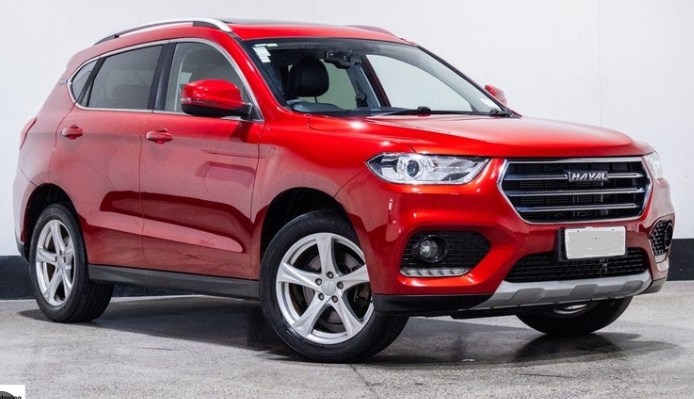
- Red Label (2014–2021):
- More conservative styling
- Traditional grille design
- Targeted at mainstream buyers
- Blue Label (2016–2021):
- Sportier, more aggressive styling
- Youth-oriented design cues
- Slight interior and exterior differences
This strategy allowed Haval to appeal to different demographics without developing entirely separate models.
The Haval H2s Variant (2016 Onward)
In 2016, Haval introduced a sportier derivative:
Haval H2s
- Production: 2016 onward
- Shorter and more compact dimensions
- Same 1.5L turbo engine (approx. 150 hp)
- Available with manual or dual-clutch transmission
The H2s emphasized:
- Sportier styling
- Reduced size for urban driving
- Slightly different interior layout
Though related, the H2s is often considered a separate model rather than a direct trim.
Technical Evolution and Features
While the H2 did not undergo a full generational redesign, it saw incremental updates:
Performance and Powertrain
- Consistent use of a 1.5L turbocharged engine
- Introduction of dual-clutch transmission options in later years
- Availability of all-wheel drive in select configurations
Safety
- Achieved a 5-star safety rating in Australasian testing (ANCAP)
Interior and Technology Updates
Over time, higher trims added:
- Larger infotainment screens
- Improved materials and finishes
- Advanced driver assistance features
Complete List of Known Trims and Variants
Across all markets and years, the Haval H2 was offered in various trims and configurations:
China (Generalized Trim Structure)
- Base / Standard
- Mid-level (often unnamed or package-based)
- High-spec / Luxury variants
- Red Label versions
- Blue Label versions
Malaysia
- Standard
- Comfort
- Premium
Other Markets
- Variants based on:
- Transmission (manual vs. automatic)
- Drivetrain (FWD vs. AWD)
- Engine tuning (1.5T, 1.6T in Europe)
H2s Variant
- 1.5T Manual
- 1.5T Dual-Clutch (DCT)
End of Production (2021)
Production of the Haval H2 ended in 2021, marking the conclusion of its lifecycle.
Successor Models
The H2 was replaced by newer-generation vehicles such as:
- Haval Jolion
- Haval Chitu
These successors featured:
- Modern platforms
- Updated engines and hybrid options
- Significantly improved technology
Market Reception and Impact
The H2 played a crucial role in establishing Haval as a global SUV brand. Its strengths included:
- Competitive pricing
- High feature content for the segment
- Stylish design relative to early Chinese competitors
However, challenges included:
- Brand perception in Western markets
- Limited dealer networks in some regions
- Mixed reliability perceptions in early export markets
Despite these challenges, the H2 helped pave the way for more advanced Haval models.
Future Outlook and Legacy
Although discontinued, the legacy of the H2 is evident in Haval’s current lineup. The model demonstrated that Chinese automakers could:
- Compete globally in the SUV segment
- Offer high-value vehicles with modern styling
- Adapt to different markets through flexible trim strategies
Modern Haval vehicles, such as the Jolion and newer hybrid SUVs, reflect significant improvements in engineering, safety, and refinement—building directly on lessons learned from models like the H2.
The Haval H2’s evolution from 2014 to 2021 illustrates a transitional era for Chinese automotive manufacturing. Rather than undergoing traditional generational redesigns, the H2 evolved through branding innovations, market-specific trims, and incremental improvements.
With its Red Label and Blue Label strategy, diverse global trim offerings, and eventual expansion into sportier derivatives like the H2s, the model served as a flexible and influential product. While no longer in production, the H2 remains a key milestone in the global expansion of Haval and Great Wall Motor, laying the foundation for the brand’s modern success in the competitive SUV market.