The Evolution of the Rising Auto F7: SAIC’s High-Tech Electric Executive Sedan
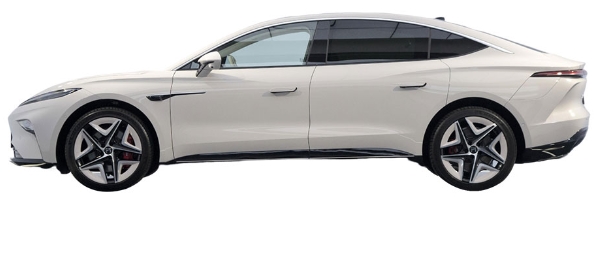
The Rising Auto F7 is a modern electric executive sedan that represents SAIC Motor’s push into the premium EV segment. Positioned as a high-tech, long-range alternative to established electric sedans, the F7 combines advanced digital features, battery innovation, and sleek liftback styling.
Since its launch in 2023, the F7 has undergone notable changes in trim structure, performance offerings, and market positioning. This article explores the full evolution of the Rising Auto F7, including its origins, production years, trim levels, technical development, and future outlook.
Origins and Development
The F7 traces its design roots to the 2020 Roewe R-Aura Concept, developed before the formal establishment of the Rising Auto brand. SAIC Motor launched Rising Auto in 2021 as a premium EV division, aiming to compete with domestic and global electric vehicle leaders.
The production F7 debuted publicly at the 2023 Shanghai Auto Show and officially entered the market in March 2023.
Production Overview
- Production: 2022–present
- Model years: 2023–present
- Assembly: Nanjing, China
- Vehicle class: Executive (E-segment) electric sedan
- Body style: 5-door liftback
The F7 became the second model in the Rising Auto lineup after the R7 SUV, reinforcing the brand’s premium ambitions.
.
THIS is GOOD stuff if your car is in need:

.
First Model Year: 2023 Launch Lineup
The 2023 Rising Auto F7 launched with a wide and complex range of trims, reflecting a strategy focused on flexibility in battery size, performance, and price.
2023 Trim Levels
The initial lineup included numerous variants:
- Metro
- Advance
- Advance Pro
- LR Pro (Long Range Pro)
- Performance Pro
- Modified Advance
- Modified Advance Pro
- Modified LR Pro
- Modified Performance Pro
These trims were offered in both standard and “modified” versions, suggesting slight equipment or configuration differences within the same tier.
Powertrain Options (2023)
The F7 debuted with multiple drivetrain and battery configurations:
Rear-Wheel Drive (RWD):
- 64 kWh LFP battery (~500 km range)
- 77 kWh NMC battery (~576–602 km range)
- Power output: ~216–250 kW (≈294–340 hp)
Dual-Motor All-Wheel Drive (AWD):
- 90 kWh NMC battery
- Power output: up to 400 kW (≈544 hp)
- Range: ~600–666 km
Performance was a key highlight, with AWD models achieving 0–100 km/h in as little as 3.7 seconds.
Technology Highlights
The 2023 F7 emphasized cutting-edge technology:
- 43-inch triple-screen cockpit
- Qualcomm Snapdragon 8155 chip
- Rising OS infotainment system
- Battery swapping capability
- Advanced driver assistance (RISING PILOT)
These features positioned the F7 as one of the most technologically advanced Chinese EV sedans at launch.
Design and Engineering Characteristics
From its debut, the F7 featured a sleek, aerodynamic design with a drag coefficient of approximately 0.206 Cd, enhancing efficiency and range.
Key Dimensions
- Length: 5000 mm
- Wheelbase: 3000 mm
- Width: 1953 mm
- Height: 1494 mm
The liftback configuration offered both executive styling and practical cargo capacity (466 liters).
2024: Consolidation and Refinement
While detailed global trim listings for 2024 are limited, this model year represented a transitional phase. Rising Auto streamlined the lineup and began shifting focus toward efficiency and simplified offerings rather than a wide array of overlapping trims.
Key trends during this period included:
- Reduced complexity in trim naming
- Greater emphasis on battery efficiency
- Continued availability of both RWD and AWD variants
This shift foreshadowed the more significant restructuring seen in 2025.
2025 Facelift and Simplified Lineup
In 2025, the Rising Auto F7 received a major lineup simplification and repositioning.
2025 Trim Levels
- Metro
- Advanced
This marked a dramatic reduction from the numerous trims offered at launch.
2025 Specifications
Metro (Base Model):
- Battery: 62.2 kWh (LFP)
- Range: 520 km (CLTC)
- Power: 150 kW (~201 hp)
- 0–100 km/h: 8.1 seconds
Advanced (Higher Trim):
- Battery: 77 kWh (NMC)
- Range: 640 km (CLTC)
- Power: 180 kW (~241 hp)
- 0–100 km/h: 7.4 seconds
Key Changes in 2025
- Elimination of dual-motor AWD variants
- Focus on rear-wheel-drive efficiency
- Improved energy consumption (~13.8 kWh/100 km)
- Continued support for battery swapping
- Standardization of advanced driver assistance systems
This repositioning made the F7 more accessible while prioritizing range and efficiency over outright performance.
Technology Evolution
Throughout its lifecycle, the F7 has remained a technology-focused vehicle.
Battery and Charging
- Battery types: LFP and NMC lithium-ion
- Capacities: 62.2 kWh to 90 kWh
- Fast charging: 30–80% in ~30 minutes
- Battery swapping capability supported
Autonomous Driving and Software
- RISING PILOT ADAS system
- Mobileye EyeQ4H chips (later models)
- Snapdragon-powered infotainment
Interior Innovation
- Triple-screen dashboard (43 inches total)
- Augmented reality-style displays
- High level of digital integration
These features kept the F7 competitive with rivals from NIO, Tesla, and XPeng.
Brand Changes and Market Impact
A major development affecting the F7 came in 2024 when Rising Auto ceased operating as an independent brand and was reintegrated into Roewe.
Implications
- The F7 continues as part of SAIC’s premium EV lineup
- Branding and marketing strategies shifted
- Greater integration with SAIC’s broader electrification plans
Despite this change, the F7 remains a core product in SAIC’s EV portfolio.
Market Position and Competitors
The Rising Auto F7 competes in the executive electric sedan segment, rivaling:
- Tesla Model 3 / Model S (depending on trim positioning)
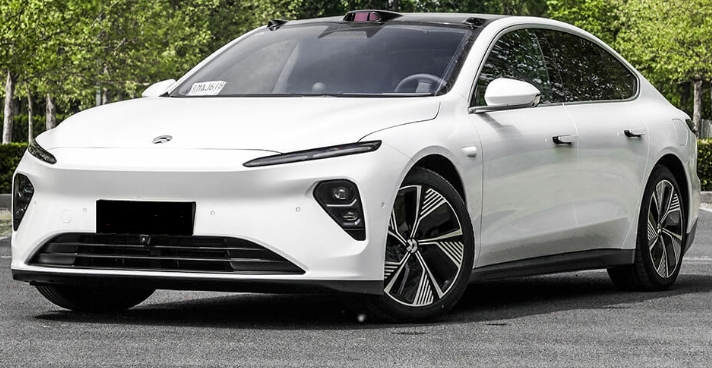
- NIO ET5 / ET7
- XPeng P7
Key Strengths
- Advanced in-cabin technology
- Competitive pricing
- Battery swapping capability
- Long driving range
Criticisms
- Complex initial trim lineup
- Limited global availability
- Removal of high-performance AWD variants in later models
Evolution Summary
2023 (Launch Year)
- Wide range of trims (Metro, Advance, Pro, Performance, LR variants)
- Both RWD and AWD configurations
- Up to 544 hp performance
2024 (Transition Year)
- Gradual simplification of lineup
- Continued focus on technology and efficiency
2025 (Facelift)
- Trim reduction to Metro and Advanced
- Removal of AWD variants
- Increased focus on affordability and efficiency
Future Outlook
The future of the Rising Auto F7 appears stable, though its positioning may continue to evolve.
Expected Developments
- Software and AI improvements
Continued enhancements to autonomous driving and infotainment systems. - Battery innovation
Potential adoption of next-generation batteries with higher energy density. - Global expansion
Possible export under alternative SAIC brands such as MG. - Potential performance return
Reintroduction of higher-performance variants if market demand increases.
The Rising Auto F7 has evolved rapidly since its introduction in 2023, transitioning from a highly complex, performance-oriented lineup to a more streamlined and efficiency-focused executive sedan.
Its journey reflects broader trends in the EV industry: rapid technological advancement, experimentation with trim diversity, and eventual simplification to meet market demand. Despite brand restructuring and lineup changes, the F7 remains a technologically advanced and competitive offering in the electric sedan segment.
As SAIC continues to refine its EV strategy, the F7 stands as a key model demonstrating the company’s ability to blend innovation, performance, and practicality in a modern electric vehicle.