The Infiniti M30: A Transitional Gem in Infiniti’s M-Series Lineage
When Japanese luxury automaker Infiniti unveiled the M30 in 2000, it marked a pivotal moment in the brand’s evolution. The M30, a mid-size luxury sedan produced from 2001 to 2003, served as a bridge between the M20 and the iconic M35. Though brief in its production run, the M30 introduced key technologies and design philosophies that would define Infiniti’s future. This article delves into the history, specifications, trim levels, and legacy of the Infiniti M30, offering a comprehensive look at its place in automotive history.
Production Timeline and Models
The Infiniti M30 was produced from 2001 to 2003, succeeding the M20 and preceding the M35. It was marketed in North America, Europe, and select Asian markets as a premium alternative to competitors like the Mercedes-Benz E-Class and BMW 5 Series. The M30 was based on the third-generation Nissan Maxima chassis (2000-2003), but Infiniti elevated it with enhanced engineering, luxury features, and a unique all-wheel-drive (AWD) system.
During its three-year production span, the M30 was offered in two primary models:
- Infiniti M30 (Base Model)
- Infiniti M30 SE (Sport Edition)
- Infiniti M30 4WD (All-Wheel Drive Variant)
The base M30 and SE trimmed models were available in both rear-wheel drive (RWD) and 4WD configurations during 2001 and 2002, while the 4WD option was phased out for 2003. This aligns with the launch of the M35 in 2004, which replaced the M-series’ 3.0L V6 engine with a 3.5L V6 and became the brand’s flagship luxury sedan.
.
NO MORE dead batteries with this:

.
Trim Levels and Features
1. Infiniti M30 Base Model
The base M30 was equipped with standard luxury features for its time, including:
- 3.0L V6 engine producing 200 horsepower and 197 lb-ft of torque.
- Power-adjustable 8-way front driver’s seat with 4-way passenger seat.
- Dual zone automatic climate control.
- 15-inch aluminum alloy wheels.
- Six-way power steering with tilt and telescopic adjustment.
- Cruise control, CD audio system with MP3 compatibility (2002–2003), and dual front airbags.
The base model also featured Infiniti’s Drive-by-Wire throttle, an advanced electronic system for smoother acceleration. While it lacked some of the RWD’s sportier handling, it prioritized comfort and a quiet ride.
2. Infiniti M30 SE
The Sport Edition (SE) trim added a more performance-oriented flair, appealing to those seeking sporty aesthetics without compromising luxury. Key features included:
- 16-inch alloy wheels with performance tires.
- Sport-tuned suspension for sharper cornering.
- Leather-trimmed seats with heating.
- Power-adjustable front passenger seat with 4-way memory.
- Sunroof.
- Upgraded 6-speaker audio system with AM/FM and CD.
The SE trim was particularly notable for its option to pair the 3.0L V6 with Infiniti’s Super All-Wheel Control (AWC) system. This four-wheel drive feature used computer-controlled torque distribution to the rear wheels, enhancing traction without sacrificing fuel efficiency. The AWC system was a hallmark of Infiniti’s innovation in the 2000s.
3. Infiniti M30 4WD
While the SE trim was the primary 4WD option, a standalone M30 4WD model was available for 2001. This version stripped out some of the SE’s sporty features to lower costs but retained the AWC system. It was less popular than the SE, partly due to its lack of leather seating and sunroof.
In 2003, the 4WD option was entirely phased out, with all models reverting to RWD. This shift coincided with the introduction of the M35, which offered a more powerful 3.5L V6 engine and a new platform, signaling the M30’s retirement.
Design and Mechanical Innovations
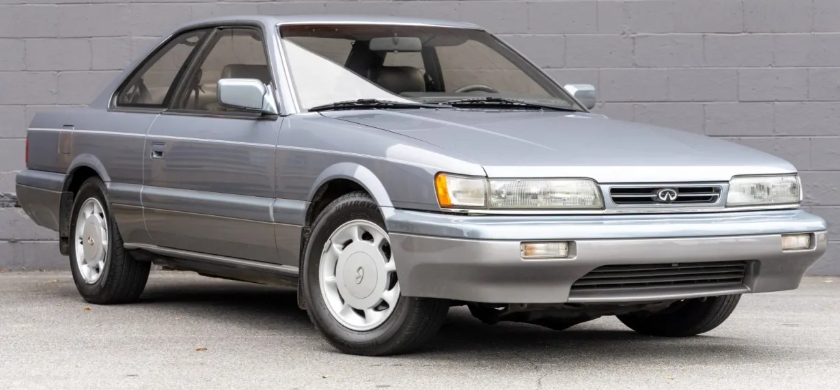
The M30 retained the 4-door sedan body style introduced with the M20 but refined its proportions with a longer wheelbase (112.2 inches) and a lower roofline. Externally, it featured a bold front grille with the iconic Infiniti shield emblem, LED taillights, and a sporty silhouette that balanced elegance and agility.
Under the hood, the 3.0L V6 engine was mated to a 5-speed automatic transmission, producing 200 horsepower. While modest by modern standards, it offered smooth power delivery and fuel efficiency, averaging 24 mpg on the highway. The engine was praised for its reliability, though some critics noted it paled in comparison to the M35’s 3.5L V6, which delivered 260 horsepower.
The Super All-Wheel Control system was the M30’s standout feature during the 2001–2002 production years. Unlike traditional AWD systems, Infiniti’s AWC used electromagnetic actuators to send up to 50% of engine torque to the rear wheels, improving traction in adverse weather while maintaining a sporty RWD character. This technology earned accolades from automotive journalists and became a precursor to Infiniti’s later AWD systems in models like the Q50 and QX50.
History and Legacy
The M30’s brief production run (2001–2003) was a strategic move by Infiniti to transition its M-series toward a more modern, globally competitive platform. Launched in 1982, the M-series had evolved through various iterations:
- M100 (1982–1985): The first Infiniti luxury sedan.
- M20 (1985–2000): A longer, more refined executive sedan.
- M30 (2001–2003): A mid-size, sport-oriented sedan bridging the gap to the M35.
- M35 (2004–2015): The pinnacle of the M-series, with a 3.5L V6 and continued AWC availability.
The M30’s key contribution was validating Infiniti’s AWC technology and preparing the M-series for its shift to larger engines. The M35, which succeeded it, became a runaway success in North America, dominating the luxury mid-size sedan segment for over a decade. The M30’s design language also influenced Infiniti’s 2000s models, such as the Q45 and QX4.
Critics at the time praised the M30 for its refined driving experience, competitive pricing, and innovative AWD system. However, its 3.0L engine and dated 1990s Maxima-based platform drew comparisons to more advanced competitors like the Audi A6 and Cadillac Seville. Despite this, the M30 carved out a niche for itself, particularly in markets valuing AWD capabilities.
Future Outlook and the Evolution of the M-Series
With the M35’s introduction in 2004, the M-series entered a new era. The M35 and later M35h hybrid models offered enhanced performance, updated interiors, and hybrid technology. The M45, introduced in 2006, brought a 4.5L V8 engine, catering to North American buyers. These models extended the M-series’ legacy until its discontinuation in 2015, when Infiniti shifted focus to SUVs and the Q50 as its flagship sedan.
The M30’s influence can be seen in the Infiniti Q50, which debuted in 2013 and adopted technologies like direct injection V6 engines, magnetic ride control, and a premium interior. Though different in size and scope, the Q50’s emphasis on driver engagement and luxury reflects principles pioneered by the M30.
While the M30 itself faded into obscurity, it remains a symbol of Infiniti’s adaptability. Its AWC system, once a novelty, is now standard in many modern Infiniti models. Additionally, the M30’s role in transitioning Infiniti from niche luxury to a more globally competitive brand cannot be overstated.
Relevance and Collector Interest
Today, the Infiniti M30 is not as widely recognized as the M35 or M45, but it holds appeal for collectors and enthusiasts of rare Japanese luxury cars. Its Super AWC system is particularly sought after, as it is a precursor to the advanced all-wheel drive systems found in later Infiniti models. Surviving examples in good condition are rare, with many driven into the ground due to their used car sales popularity.
For those seeking a vintage Infiniti with a twist of sportiness and innovation, the M30 is a fascinating acquisition. Its combination of AWD capability, V6 power, and early 2000s luxury features makes it a unique artifact in automotive history.
The Infiniti M30, though a brief chapter in the brand’s story, played an essential role in shaping the future of Infiniti’s M-series. As a transitional model, it introduced technologies like the Super AWC system, refined the M-series’ design DNA, and set the stage for the M35’s success. While it lacks the name recognition of its successors, the M30 endures as a testament to Infiniti’s commitment to innovation and luxury. For automotive historians and collectors, it is a hidden gem worth rediscovering—a bridge between the M20’s classic charm and the M35’s modern excellence.
In the ever-evolving world of luxury sedans, the M30 serves as a reminder that even short-lived models can leave a lasting legacy.