History of The Talbot Matra Murena: A Unique Sports Car of the Early 1980s
The Talbot Matra Murena is a relatively little-known French sports car that was produced between 1980 and 1983. It stood out for its distinctive styling, innovative engineering, and unusual approach to corrosion protection at a time when rust was the bane of many vehicles. The Murena was the final sports car collaboration between the French engineering company Matra and the Talbot brand (then under the ownership of PSA Peugeot-Citroën). Today, it is appreciated by enthusiasts as both a technical curiosity and a rare survivor of a short-lived but ambitious automotive venture.
This article explores the Murena’s origins, design, production history, model range, and its lasting legacy.
Historical Background
Matra’s Sports Car Lineage
Matra (Mécanique Aviation Traction) was a French engineering and manufacturing company that had earned a reputation in aerospace and motorsport before venturing into road cars during the 1960s. Matra’s previous sports car, the Matra-Simca Bagheera (1973–1980), was a mid-engined, three-seat sports coupe that offered distinctive styling and practicality. However, the Bagheera suffered from a major flaw—its steel body shells were prone to severe rust, often leading to structural damage.
When the time came to replace the Bagheera, Matra set out to solve this issue while refining the formula of a practical, mid-engined sports car. The result was the Talbot Matra Murena.
Development and Launch
The Murena was introduced to the public in late 1980 for the 1981 model year. It was built at Matra’s production facility in Romorantin-Lanthenay, France. By this time, the Matra brand had been integrated into the Talbot marque, following Chrysler Europe’s sale to PSA Peugeot-Citroën in 1978. As a result, the Murena was badged as a Talbot Matra rather than a Simca Matra.
The car retained some of the Bagheera’s unique traits—most notably the three-abreast seating arrangement—but introduced a range of significant improvements.
.

.
Design and Engineering
Corrosion Resistance
Perhaps the Murena’s most groundbreaking feature was its fully galvanized steel chassis combined with fiberglass-reinforced polyester body panels. Matra was one of the first manufacturers to galvanize an entire chassis, and this move virtually eliminated the rust problems that plagued the Bagheera. The body panels were mounted to the zinc-coated steel structure, ensuring both lightness and durability.
Aerodynamics and Styling
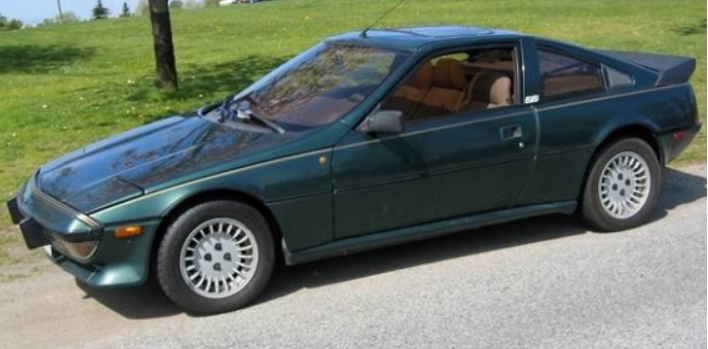
The Murena’s sleek, wedge-shaped body was designed with aerodynamics in mind. Its pop-up headlights, low nose, and flowing lines reflected the sports car styling trends of the late 1970s and early 1980s. The drag coefficient was around 0.328, which was competitive for the era and contributed to performance and fuel economy.
Mid-Engine Layout
Like the Bagheera, the Murena featured a mid-engine, rear-wheel-drive layout. The engine was mounted transversely behind the passenger compartment, providing balanced weight distribution and good handling characteristics.
Models and Trim Levels
The Talbot Matra Murena was available in three main versions over its short life span, each defined by its engine size and performance characteristics.
- Murena 1.6
- Engine: 1.6-liter, 4-cylinder, overhead-valve engine (Type Poissy engine) producing around 92 hp.
- Transmission: 5-speed manual.
- Performance: Top speed approximately 180 km/h (112 mph).
- Market Position: Entry-level model intended to be affordable while still offering sports car styling and handling.
- Trim/Equipment: Basic specification with fewer luxury features than the larger-engined versions. Steel wheels were standard.
- Murena 2.2
- Engine: 2.2-liter, 4-cylinder, overhead-cam engine derived from the Chrysler/Simca Type 180 unit, producing 118 hp.
- Performance: Top speed around 200 km/h (124 mph).
- Features: Higher equipment levels than the 1.6, alloy wheels, and more refined interior trim.
- Purpose: Catered to drivers seeking greater performance and refinement.
- Murena 2.2 S (also known as Murena 2.2 “Préparation 142 ch”)
- Introduced: 1983.
- Engine: Tuned version of the 2.2-liter producing 142 hp, thanks to revised camshaft, carburetor, and exhaust.
- Performance: 0–100 km/h in under 9 seconds, top speed approximately 210 km/h (130 mph).
- Market Position: The most performance-oriented Murena, aimed at enthusiasts.
- Visual Differences: Often featured distinctive striping or badging to denote the higher performance specification.
Interior and Practicality
One of the Murena’s most unusual features was its three-seat layout, with all seats positioned side-by-side in a single row. This arrangement placed the driver slightly forward compared to the outer passenger seats, improving visibility and ergonomics. The central seat could be folded down to act as an armrest when not in use.
The cabin finish varied depending on trim level, but generally included cloth or velour upholstery, a simple but functional dashboard, and adequate instrumentation for a sports car of the era. While not luxurious by modern standards, the Murena was comfortable for long journeys and offered more practicality than many contemporary two-seat sports cars.
Performance and Driving Experience
The Murena’s mid-engine configuration and relatively light weight (around 980–1,050 kg depending on version) gave it nimble handling. The suspension setup consisted of MacPherson struts at the front and trailing arms at the rear, tuned for a balance between agility and ride comfort.
While the 1.6-liter model was not particularly fast, it offered a lively driving experience thanks to good chassis balance. The 2.2-liter versions provided stronger acceleration and better high-speed cruising ability, making them more suitable for long-distance touring.
Production Numbers and Demise
Production of the Talbot Matra Murena lasted from 1980 to 1983, with a total of 10,680 units built:
- Approximately 5,640 of the 1.6-liter version.
- Around 4,560 of the 2.2-liter version (including the 2.2 S).
The Murena’s short production run was partly due to shifting corporate priorities. By the early 1980s, PSA Peugeot-Citroën was focusing on core models and was reluctant to invest in niche sports cars that competed with vehicles from other PSA brands. Additionally, the sports car market was shrinking due to rising fuel prices, insurance costs, and changing consumer tastes.
Matra ended its sports car program after the Murena and shifted to producing the Matra Renault Espace (1984), effectively pioneering the European MPV segment.
Legacy and Collectability
Today, the Talbot Matra Murena is remembered as a forward-thinking sports car that was ahead of its time in terms of corrosion protection and packaging. Enthusiasts appreciate its rarity, its distinctive three-seat layout, and the fact that its galvanized chassis means many have survived in good condition compared to other cars of the period.
Collectors value the 2.2 S model highest due to its rarity and performance, but all versions are considered desirable among fans of unusual French cars. Spare parts availability can be challenging, particularly for body panels and trim, but a dedicated network of owners’ clubs and specialists keeps the Murena on the road.
Future Outlook
The Murena’s appeal is likely to grow among collectors of classic European sports cars, particularly those seeking something different from the more common models of the era. Its combination of rarity, technical innovation, and distinctive styling ensures that it will remain a conversation piece at classic car events.
As environmental and governmental regulations in some countries limit the use of older internal combustion vehicles, the Murena’s role will increasingly be as a cherished collector’s item rather than a daily driver. However, its corrosion resistance gives it an advantage over many contemporaries when it comes to long-term preservation.
Conclusion
The Talbot Matra Murena stands as a fascinating chapter in French automotive history. Produced from 1980 to 1983 in 1.6, 2.2, and high-performance 2.2 S versions, it brought together innovative engineering, distinctive design, and surprising practicality. Although it wasn’t a commercial success in its time, the Murena remains an enduring symbol of Matra’s inventive spirit and willingness to defy convention.
For those fortunate enough to encounter one today, the Murena offers a glimpse into a period when small manufacturers could experiment boldly, creating sports cars that were as practical as they were stylish—a philosophy that, in the Murena’s case, still turns heads over 40 years later.