The Riich M1: The Evolution of Chery’s Early Urban Hatchback and Its Lasting Influence
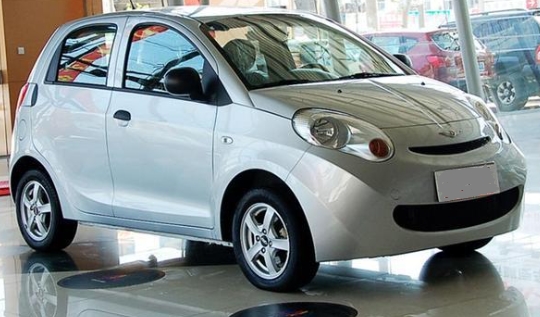
The Riich M1 stands as one of the most important early models in Chery Automobile’s attempt to move upmarket through its short-lived Riich division. Introduced at the end of the 2000s, the M1 was designed as a modern, city-focused hatchback that combined compact dimensions with relatively advanced features for its class.
Although its production run was relatively brief, the Riich M1 played a central role in shaping Chery’s later strategies, particularly in platform sharing, electrification, and global exports. This article explores the full evolution of the Riich M1, including its production timeline, trim levels, technical specifications, and long-term legacy.
Origins of the Riich Brand and Concept Development (2008–2009)
The Riich M1 originated as a concept vehicle known as the Chery Faira, first shown at the Beijing Auto Show in 2008.
This concept was part of a broader vision to create a family of small urban vehicles, including hatchbacks, sedans, and crossovers. The production version of the M1 became the first model launched under the Riich brand, which debuted in March 2009 as Chery’s attempt to establish a more premium identity.
The M1’s role was clear from the beginning:
- Serve as the entry-level model in the Riich lineup
- Showcase improved design and quality over standard Chery vehicles
- Form the basis for multiple derivatives, including the M5 sedan and X1 crossover
Production Timeline and Overview
First and Only Generation (2009–2014)
- Years produced: 2009–2014
- Class: City car / subcompact hatchback
- Body style: Five-door hatchback
- Platform: Shared with derivatives such as the Riich M5 and X1
The Riich M1 remained a single-generation model throughout its lifecycle, receiving only minor updates rather than a full redesign.
Production began in spring 2009 and continued until 2014, when both the model and the Riich brand were discontinued due to weak sales performance.
.

.
Design and Engineering Evolution
Exterior Design
The Riich M1 featured a distinctive and somewhat unconventional design for its segment:
- Tall, upright proportions
- Short overall length (approximately 142 inches / 3600 mm)
- Hidden rear door handles integrated into the C-pillars
- Rounded front fascia with compact headlights
This design gave the M1 a unique identity, blending elements of hatchbacks and microcars.
Interior Layout
Inside, the M1 emphasized simplicity and space efficiency:
- Central instrument cluster (a design trend at the time)
- Compact dashboard layout
- Seating for five passengers
While materials were basic, the interior was intended to feel more modern than typical entry-level vehicles in China at the time.
Powertrain and Mechanical Development
The Riich M1 was offered with a limited but practical range of gasoline engines from Chery’s Acteco family.
Engine Options
1. 1.0-Liter Inline-4
- Output: ~68 horsepower (50 kW)
- Focused on fuel efficiency and affordability
2. 1.3-Liter Inline-4
- Output: ~83–84 horsepower (62–63 kW)
- Improved performance for urban and highway driving
Transmission Options
- 5-speed manual transmission (standard)
- Automated manual transmission (AMT) (optional in higher trims)
Chassis and Layout
- Front-engine, front-wheel drive
- MacPherson strut front suspension
- Rear torsion beam axle
- Front disc and rear drum brakes
This setup prioritized low cost and reliability over performance.
Models and Trim Levels (2009–2014)
The Riich M1 followed a straightforward trim structure, with variations primarily based on engine size and equipment level.
Early Trim Levels (2009–2011)
At launch, the M1 was offered in several configurations:
1. Base Trim (1.0L)
- 1.0-liter engine
- Manual transmission
- Basic interior features
- Minimal safety equipment
This version targeted budget-conscious buyers and first-time car owners.
2. Standard Trim (1.3L)
- More powerful 1.3-liter engine
- Additional comfort features
- Improved interior materials
3. Comfort / Luxury Trim
- Optional automated manual transmission
- Power windows and upgraded audio system
- Enhanced interior trim
These trims provided a more premium experience in line with the Riich brand’s positioning.
Mid-Cycle Updates (2011–2013)
During its production run, the M1 received minor updates:
- Improved interior finishes
- Slight feature upgrades
- Expanded availability of safety features such as ABS and airbags
However, there was no major facelift or second-generation model introduced.
Late Production Phase (2013–2014)
Following the discontinuation of the Riich brand in 2013, the M1 continued under Chery branding in some markets:
- Renamed as the Chery M1
- Continued production until 2014
This phase marked the final chapter of the model’s lifecycle.
Derivatives and Platform Expansion
One of the most important aspects of the Riich M1’s evolution was its role as a platform for multiple vehicles.
Key Derivatives
- Riich M5: A notchback sedan version with extended rear section
- Riich X1: A crossover variant with raised suspension and rugged styling
- Electric variants: Early EV versions based on the M1 platform
The platform’s flexibility allowed Chery to create an entire lineup with minimal development costs.
Electric Variant and Early Electrification
The Riich M1 was also notable for spawning one of Chery’s earliest electric vehicles:
- Riich M1 EV
- Early adoption of battery-electric technology
This made the M1 platform an important stepping stone in Chery’s transition toward electrification.
Market Position and Competition
The Riich M1 competed in the city car segment, targeting urban drivers seeking affordability and practicality.
Strengths
- Compact size ideal for crowded cities
- Affordable pricing
- Versatile platform with multiple derivatives
Weaknesses
- Limited performance
- Basic interior quality
- Weak brand recognition
Challenges and Decline
Despite its innovative approach, the Riich M1 faced several challenges:
Brand Identity Issues
The Riich brand struggled to differentiate itself from Chery’s mainstream lineup, limiting its appeal.
Intense Competition
The subcompact segment was highly competitive, with both domestic and international players offering similar or better-equipped vehicles.
Perception of Quality
Although positioned as a premium offering, Riich vehicles were still associated with Chery’s budget image.
Discontinuation and End of Production (2014)
The Riich brand was officially discontinued in 2013, and production of the M1 ended in 2014.
This marked the end of Chery’s first attempt at creating a premium sub-brand.
Post-Production and Legacy
Although the Riich M1 itself is no longer produced, its legacy continues in several ways:
International Rebadging
- Sold as the DR1 in Italy
- Marketed as the Chery M1 in export markets
Electric Vehicle Development
- Platform used for later EV models such as the Hawtai S1 iEV360
- Demonstrated early commitment to electrification
Evolution Summary
The evolution of the Riich M1 can be summarized as follows:
2008
- Concept debut as Chery Faira
2009
- Launch of production model
- Introduction of initial trims and engine options
2010–2011
- Expansion of trim levels
- Introduction of derivatives (M5, X1)
2012–2013
- Decline in sales
- Announcement of Riich brand discontinuation
2014
- Final production year
- Transition to Chery branding
Significance in Automotive History
The Riich M1 holds an important place in automotive history for several reasons:
Early Platform Strategy
It demonstrated how a single platform could support multiple vehicle types.
Entry into Electrification
It was among Chery’s first vehicles to spawn an electric variant.
Branding Experiment
The M1 was central to Chery’s early attempt at building a premium sub-brand.
Future Outlook and Influence
While the Riich M1 itself has no direct successor, its influence can be seen in modern vehicles:
Improved Branding Strategies
Chery has since launched more successful global brands with clearer positioning.
Growth of Compact Cars
The city car segment continues to evolve, with greater emphasis on technology and efficiency.
Electrification Trends
The M1’s early EV variant foreshadowed the industry’s shift toward electric mobility.
The Riich M1 represents a pivotal moment in the evolution of China’s automotive industry. Produced from 2009 to 2014, it served as the foundation for an entire family of vehicles and an early attempt by Chery to move upmarket.
Key highlights of its evolution include:
- A single-generation lifecycle with gradual updates
- A simple trim structure based on engine size and equipment
- A versatile platform supporting multiple derivatives
- A short production run, ending with the discontinuation of the Riich brand
Although it ultimately fell short in the marketplace, the Riich M1 played a crucial role in shaping Chery’s future direction. Today, it stands as an example of early ambition, experimentation, and the growing pains of an industry that would soon become a global force.