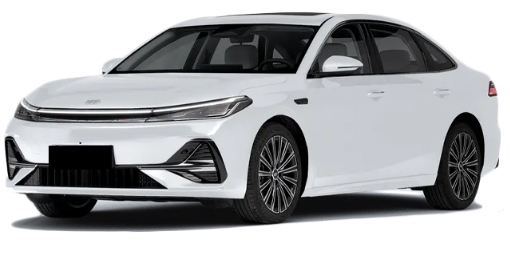
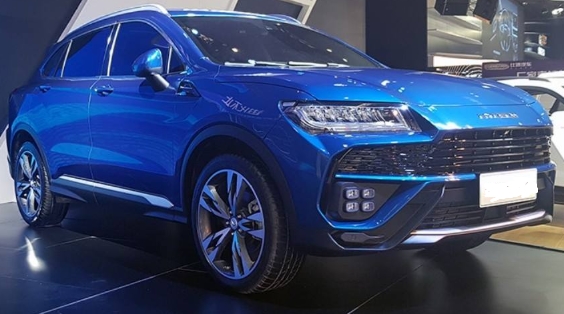
The Evolution of the Geely Galaxy A7: A Flagship Hybrid Sedan Redefining Long-Range Efficiency
The Geely Galaxy A7 is one of the newest and most technologically advanced models in Geely Auto’s Galaxy sub-brand lineup. Introduced in 2025, the A7 represents the company’s push into the mid-size plug-in hybrid sedan segment with an emphasis on ultra-high efficiency, long driving range, and advanced artificial intelligence-assisted driving systems. Despite being very new, the Galaxy A7 has already undergone rapid development, including the introduction of both plug-in hybrid and fully electric versions within its first year of production.
This article explores the evolution of the Galaxy A7, including its production timeline, trim levels, technical specifications, and future outlook.
Origins and Development (2024–2025)
The Galaxy A7 was developed as part of Geely’s broader Galaxy electrification strategy, which focuses on plug-in hybrid (PHEV) and electric vehicles built on new-generation architectures such as the GEA (Global Intelligent New Energy Architecture). The A7 was designed to sit in the mid-size sedan segment, targeting competitors like BYD’s hybrid sedans and other global mainstream family cars.
Unlike earlier Galaxy models that prioritized SUVs (such as the L7 and E5), the A7 marked a return to the sedan format, reflecting strong demand for efficient long-range family vehicles in China and export markets.
The vehicle is closely related to other Galaxy models, sharing technology with:
- Galaxy Starshine series sedans
- Galaxy hybrid SUV lineup
- EM-i hybrid system vehicles
Launch and Production Start (2025)
Production Years
- 2025–present (2026)
The Galaxy A7 officially entered production in mid-2025, with pre-sales beginning in July 2025 and full market launch shortly after in August 2025.
Market Position
- Segment: Mid-size sedan
- Body style: Four-door sedan
- Seating: Five passengers
The A7 was positioned as a high-efficiency plug-in hybrid sedan with optional battery-electric variants, designed for both private buyers and fleet usage.
.

.
2025 Model Year: Initial Launch Configuration
At launch, the Galaxy A7 introduced a relatively complex trim structure, offering multiple battery sizes and equipment levels from the beginning.
2025 Trim Levels
The initial lineup included seven trim variants, typically grouped by electric range:
- 70 km Deluxe
- 70 km Launch Edition
- 70 km Explorer
- 150 km Premium
- 150 km Range Edition
- 150 km Explore Plus
- 150 km Starship Edition
Powertrain (2025)
The Galaxy A7 uses Geely’s EM-i (NordThor AI Hybrid 2.0) system, a highly efficient plug-in hybrid setup.
Key components:
- 1.5-liter naturally aspirated gasoline engine
- Electric traction motor
- Dedicated hybrid transmission system
Performance
- Combined output: approximately 230–240 horsepower (FWD system)
- Electric motor output: up to 238 horsepower equivalent
- Fuel consumption (battery depleted): about 2.5–2.7 L/100 km
- Combined driving range: over 1,300 miles (2,100 km)
This extreme range is one of the A7’s defining characteristics.
Battery Options (2025)
The A7 launched with two main plug-in hybrid battery sizes:
Small Battery Pack
- Capacity: 8.5 kWh
- Electric range: ~34–37 miles (about 55–60 km CLTC)
Large Battery Pack
- Capacity: 18.4 kWh to 18.99 kWh
- Electric range: ~75 miles (about 120 km CLTC)
2025 Trim Evolution and Market Simplification
Although the A7 launched with seven trims, Geely quickly refined the lineup based on market demand. The structure was simplified into clearer tiers:
Refined Trim Categories (Late 2025)
- Base 70 km models (entry efficiency trims)
- Mid 150 km models (balanced range and features)
- Starship Edition (flagship luxury trim)
This simplification helped streamline production and improve delivery speed.
Production Performance and Market Reception (2025–2026)
The Galaxy A7 quickly became one of Geely’s fastest-selling hybrid sedans.
- 10,000 units delivered within 14 days of launch
- Over 70,000 units produced within 110 days
- Monthly sales exceeding 15,000 units at peak demand
This rapid ramp-up was supported by Geely’s upgraded manufacturing facility in Guiyang, which introduced advanced automation and increased annual capacity significantly.
2026 Model Year: Expansion and Full Lineup Development
By 2026, the Galaxy A7 had expanded into a dual-powertrain lineup, offering both plug-in hybrid and fully electric versions.
Major Expansion: Introduction of EV Variant
A fully electric version of the A7 was introduced after prototype testing in late 2025 and official launch in April 2026. The EV variant uses the same general body structure but replaces the hybrid system with a battery-electric drivetrain.
2026 Model Types
- Galaxy A7 EM-i (plug-in hybrid)
- Galaxy A7 BEV (battery electric vehicle)
This marked a major step in the model’s evolution from a single hybrid sedan to a multi-powertrain global platform.
2026 Trim Levels
With the introduction of the EV variant, the lineup became more structured:
Plug-In Hybrid (EM-i) Trims
- 70 km Base
- 70 km Pro
- 150 km Pro
- 150 km Max
- 150 km Starship Edition
Battery Electric (BEV) Trims
- Standard Range EV
- Long Range EV
- Performance EV (top trim)
While exact naming varies by market, the structure generally mirrors Geely’s Galaxy EV lineup strategy.
Design and Exterior Evolution
The Galaxy A7 follows Geely’s “Galaxy Ripple” design language, which emphasizes fluid aerodynamic surfaces and modern lighting elements.
Key Design Features
- Full-width LED light bars (front and rear)
- Low drag coefficient (~0.23 Cd)
- Flush-style body surfacing
- Conventional door handles (non-retractable)
The design remains consistent across both hybrid and EV versions, with only minor aerodynamic differences.
Interior and Technology
The A7’s interior is one of its strongest selling points, emphasizing digital integration and comfort.
Core Interior Features
- Large central infotainment touchscreen
- Fully digital instrument cluster
- AI-powered voice assistant system
- Minimal physical buttons layout
Advanced Technology
- Flyme Auto smart cockpit system
- AI Cloud Power 2.0 hybrid management system
- Over-the-air software updates
- Advanced driver assistance (Level 2+)
Some trims include unique features such as magnetic device mounts integrated into the dashboard, reflecting a growing trend in Chinese EV interior design.
Dimensions and Platform
The Galaxy A7 is a mid-size sedan with generous interior space:
- Length: 193.6 inches (4,918 mm)
- Width: 75.0 inches (1,905 mm)
- Height: 58.8 inches (1,495 mm)
- Wheelbase: 112.0 inches (2,845 mm)
It is built on the GEA platform, designed for both hybrid and electric applications.
Market Position and Competitors
The Galaxy A7 competes in the highly competitive mid-size hybrid and electric sedan segment.
Key Rivals
- BYD Qin L DM-i
- BYD Seal 06 DM-i
- Toyota Camry Hybrid (in export markets)
- Honda Accord Hybrid
Competitive Advantages
- Extremely long combined driving range
- Low fuel consumption in hybrid mode
- High-performance plug-in hybrid system
- Competitive pricing (around $12,000–$17,000 USD in China)
Role in the Galaxy Lineup
The Galaxy A7 serves as:
- The flagship sedan of the Galaxy hybrid lineup
- A bridge between internal combustion hybrids and full EVs
- A global platform candidate for export markets
It complements:
- Galaxy L6 (compact hybrid sedan)
- Galaxy L7 (compact SUV hybrid)
- Galaxy E5 (electric SUV)
Evolution Strategy
Unlike older vehicles that rely on long generational cycles, the Galaxy A7 follows a rapid dual-evolution strategy:
- Initial hybrid launch (2025)
- Rapid trim expansion
- Addition of full EV variant (2026)
- Continuous software and efficiency improvements
This reflects Geely’s broader shift toward platform-based, multi-energy vehicle families.
Future Outlook
As of 2026, the Galaxy A7 is still in its first generation, but several developments are expected:
1. Expanded EV Range Options
- Larger battery packs
- Improved charging speeds
- Longer electric-only driving range
2. Advanced Autonomous Driving
- Expansion of sensor suite (including LiDAR in top trims)
- Improved highway autonomy features
3. Global Expansion
- Potential entry into European and Southeast Asian markets
- Adaptation to international safety standards
4. Second-Generation Development
A future redesign may introduce:
- Dedicated EV-only platform
- More aerodynamic coupe-like styling
- Enhanced AI driving systems
The Geely Galaxy A7 is a rapidly evolving mid-size sedan that showcases the speed of modern automotive development. Since its introduction in 2025, it has expanded from a plug-in hybrid sedan into a dual-powertrain platform offering both hybrid and fully electric versions.
Across its evolution, the A7 has delivered:
- Multiple hybrid trims (70 km and 150 km variants)
- A fully electric variant introduced in 2026
- Industry-leading combined driving range exceeding 2,100 km
- Advanced AI-driven cockpit and driver assistance systems
With its strong performance, technological sophistication, and flexible powertrain strategy, the Galaxy A7 stands as one of the most important models in Geely’s current lineup and a key indicator of where global mid-size sedans are headed in the era of electrification.