The Buzz of Muscle: The Evolution of the Dodge Coronet Super Bee and the Mystique of the “Mr. Norm” Cars
The Dodge Coronet Super Bee stands as an iconic emblem of American muscle car history — a high-performance, no-frills bruiser born in the height of the late-1960s horsepower wars. While the Super Bee itself enjoyed a short but storied production run, the added layer of mystique comes from those rare examples sold and tuned through the legendary Mr. Norm’s Grand Spaulding Dodge dealership in Chicago, where owner Norman “Mr. Norm” Kraus made his mark as one of the most influential muscle-car dealers of the era.
Birth of a Bee: The Origins of the Super Bee (1968–1971)
The Super Bee debuted for the 1968 model year as Dodge’s answer to the wildly successful Plymouth Road Runner — a budget-friendly muscle car with raw power and minimal frills. The Super Bee was essentially a performance-oriented version of the Dodge Coronet, built on Chrysler’s B-body intermediate platform shared with the Road Runner, Charger, and other Mopars.
1968: First Flight — Super Bee Emerges
In 1968, the Super Bee was introduced as a 2-door Coronet coupe with bold graphics and a buzzing personality. Engines available included powerful big-block V8s designed for brute force — the 383 “Magnum” V8 and the legendary 426 Hemi V8. It was Dodge’s “bang for the buck” muscle car, marketed with less luxury but plenty of thrills.
The Super Bee’s sales started modestly at about 7,800 units, overshadowed by the more popular Road Runner, but those early Bees forged a loyal following among performance enthusiasts.
1969: Refinement and Peak Production
For 1969, the Super Bee got some refinement and stronger sales, with production climbing sharply. Dodge offered multiple engine options including:
- 383 Magnum V8
- 426 Hemi V8
- 440 Six-Pack — notably powerful with three two-barrel carburetors
The Super Bee now had tooling and options that made it competitive, and by the end of the year sales reached near 28,000 units.
1970: Muscle with Attitude
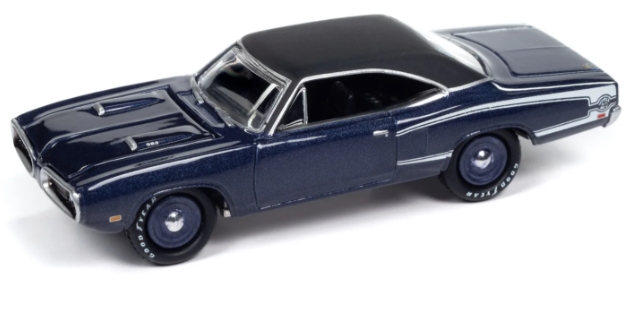
By the 1970 model year, Dodge redesigned the Super Bee with distinctive new styling — including the twin-looped front bumper known as the “bumblebee wings”— yet sales dipped again as meatier insurance premiums and fuel concerns began eating into the muscle car market.
Although still a potent performer, the 1970 Super Bee marked the beginning of the nameplate’s decline in the U.S., even as 15,000+ units still found buyers.
1971: Final Year and Transition
In 1971, Dodge made a major change — the Coronet was no longer available as a 2-door coupe, so the Super Bee name was shifted to the Dodge Charger body platform. This year was notably the Super Bee’s last in regular U.S. production before a long hiatus. Only about 5,000 units were built as Charger-based Super Bees.
Engine choices in 1971 were broad but limited in production numbers:
- 340 cubic-inch small-block V8 — the only year offered in a Super Bee
- 383 Magnum V8
- 440 V8 with two outputs (standard and Six-Pack)
- 426 Hemi V8 — extremely rare (only 22 Hemi Bees in 1971)
Because of changing market conditions — including tightening emissions rules, rising insurance costs, and shrinking demand — the Super Bee nameplate disappeared after 1971 (in the U.S.) until later revivals.
.

.
Trim Levels and Engine Options: What Was Offered?
Unlike many modern cars with expansive trim hierarchies, the Super Bee was less about trims and more about engine performance and minimal trim levels. Initially, the Super Bee was its own distinct model within the Coronet lineup (equivalent to the “budget muscle” group), not a minor sub-trim. Engine and performance packages were the primary ways buyers distinguished cars.
1968–1970 Highlights
- Base V8: 383 “Magnum” — reliable and powerful enough for most street applications
- Top Performance: 426 Hemi V8 — the rarest and most valuable engine code
- Six-Pack 440: A potent 440ci power plant with three two-barrel carburetors
During these years, the Super Bee was offered exclusively as a 2-door (fastback or coupe), with options for further performance hardware through dealer accessories and racing bits.
1971 Model Year Options
The 1971 Super Bee, relocated to the Charger body, offered:
- 340 small block — first and only year in a Bee
- 383 Magnum standard
- 440 and 440 Six-Pack
- 426 Hemi (very limited)
Unlike the earlier Coronet-based cars, the Charger Super Bee shared body configurations with other Charger trims, and buyers could select various convenience options on top of the performance-oriented nature.
Mr. Norm’s Role: Grand Spaulding Dodge and the Muscle Car Craze
Who Was “Mr. Norm”?
Norman “Mr. Norm” Kraus was a used-car salesman turned muscle-car legend whose Grand Spaulding Dodge dealership in Chicago became one of the most famous hot spots for performance cars in the 1960s and early 1970s. Starting in the early 1960s, Kraus and his brother focused their business on selling high-performance Dodge vehicles, often dyno-tuning them at no extra cost and promoting them heavily to muscle car enthusiasts. Their efforts drove both sales and a devoted following nationwide.
Mr. Norm’s was more than a dealership — it was a performance culture hub. Through sponsored race teams, drag racing involvement, and dealer-built performance upgrades, the brand became almost as legendary as the cars themselves. It wasn’t uncommon for vehicles like the Super Bee to leave the showroom with additional dealer-selected performance tweaks or to carry unique provenance tied to Mr. Norm’s.
What Makes a “Mr. Norm” Car?
A car labeled as a “Mr. Norm’s Dodge” — including Super Bees bought through the shop — generally means the car was ordered, sold, and occasionally enhanced by the Grand Spaulding Dodge dealership. Many of these cars are considered rare and highly collectible for that association alone, much like Yenko Chevrolets or Royal Pontiacs from other performance dealers of the era.
Documented cases of Mr. Norm’s Super Bees include rare 1969 and 1971 models with enhanced performance profiles and original dealer documentation — surviving examples being treasured by collectors today.
Legacy and Cultural Impact
Though its original U.S. production run lasted just four years, the Super Bee’s impact has echoed through decades of muscle car culture. It earned a reputation for delivering raw power at a relatively accessible price — a true street-fighter among big V8 competitors of the time.
Revival and Contemporary Use
While the U.S. Super Bee nameplate disappeared after 1971, it saw revival in later decades on modern Dodge Charger models under special performance or limited-edition packages. These later Super Bees brought the classic branding into the modern era while celebrating performance roots.
Collector Enthusiasm
Today, original Super Bees — especially rare variants like the 440 Six-Pack or Hemi-equipped machines — command significant interest among collectors and enthusiasts. The added provenance of a Mr. Norm’s vehicle only amplifies desirability and historical significance.
Future Outlook
Though Dodge no longer builds Super Bees in the classic sense, the legacy of high-performance V8 vehicles lives on with enthusiast interest, aftermarket restorations, and special editions tied to Charger and Challenger models. The shift toward electrification and emissions regulation may change the nature of performance cars in the coming years, but the passion for historical icons like the Super Bee remains strong among collectors, restorers, and muscle car clubs. Today’s market continues to celebrate these classics at auctions, shows, and restorations — and Mr. Norm’s connection to performance history ensures these cars retain a special place in automotive lore.
The Dodge Coronet Super Bee’s journey from 1968 to 1971, and its connection to the legendary Mr. Norm’s Grand Spaulding Dodge, paints a vivid picture of American muscle car culture at its peak. Rare, powerful, and unapologetically raw, these cars remain symbols of performance freedom — buzzing loudly across history and into future generations of enthusiasts.