The Evolution of the Jonway Falcon: A Short-Lived but Ambitious Chinese Crossover
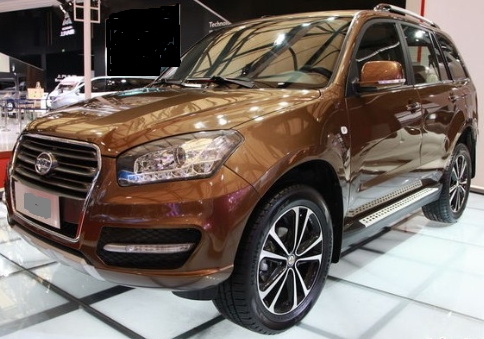
The Jonway Falcon was a compact crossover sport utility vehicle (SUV) produced by Zhejiang Jonway Automobile, a Chinese automaker based in Taizhou, Zhejiang Province. Introduced in 2013, the Falcon represented Jonway’s attempt to modernize its SUV lineup and move beyond the aging styling of the company’s first successful model, the Jonway A380. Although the Falcon remained in production for only a few years, it played an important role in the evolution of Jonway as a manufacturer and demonstrated the company’s efforts to compete in China’s rapidly expanding crossover market.
Unlike many successful Chinese SUVs of the period, the Falcon was not an entirely new vehicle. Instead, it was developed as a heavily redesigned version of the existing Jonway A380, sharing much of its underlying platform, chassis, and mechanical components while featuring a completely revised exterior and interior design. This approach allowed Jonway to modernize its product range without the enormous development costs associated with creating an entirely new vehicle.
The Origins of the Falcon
To understand the Falcon, it is important to examine its predecessor. Jonway Automobile entered the automotive market in 2003, and its first major product was the Jonway A380, also known as the UFO A380. Introduced in 2005, the A380 became known for its resemblance to the second-generation Toyota RAV4. Available in both three-door and five-door body styles, the A380 established Jonway’s presence in the growing compact SUV segment.
By the early 2010s, however, the Chinese automotive market had become far more competitive. Consumers increasingly demanded modern styling, improved interiors, and greater refinement. Rather than replacing the A380 entirely, Jonway decided to create a more contemporary model based on the same mechanical foundation.
The result was the Falcon, which debuted in 2013. While the vehicle retained the A380’s platform and basic engineering, it received an extensively redesigned exterior and cabin. The Falcon was intended to appear more sophisticated and contemporary while maintaining the affordability that characterized Jonway’s products.
.
We LOVE cars & cruising around, but sometimes day trips to explore new cities are required (with family or friends) for a spice of variety in your life!
So GO explore!
Cruises & Day/Night USA City Tours to: Baltimore, Boston, Chicago, Marina Del Ray, New York, Niagara, Philadelphia, San Diego, San Francisco, Toronto, Washington DC, etc.:

.
Launch and Production (2013–2015)
The Jonway Falcon officially entered the Chinese market during 2013. Production continued until approximately 2015, making it one of the shortest-lived models in Jonway’s history. Despite its brief production run, the Falcon represented an important transitional vehicle for the company.
The Falcon was positioned as a compact crossover SUV aimed at buyers seeking a practical family vehicle with SUV styling at an affordable price. It competed against numerous domestic rivals from manufacturers such as Great Wall, Chery, BYD, JAC, and Geely.
Like many Chinese crossovers of the period, the Falcon prioritized value and utility over outright performance. Its relatively simple mechanical design helped keep costs low while providing dependable transportation for budget-conscious consumers.
Design Evolution
One of the Falcon’s most significant contributions was its styling.
While the A380 closely resembled the Toyota RAV4, the Falcon adopted a more distinctive appearance. The front fascia received a completely redesigned grille, new headlights, revised bumpers, and updated body detailing. The rear of the vehicle was also redesigned, helping the Falcon establish a stronger identity within the marketplace.
The interior received similar attention. Jonway redesigned the dashboard, center console, instrumentation, and trim materials. Although the vehicle remained an affordable crossover, these improvements helped it appear more modern and competitive.
The redesign represented one of Jonway’s most ambitious styling efforts at the time and demonstrated the company’s desire to move away from direct visual comparisons with established foreign manufacturers.
Mechanical Specifications
Because the Falcon was based on the A380 platform, it shared many of its mechanical components.
The vehicle utilized:
- Front-engine layout
- Body-on-frame-inspired SUV architecture
- Rear-wheel-drive-based configuration in some markets
- Manual and automatic transmission options
- Independent front suspension
- Compact crossover dimensions
Several engine options were available depending on market and year. These generally mirrored those offered in the A380 lineup. Available engines included:
1.6-Liter Gasoline Engine
The entry-level engine produced approximately 99 horsepower and was designed to provide affordable operation and reasonable fuel economy. This engine was aimed primarily at urban users.
1.8-Liter Engine
A larger 1.8-liter powerplant provided additional performance and became one of the more popular options in certain markets.
2.0-Liter Gasoline Engine
The 2.0-liter engine delivered stronger performance and was often paired with higher equipment levels.
2.4-Liter Gasoline Engine
In some configurations, a 2.4-liter engine was available as the flagship powertrain, offering the strongest performance in the lineup.
Models and Trim Levels
Unlike many major manufacturers, Jonway did not always use standardized trim names across all markets. Instead, the Falcon was typically sold through combinations of engine sizes, equipment packages, and body configurations.
Documented model variations included:
Falcon 1.6 Standard
The base model generally included:
- Cloth seating
- Manual air conditioning
- Steel wheels
- Manual transmission
- Basic audio system
This version targeted budget-conscious buyers and fleet operators.
Falcon 1.8 Comfort
Mid-level versions often added:
- Improved upholstery
- Power windows
- Alloy wheels
- Enhanced audio equipment
- Additional convenience features
Falcon 2.0 Luxury
Higher-specification models typically included:
- Premium interior trim
- Upgraded infotainment system
- Enhanced exterior styling
- Additional safety equipment
Falcon 2.4 Flagship
The top-tier version generally offered:
- Largest available engine
- Automatic transmission availability
- Improved interior appointments
- Additional comfort and convenience features
Because Jonway’s dealer network frequently adapted specifications for local markets, exact trim names and equipment packages could vary significantly. However, the overall hierarchy followed a familiar pattern of Standard, Comfort, Luxury, and flagship-oriented variants.
Market Reception
The Falcon entered a highly competitive marketplace at a time when Chinese SUV sales were expanding rapidly. Consumers increasingly favored modern crossovers that offered the appearance of an SUV with the practicality of a passenger car.
Although the Falcon improved substantially upon the A380’s styling, it faced intense competition from newer vehicles developed by larger manufacturers with greater engineering resources. As a result, the Falcon never achieved the widespread success enjoyed by some of its competitors.
Nevertheless, it demonstrated Jonway’s willingness to modernize its product range and improve vehicle design quality.
End of Production
Production of the Falcon appears to have concluded around 2015. By that time, China’s automotive industry had entered a new phase characterized by increasingly sophisticated crossover vehicles featuring modern platforms, advanced safety systems, and more efficient powertrains.
For a smaller manufacturer such as Jonway, competing against larger domestic and international automakers became increasingly difficult. As a result, the Falcon’s production run was relatively short compared with many rival SUVs.
Legacy and Future Outlook
Although the Jonway Falcon is no longer in production, it occupies an important place in the company’s history. It represented one of Jonway’s most serious efforts to transition from simple derivative vehicles toward products with more distinctive styling and broader market appeal.
The Falcon also served as evidence of the rapid evolution of China’s automotive industry during the early 2010s. Vehicles that once would have remained competitive for a decade quickly became outdated as consumer expectations rose and competition intensified.
Today, Jonway’s automotive operations are far smaller than they were during the Falcon era, with greater emphasis placed on specialized vehicles and electric vehicle projects. The lessons learned from the Falcon’s development continue to reflect the challenges faced by smaller Chinese manufacturers attempting to establish themselves in a highly competitive global market.
The Jonway Falcon was a compact crossover SUV produced from 2013 to approximately 2015. Developed as a heavily redesigned derivative of the Jonway A380, it featured updated styling, a revised interior, and a range of gasoline engines from 1.6 to 2.4 liters. Offered in multiple trim levels ranging from basic entry-level models to better-equipped flagship versions, the Falcon represented Jonway Automobile’s effort to modernize its SUV lineup during a period of rapid growth in China’s crossover market. While its production run was brief, the Falcon remains a noteworthy chapter in Jonway’s history and an example of the transformation occurring within the Chinese automotive industry during the early twenty-first century.