The Evolution of the Jonway Wuxing: Jonway Automobile’s Entry into the Microvan Market
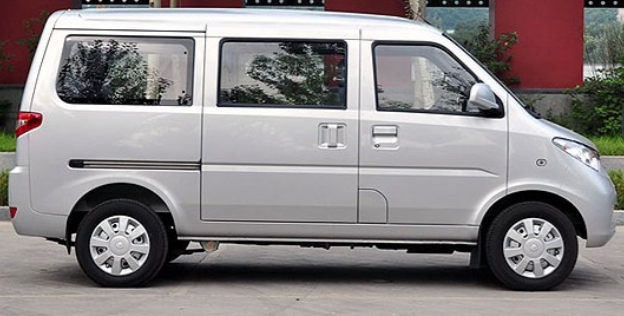
The Jonway Wuxing is a compact commercial microvan produced by Jonway Automobile. Introduced in 2012, the Wuxing was developed as the company’s first dedicated entry into China’s highly competitive microvan segment, a market long dominated by vehicles such as the Wuling Sunshine and other small commercial vans. Designed primarily for small businesses, delivery operators, tradespeople, and rural customers, the Wuxing combined affordability, practicality, and simplicity in a package intended to appeal to both commercial and private buyers.
Although the Wuxing has never received the extensive range of trims and variants offered by larger Chinese manufacturers, it remains an important vehicle in Jonway’s history because it marked the company’s expansion beyond sport utility vehicles and passenger cars into the commercial vehicle sector. The platform also served as the basis for several electric commercial vehicles produced by partner companies, giving the Wuxing a role in the early development of Chinese electric logistics vans.
Origins of the Wuxing
Founded in Zhejiang Province, Jonway Automobile initially built its reputation through compact sport utility vehicles and crossovers. During the early 2010s, however, China’s demand for low-cost commercial transportation continued to grow rapidly, especially in smaller cities and rural regions.
Recognizing this opportunity, Jonway developed the Wuxing microvan. The name “Wuxing” translates to “Five Star” in Chinese, reflecting the company’s ambition to create a practical and dependable vehicle capable of competing in one of China’s largest vehicle segments. The model was officially introduced in 2012 and entered the market shortly thereafter. It represented Jonway’s first serious attempt to compete in the commercial van category.
.
We LOVE cars & cruising around, but sometimes day trips to explore new cities are required (with family or friends) for a spice of variety in your life!
So GO explore!
Cruises & Day/Night USA City Tours to: Baltimore, Boston, Chicago, Marina Del Ray, New York, Niagara, Philadelphia, San Diego, San Francisco, Toronto, Washington DC, etc.:

.
First Generation (2012–Present)
Unlike many vehicles that undergo frequent redesigns, the Wuxing has remained largely unchanged since its introduction. As of 2026, the model continues to be listed as being in production, making it a remarkably long-lived product in the Chinese automotive industry.
The Wuxing was developed as a traditional microvan featuring:
- Mid-engine layout
- Rear-wheel drive
- Five-door body configuration
- Compact dimensions
- Lightweight construction
- Commercial-oriented design
Its layout was chosen to maximize cargo and passenger space while maintaining low production costs. This approach mirrored the philosophy used by many successful Chinese microvans during the same period.
Launch Models (2012–2013)
At launch, the Wuxing was offered as a basic microvan intended primarily for commercial use.
Standard specifications included:
- 1.1-liter Mitsubishi 4A10 four-cylinder gasoline engine
- Approximately 69 horsepower
- 89 Nm (66 lb-ft) of torque
- Five-speed manual transmission
- Rear-wheel drive
- Seating for multiple passengers
- Dual-purpose passenger and cargo capability
The vehicle measured approximately:
- Length: 164.5 inches
- Width: 64.2 inches
- Height: 74.7 inches
- Wheelbase: 106.5 inches
These dimensions placed the Wuxing squarely within the traditional Chinese microvan category.
Trim Levels and Variants
One challenge in documenting the Wuxing lineup is that Jonway did not publicly market trim levels in the same manner as larger manufacturers. Instead, the company primarily differentiated models through equipment packages, seating arrangements, and commercial applications.
Documented variants have included:
Standard Passenger Van
The Standard Passenger Van served as the core model.
Features generally included:
- Passenger seating
- Side windows
- Basic interior trim
- Manual controls
- Commercial-grade upholstery
This version targeted small businesses and family users requiring inexpensive transportation.
Cargo Van
A cargo-focused configuration was available for logistics and delivery applications.
Features included:
- Reduced passenger seating
- Expanded cargo area
- Commercial interior finishes
- Business-oriented functionality
This version proved particularly attractive to local delivery companies and small enterprises.
Utility Configuration
Some markets received utility-oriented versions featuring:
- Flexible seating layouts
- Cargo/passenger combinations
- Small business adaptations
- Rural transportation applications
These variants emphasized versatility rather than comfort.
Planned Export Models
Shortly after the Wuxing’s introduction, Jonway announced plans to market the vehicle internationally.
Two export names were proposed:
Shuttle G
The gasoline-powered export version was intended to be marketed as the Shuttle G in North America and other overseas markets.
Planned features included:
- Conventional gasoline powertrain
- Commercial and passenger configurations
- Affordable purchase price
Shuttle EV
Jonway also announced plans for an electric version called the Shuttle EV.
The company hoped to capitalize on growing interest in low-cost electric commercial vehicles. However, large-scale international sales of the Shuttle EV never materialized as originally envisioned.
Electric Derivatives (2015–Present)
Although Jonway itself did not establish a major electric Wuxing lineup, the platform became important as the basis for several electric commercial vehicles developed by partner companies.
Skio Junfeng
One of the most notable derivatives was the Skio Junfeng, an electric logistics vehicle developed through cooperation between Jonway and industry partners.
The Skio Junfeng featured:
- Battery-electric powertrain
- Commercial cargo configuration
- Urban delivery focus
- Zero tailpipe emissions
The vehicle was marketed primarily toward logistics companies operating in urban environments.
Zhejiang-Hongyuan Paipai
Another electric derivative appeared under the name Zhejiang-Hongyuan Paipai.
Introduced around 2015, this version utilized the Wuxing platform as a foundation for electric commercial transportation. The existence of these variants demonstrated the adaptability of the basic Wuxing architecture.
Design and Engineering
One reason for the Wuxing’s longevity is its straightforward engineering.
Key design characteristics include:
- Proven Mitsubishi-sourced engine technology
- Simple mechanical systems
- Durable commercial construction
- Easy maintenance
- Low operating costs
Unlike more advanced passenger vehicles, the Wuxing prioritized reliability and affordability over luxury or sophisticated electronics.
The mid-engine, rear-wheel-drive layout also allowed for efficient packaging and respectable cargo capacity relative to the vehicle’s compact footprint.
Market Position
The Wuxing entered a highly competitive market dominated by major manufacturers. Rather than competing through advanced technology, Jonway positioned the vehicle as an affordable alternative to established microvan leaders.
Its primary customer base included:
- Small business owners
- Delivery services
- Rural operators
- Tradespeople
- Fleet customers
- Budget-conscious families
The vehicle’s low purchase price and simple maintenance requirements helped it remain attractive despite increasing competition.
Production Timeline
2012–2014
- Initial launch and market introduction
- Standard gasoline-powered microvan production
- Passenger and cargo configurations
2015–2019
- Continued production with minor updates
- Introduction of electric derivatives based on the platform
- Expansion into commercial logistics applications
2020–Present
- Ongoing production in select markets
- Continued availability as a low-cost commercial vehicle
- Platform remains in use for specialized applications
Future Outlook
The future of the Jonway Wuxing is uncertain but noteworthy. The traditional microvan segment has been declining as buyers increasingly move toward larger vans, compact commercial vehicles, and electric delivery platforms.
However, several factors may help extend the Wuxing’s lifespan:
- Continued demand for inexpensive commercial transportation
- Strong utility in rural markets
- Availability of electric platform adaptations
- Low manufacturing costs
If Jonway chooses to modernize the model, future developments could include updated emissions-compliant engines, improved safety features, or a dedicated battery-electric version. Given the continued growth of urban logistics and last-mile delivery services, an electric successor could potentially build upon the Wuxing’s practical design philosophy.
Since its introduction in 2012, the Jonway Wuxing has served as Jonway Automobile’s entry into the commercial microvan market. While it has not undergone multiple generations or extensive trim-level diversification, the vehicle has established itself as a practical and affordable transportation solution. Offered primarily as passenger and cargo-oriented variants and later serving as the foundation for electric logistics vehicles such as the Skio Junfeng, the Wuxing has demonstrated remarkable longevity. More than a decade after its debut, it remains an important chapter in Jonway’s history and a noteworthy example of China’s enduring microvan tradition.