The Evolution of the Škoda Kamiq: Škoda’s Compact SUV for the Modern Era
The Škoda Kamiq represents a crucial chapter in Škoda’s transformation into a global SUV-focused brand. Introduced in 2019 as the company’s smallest SUV, the Kamiq was designed to appeal to urban drivers seeking practicality, affordability, and modern technology in a compact footprint.
Since its launch, the Kamiq has evolved through a single generation with a significant facelift, multiple trim structures, and ongoing refinements. This article explores its full development, including production years, trim levels, technical evolution, and future outlook.
Origins and Background
The Kamiq originated from the 2018 Vision X concept, reflecting Škoda’s intention to expand its SUV lineup downward into the fast-growing subcompact segment. It debuted at the 2019 Geneva Motor Show and entered production shortly thereafter.
Production Overview
- Production years: 2019–present
- Segment: Subcompact crossover (B-SUV)
- Platform: Volkswagen Group MQB-A0
- Assembly locations: Europe and global markets
The Kamiq became the third SUV in Škoda’s lineup after the larger Kodiaq and Karoq, completing a three-tier SUV strategy.
.
THIS is GOOD stuff if your car is in need:

.
First Generation (2019–Present)
Unlike other Škoda models, the Kamiq has remained in its first generation since launch, undergoing a major facelift in 2023 rather than a full redesign.
Initial Launch Models (2019–2023)
Design and Positioning
At launch, the Kamiq was positioned as an affordable, city-friendly SUV with styling inspired by larger Škoda models. It featured:
- Split headlight design with LED daytime running lights
- Compact dimensions for urban driving
- Practical interior with strong cargo capacity
The model emphasized value and usability rather than off-road capability, as it was offered exclusively with front-wheel drive.
Trim Levels (2019–2023)
The Kamiq followed Škoda’s traditional trim hierarchy, though names varied by market.
Core Global Trims
- Active (entry-level)
- Ambition (mid-range)
- Style (high specification)
Additional and Market-Specific Trims
- SE / SE L / SE Drive (UK markets)
- Monte Carlo (sporty variant)
- Laurin & Klement (limited availability)
These trims allowed the Kamiq to appeal to a wide range of buyers, from budget-conscious customers to those seeking premium features.
Powertrain Options (2019–2023)
The early Kamiq offered a diverse engine lineup:
Petrol Engines (TSI)
- 1.0 TSI (95–115 hp)
- 1.5 TSI (150 hp)
Diesel Engine (TDI)
- 1.6 TDI (115 hp)
Alternative Fuel
- 1.0 G-TEC (CNG, 90 hp)
Transmission options included:
- 5- or 6-speed manual
- 7-speed DSG automatic
This range allowed buyers to prioritize efficiency, performance, or fuel type depending on their needs.
Technology and Features at Launch
The Kamiq introduced several modern features uncommon in its class:
- Digital cockpit (optional)
- Touchscreen infotainment with smartphone integration
- Advanced driver assistance systems
- High level of standard safety equipment
It also featured Škoda’s “Simply Clever” solutions, such as smart storage compartments and flexible seating arrangements.
Market Reception and Growth
The Kamiq was well received due to its:
- Competitive pricing
- Practical interior space
- Efficient engine lineup
By the early 2020s, it had become one of Škoda’s best-selling SUVs, contributing significantly to the brand’s global growth.
2023 Facelift (2023–Present)
Overview
- Facelift production years: 2023–present
The 2023 facelift represented the most significant update in the Kamiq’s lifecycle.
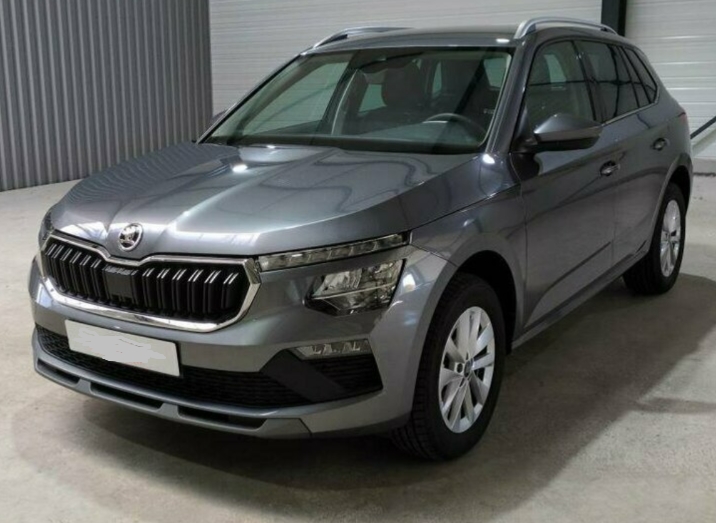
Updated Design
The facelift introduced several visual improvements:
- Revised grille with vertical slats
- Slimmer LED headlights
- Optional Matrix LED technology
- Updated bumper and aerodynamic elements
These changes modernized the Kamiq while maintaining its recognizable design.
Updated Trim Levels (2023–Present)
The facelift also brought a revised trim structure in many markets:
- Essence (entry-level replacement for Active)
- Selection (mid-range replacement for Ambition)
- Monte Carlo (sport-oriented trim)
- Drive / Style variants (market-dependent)
This new naming strategy aligned the Kamiq with other updated Škoda models.
Powertrain Updates (2023–Present)
The facelift retained a focus on efficiency:
- 1.0 TSI (95–115 hp)
- 1.5 TSI ACT (150 hp)
Diesel options were reduced or removed in some markets as part of broader industry trends toward electrification.
The Kamiq continues to be front-wheel drive only, reflecting its urban-focused design.
Interior and Technology Improvements
The facelift brought notable upgrades:
- Larger infotainment displays
- Improved digital cockpit availability
- Enhanced connectivity features
- Increased use of sustainable materials
These changes ensured the Kamiq remained competitive in a rapidly evolving segment.
Trim Level Evolution Summary
2019–2023 (Launch Phase)
- Active
- Ambition
- Style
- Monte Carlo
- SE / SE L (regional)
2023–Present (Facelift Phase)
- Essence
- Selection
- Monte Carlo
- Drive / Style variants
This evolution reflects Škoda’s shift toward simplified and modernized trim naming.
Design Evolution
Launch Design (2019)
- Distinctive split-headlight layout
- Upright grille
- Compact SUV proportions
Facelift Design (2023)
- Sharper front-end styling
- Improved aerodynamics
- More premium lighting technology
While not a full redesign, the facelift significantly enhanced the vehicle’s visual appeal.
Technology Progress
Safety Systems
- Lane assist
- Adaptive cruise control
- Emergency braking
Infotainment
- Early touchscreen systems → modern digital interfaces
- Smartphone integration standard in most trims
Sustainability
- Increased use of recycled and eco-friendly materials
- More efficient engine technologies
These developments highlight Škoda’s focus on modernization and environmental responsibility.
Market Position and Competitors
The Kamiq competes in the highly competitive subcompact SUV segment, alongside models such as:
- Volkswagen T-Cross
- SEAT Arona
- Hyundai Kona
Its key strengths include:
- Strong value for money
- Practical interior space
- Efficient powertrains
The Kamiq’s positioning below the Karoq and Kodiaq allows it to serve as an entry point into Škoda’s SUV lineup.
Global Impact
The Kamiq has played a major role in Škoda’s expansion:
- Over 300,000 units sold within a few years
- Contributed significantly to SUV sales growth
- Popular in Europe and emerging markets
It has become a cornerstone of Škoda’s modern portfolio.
Strengths and Criticisms
Strengths
- Affordable pricing
- Practical design
- Strong safety and technology features
- Efficient engines
Criticisms
- No all-wheel drive option
- Smaller interior compared to larger SUVs
- Limited electrification options
Future Outlook
The future of the Kamiq will likely follow broader industry trends.
Expected Developments
- Electrification
- Potential introduction of hybrid or fully electric variants
- Alignment with Volkswagen Group EV strategy
- Next Generation Model
- A full redesign is expected later in the decade
- Likely adoption of updated platforms
- Technology Enhancements
- More advanced driver assistance systems
- Expanded connectivity and software features
- Continued Market Role
- The Kamiq will remain Škoda’s entry-level SUV
Since its debut in 2019, the Škoda Kamiq has evolved into a key model in the brand’s lineup. From its origins as a concept-driven urban crossover to its current form as a refined, technology-rich compact SUV, the Kamiq has consistently delivered practicality and value.
With a clear trim evolution—from Active, Ambition, and Style to Essence and Selection—and ongoing updates in design and technology, the Kamiq remains competitive in one of the automotive industry’s most crowded segments.
As Škoda continues to move toward electrification and digital innovation, the Kamiq is well positioned to adapt, ensuring its continued success as an accessible and versatile SUV for modern drivers.