The Evolution of the Škoda Fabia: From Budget Supermini to Modern Compact Benchmark
The Škoda Fabia is one of the most significant models in Škoda’s modern history. Introduced in 1999 as a successor to the Felicia, the Fabia quickly became the brand’s entry-level cornerstone, offering a compelling mix of affordability, practicality, and Volkswagen Group engineering.
Over more than two decades and four generations, the Fabia has evolved dramatically in terms of design, technology, and trim complexity. This article explores its full evolution, including production years, trim levels, and future outlook.
Origins and Early Development
The Fabia was launched at the 1999 Frankfurt Motor Show, marking a new era for Škoda under Volkswagen Group ownership.
It replaced the aging Felicia and was the first Škoda model built on a modern Volkswagen platform, significantly improving quality, safety, and refinement.
Production Overview
- Production start: 1999
- Generations: Four (1999–present)
- Segment: B-segment (supermini)
- Total production: Over 5 million units by 2025
First Generation (1999–2007)
Overview
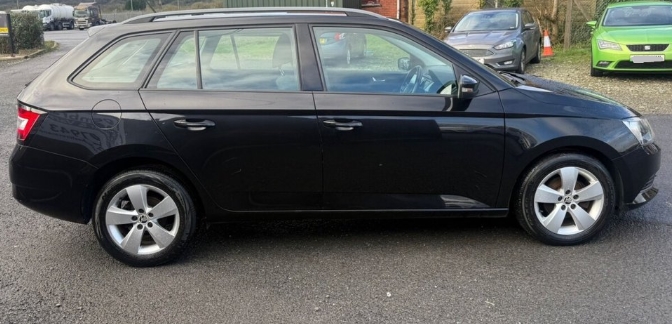
- Generation: Mk1 (Type 6Y)
- Production years: 1999–2007
- Body styles: Hatchback, Combi (estate), Sedan
The first-generation Fabia was a major step forward for Škoda, offering modern engineering and a spacious interior for its class.
.
THIS is GOOD stuff if your car is in need:

.
Trim Levels
Trim names varied by market, but commonly included:
- Classic (entry-level)
- Comfort
- Ambiente
- Elegance (top trim)
- RS (performance variant, introduced later)
These trims established a structure that would influence later generations.
Key Developments
- Wide range of petrol and diesel engines
- Introduction of the Fabia Combi (2000)
- Launch of Fabia Sedan (2001)
- Debut of Fabia RS (2003) performance model
Impact
The first Fabia became a major success due to:
- Competitive pricing
- Strong reliability
- Class-leading interior space
Second Generation (2007–2014)
Overview
- Generation: Mk2 (Type 5J)
- Production years: 2007–2014
- Body styles: Hatchback and Combi
The second-generation Fabia built on the success of the original, offering improved refinement and a more modern design.
Trim Levels
Common trims included:
- S
- SE
- Elegance
- Ambiente (in some markets)
- Scout (crossover-inspired variant)
- Monte Carlo (sporty styling variant)
- RS (high-performance version)
Key Features
- More rounded styling compared to Mk1
- Expanded engine lineup
- Introduction of DSG dual-clutch transmissions
- Improved safety and comfort features
Facelift (2010)
A mid-cycle update introduced:
- Revised front-end design
- Updated engines for improved efficiency
- Enhanced interior materials
Performance Models
- Fabia RS offered turbocharged petrol engines
- Continued motorsport influence
Third Generation (2014–2021)
Overview
- Generation: Mk3 (Type NJ)
- Production years: 2014–2021
- Body styles: Hatchback and Combi
The third generation marked a major step forward in design and technology.
Trim Levels
Typical trims included:
- S
- SE
- SE L
- Monte Carlo
- Style
- Laurin & Klement (in select markets)
- Scoutline (estate variant)
Key Developments
- Sharper, more angular design
- Improved infotainment systems
- Enhanced driver assistance features
- Lightweight construction
2018 Facelift
The facelift brought significant updates:
- LED headlights
- New infotainment systems
- Advanced safety features such as blind-spot monitoring
Engine Range
- 1.0L three-cylinder petrol engines
- Diesel engines gradually phased out
- Improved efficiency and emissions
Fourth Generation (2021–Present)
Overview
- Generation: Mk4 (Type PJ)
- Production years: 2021–present
- Platform: MQB-A0
The fourth-generation Fabia represents the most advanced version yet.
Body Style Changes
- Hatchback only (Combi discontinued after Mk3)
Trim Levels
Modern trims vary by market but generally include:
- Active / Essence (entry-level)
- Ambition / Selection (mid-range)
- Style (high specification)
- Monte Carlo (sporty trim)
Special editions also exist, such as anniversary or performance-inspired models.
Key Features
- Larger dimensions (over 4.1 meters long)
- Increased boot capacity (up to 380 liters)
- Advanced driver assistance systems
- Digital cockpit and large infotainment displays
Powertrain Options
- 1.0 TSI petrol engines
- 1.5 TSI petrol engine (higher trims)
Diesel engines were discontinued in many markets, reflecting industry trends.
Performance and Motorsport Legacy
The Fabia has a strong motorsport heritage:
- Fabia WRC (2003) introduced rally participation
- Fabia Super 2000 (2009) achieved global success
- Fabia Rally2 and RS Rally2 dominate modern rally categories
These racing models helped strengthen the Fabia’s sporty image.
Design Evolution
Mk1 (1999–2007)
- Conservative, functional design
- Focus on practicality
Mk2 (2007–2014)
- More rounded and approachable styling
Mk3 (2014–2021)
- Sharper lines and modern proportions
Mk4 (2021–)
- Sleeker, more aerodynamic design
- Premium-inspired interior
Technology Progress
Safety
- Early airbags and ABS → modern autonomous systems
- Adaptive cruise control, lane assist, and emergency braking
Infotainment
- Basic radios → touchscreen systems → fully digital cockpit
Efficiency
- Transition from larger engines to efficient turbocharged units
- Elimination of diesel in many markets
Trim Level Evolution
The Fabia’s trim structure has evolved significantly:
Early Years (1999–2007)
- Classic, Comfort, Elegance
Expansion (2007–2014)
- S, SE, Elegance, Monte Carlo, Scout
Modernization (2014–2021)
- S, SE, SE L, Monte Carlo, Style
Current Era (2021–Present)
- Active/Essence, Ambition/Selection, Style, Monte Carlo
This evolution reflects increasing complexity and customization.
Market Position and Competitors
The Fabia competes in the supermini segment alongside:
- Volkswagen Polo
- Ford Fiesta
- Toyota Yaris
Its key strengths include:
- Excellent value for money
- Spacious interior for its class
- Reliable Volkswagen-based engineering
Global Impact
The Fabia is one of Škoda’s most successful models:
- Over 5 million units produced
- Second best-selling Škoda after the Octavia
- Sold worldwide, with strong presence in Europe
It serves as the entry point into the Škoda brand.
Future Outlook
The future of the Fabia reflects broader industry trends.
Continued Production
Škoda has confirmed that the Fabia will remain in production with combustion engines beyond 2030.
Electrification
- Potential hybrid or electric successor
- Alignment with Volkswagen Group EV strategy
Role in Lineup
The Fabia will continue to serve as:
- Škoda’s entry-level model
- A key volume seller
- A gateway to the brand
From its debut in 1999 to its current fourth generation, the Škoda Fabia has undergone a remarkable transformation. What began as a simple, affordable supermini has evolved into a sophisticated and technologically advanced vehicle.
Across four generations, numerous trim levels, and millions of units sold, the Fabia has consistently delivered practicality, value, and reliability. Its continued success demonstrates Škoda’s ability to adapt to changing market demands while maintaining its core strengths.
As the automotive industry moves toward electrification and digital innovation, the Fabia is poised to remain a vital part of Škoda’s lineup—continuing its legacy as one of Europe’s most successful small cars.