The History of Baldwin-Motion
Big-Block Excess and the Apex of Dealer-Built American Muscle
In the late 1960s and early 1970s, when horsepower wars defined American car culture, Baldwin-Motion stood at the extreme edge of what was possible. More radical than factory muscle cars and more organized than backyard hot-rod shops, Baldwin-Motion produced some of the most powerful and intimidating street-legal Chevrolets ever sold. Though its period of operation was brief, Baldwin-Motion’s impact on American performance history has proven enormous, with its cars now ranking among the most valuable and mythologized muscle cars in existence.
Origins and Years in Operation
Baldwin-Motion was not a conventional automaker but a partnership between two entities:
- Baldwin Chevrolet – a high-performance Chevrolet dealership in Baldwin, New York
- Motion Performance, Inc. – a specialty performance engineering company based in Long Island, New York
The Baldwin-Motion collaboration operated primarily between 1967 and 1972, though both underlying businesses existed outside those years.
- Motion Performance, Inc.: founded in 1966
- Baldwin-Motion program: active 1967–1972
- Motion Performance (independent): 1966–1974
Baldwin-Motion vehicles were sold as new cars through Baldwin Chevrolet and modified by Motion Performance before delivery to customers.
Founders and Key Figures
Joel Rosen – The Engineering Mastermind
The technical heart of Baldwin-Motion was Joel Rosen, founder of Motion Performance, Inc. Born in 1942, Rosen was a mechanical prodigy with a deep understanding of engine dynamics, airflow, and durability. Unlike many muscle-era tuners who relied on brute force alone, Rosen was intensely analytical, focusing on power that could survive sustained abuse.
Rosen had experience working with Chevrolet’s high-performance parts and racing programs, giving him intimate knowledge of GM big-block engines. His reputation quickly grew as someone who could extract extreme horsepower without catastrophic failure—a rare skill in the era.
Baldwin Chevrolet Leadership
Baldwin Chevrolet, located on Sunrise Highway in Baldwin, New York, was one of the most performance-oriented Chevy dealerships in the country. The dealership’s leadership recognized early that there was a growing market for ultra-high-performance street cars that went beyond factory offerings.
The partnership between Baldwin Chevrolet and Motion Performance allowed customers to purchase cars that were technically new, dealer-sold Chevrolets—but far more extreme than anything Chevrolet officially sanctioned.
The Baldwin-Motion Concept
During the late 1960s, General Motors imposed internal restrictions on engine displacement and discouraged overt racing involvement. While Chevrolet produced formidable engines like the 427 and 454 big-blocks, installing them in lighter cars such as the Camaro was often restricted or limited.
Baldwin-Motion exploited a loophole:
- Customers ordered a new Chevrolet through Baldwin Chevrolet
- The car was delivered directly to Motion Performance
- Motion installed high-horsepower engines, driveline upgrades, and suspension modifications
- The completed vehicle was sold as a Baldwin-Motion car
These vehicles were often sold with warranties—an extraordinary promise given their performance levels.
What Made Baldwin-Motion Different
Baldwin-Motion distinguished itself in several key ways:
- Extreme horsepower claims (often 500–600+ horsepower in the late 1960s)
- Turn-key performance packages, not just engine swaps
- Dealer-sold legitimacy, unlike many independent hot rods
- Aggressive marketing with bold, unapologetic language
While Yenko emphasized factory-style integration and racing credibility, Baldwin-Motion leaned into raw excess. Their cars were louder, faster, and more outrageous—both mechanically and visually.
Signature Vehicles and Models
1. Baldwin-Motion Phase III Camaro
Their most famous vehicle was the Baldwin-Motion Phase III Camaro, available from 1967 to 1972.
Key features included:
- 427 or 454 cubic-inch big-block V8s
- Claimed outputs of 500–600 horsepower
- Heavy-duty Muncie 4-speed or Turbo-Hydramatic transmissions
- Upgraded rear axles, suspension, and brakes
- Distinctive striping, hood scoops, and Motion badging
Production numbers were extremely low. Estimates suggest fewer than 50 genuine Phase III Camaros were built, making them among the rarest muscle cars ever.
2. Baldwin-Motion Phase III Corvette
Baldwin-Motion also produced highly modified Corvettes, including the Baldwin-Motion Phase III Corvette versions featuring big-block engines, flared fenders, and suspension upgrades.
These Corvettes were designed to rival European supercars in straight-line performance at a fraction of the cost—at least by 1960s standards.
3. Baldwin-Motion Phase III Chevelle
The Baldwin-Motion Phase III Chevelle offered similar upgrades in GM’s intermediate platform. With massive torque and lighter weight than full-size Chevrolets, these cars were brutally quick and highly competitive in street racing and drag racing environments.
The Most Popular and Successful Baldwin-Motion Vehicle
Baldwin-Motion Phase III Camaro
The Phase III Camaro is universally regarded as Baldwin-Motion’s most successful and iconic creation.
Why it stood out:
- Camaro’s compact size amplified big-block performance
- Extreme horsepower claims captured national attention
- Aggressive styling reinforced its reputation
- Limited production increased exclusivity
Sales Figures:
- U.S. sales: Estimated under 50 original Phase III Camaros
- Global sales: Nearly all sold in the United States
Although sales numbers were tiny, the car’s influence was massive. Today, documented Phase III Camaros can exceed $500,000 to $700,000 at auction, with some valuations climbing higher depending on provenance.
Marketing and Media Strategy
Baldwin-Motion’s marketing was bold, controversial, and unforgettable.
Print Advertising
Their ads appeared in performance magazines with headlines promising:
- Quarter-mile times in the low 11-second range
- Top speeds exceeding 170 mph
- “Warranty-backed supercars”
These claims often bordered on outrageous, but they generated enormous attention.
The Motion Supercar Image
Baldwin-Motion effectively marketed its cars as American supercars before the term was commonly used. The idea that a Chevrolet dealer could sell something faster than Ferraris and Lamborghinis resonated strongly with American buyers.
Racing Programs and Competition
Motion Performance and Baldwin-Motion cars were involved in multiple forms of racing:
- Drag racing at NHRA-sanctioned and local tracks
- Street racing, which—while unofficial—played a large role in their reputation
- Exhibition and magazine testing, which served as de facto competition
Joel Rosen himself was deeply involved in drag racing and performance testing, and Motion engines powered numerous competitive race cars.
Factory and Shop Operations
Baldwin-Motion vehicles were built using a hybrid process:
- Chevrolet assembled the base vehicle
- Baldwin Chevrolet handled sales and logistics
- Motion Performance performed engine builds, installation, and testing
- Final tuning and cosmetic modifications completed the car
Motion’s shop was highly specialized, focusing on engines, drivetrains, and chassis reinforcement rather than mass production.
Consumer Reception in the United States
Among performance enthusiasts, Baldwin-Motion cars were legendary—but also polarizing.
Positive reception:
- Extreme power and exclusivity
- Dealer-sold legitimacy
- Performance unmatched by most factory cars
Criticism:
- Very high prices (often double the cost of a stock Camaro)
- Loud, aggressive behavior unsuitable for casual drivers
- Skepticism over advertised horsepower claims
Despite this, Baldwin-Motion developed a cult following that has only grown stronger over time.
Hardships and Decline
Regulatory Pressure
By the early 1970s, several forces converged:
- Stricter emissions regulations
- Rising insurance premiums
- Fuel economy concerns
- Increased scrutiny of performance claims
These factors made it increasingly difficult to sell extreme street cars.
Legal Troubles
In 1974, Motion Performance became embroiled in legal issues related to business practices and regulatory compliance. While not directly tied to Baldwin-Motion vehicles themselves, these problems effectively ended Motion’s operations.
End of Baldwin-Motion (1972–1974)
- Baldwin-Motion performance cars ended: 1972
- Motion Performance ceased operations: 1974
The company was not bought out or merged. It went defunct due to regulatory pressure, legal issues, and the collapse of the muscle car market.
Revival and Modern Baldwin-Motion
In later decades, the Baldwin-Motion name was revived through licensing agreements, most notably involving Joel Rosen himself in advisory roles.
Modern Baldwin-Motion cars:
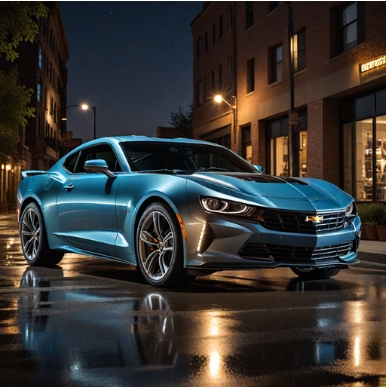
- Based on late-model Camaros and Corvettes
- Supercharged engines producing 700–1,000+ horsepower
- Built in very limited numbers
- Marketed as tributes, not continuations
Milestones and Notable Accomplishments
- Creation of some of the most powerful dealer-sold muscle cars ever
- Popularization of the “Phase” performance package concept
- Influence on modern supercar marketing language
- Enduring collector value decades after production ended
Current Status and Outlook
As of 2026, Baldwin-Motion does not exist as an original operating company. The name survives only through licensed continuation vehicles and historical recognition.
The outlook for the brand remains strong in collector and enthusiast circles, with original cars appreciating steadily and modern tribute builds maintaining demand.
Conclusion
Baldwin-Motion represents the most unapologetically extreme expression of the American muscle car era. Where factories hesitated and regulations loomed, Baldwin-Motion delivered excess—huge engines, massive torque, and marketing bravado to match. Though its lifespan was short, its legacy endures as a symbol of an era when horsepower ruled unchecked and ingenuity could turn a Chevrolet dealership into a supercar factory. Today, Baldwin-Motion cars stand not just as vehicles, but as rolling monuments to the peak of American muscle.