The History of Dongfeng Motor Group (DongFeng, M-Hero, Voyah, Aeolus, Nammi, Forthing)
From State Arsenal to Global Automotive Contender
Dongfeng Motor Group is one of China’s largest and most historically significant automobile manufacturers. Founded during the height of China’s industrialization push in the late 1960s, the company has evolved from a military-focused truck producer into a diversified automotive giant with multiple consumer brands, international joint ventures, and a growing electric vehicle (EV) portfolio. Its sub-brands—including M-Hero, Voyah, Aeolus, Nammi, and Forthing—represent its attempt to compete across nearly every segment of the global automotive market.
Founding and Early Years (1969–1980s)
Dongfeng Motor Group traces its origins to 1969, when it was established as the “Second Automobile Works” (SAW) in Shiyan, Hubei Province, China. The company was created under direct orders from the Chinese government during a period of geopolitical tension, with the goal of building a secure inland automotive manufacturing base capable of producing military trucks.
Unlike Western automakers founded by individual entrepreneurs, Dongfeng was state-founded, meaning it does not have a single traditional founder. Instead, its creation was overseen by the Chinese central government under the leadership of Mao Zedong. The workforce consisted largely of relocated engineers, soldiers, and industrial workers tasked with building a strategic industrial asset from scratch.
Early production focused on rugged military trucks, particularly the EQ240, which became a backbone vehicle for the People’s Liberation Army. Operations were challenging due to the remote mountainous location, limited infrastructure, and lack of advanced manufacturing technology.
Reform Era and Expansion (1980s–2000s)
China’s economic reforms in the late 1970s and 1980s transformed Dongfeng’s trajectory. The company began transitioning from purely military production to civilian vehicles, including commercial trucks and passenger cars.
Key Joint Ventures
Dongfeng became known for its strategic partnerships with foreign automakers, which helped it acquire modern technology and manufacturing expertise:
- Dongfeng Peugeot–Citroën (1992–present)
Partnership with PSA Group (founded 1976). This joint venture introduced European car designs to China. - Dongfeng Nissan (2003–present)
Collaboration with Nissan Motor Company (founded 1933), producing models like the Sylphy and X-Trail. - Dongfeng Honda (2003–present)
Partnership with Honda Motor Co. (founded 1948), producing CR-V and Civic models for the Chinese market.
These joint ventures were not acquisitions but equity partnerships, with ownership shared between Dongfeng and foreign firms. They became a cornerstone of Dongfeng’s growth, significantly boosting production capacity and technological capability.
Challenges and Industry Pressures
Dongfeng has faced several notable hardships:
1. Geographic Isolation (1970s–1980s)
Its original factory location in Shiyan made logistics difficult. This was eventually mitigated by expanding operations into Wuhan, which became a major production hub.
2. Overreliance on Joint Ventures (2000s–2010s)
Dongfeng’s profits were heavily dependent on foreign partnerships. This created a lack of strong independent brands, limiting its global competitiveness.
Resolution:
The company invested heavily in developing its own marques, such as Aeolus and Voyah.
3. Declining Sales in China (Late 2010s–2020s)
As China’s auto market became saturated and highly competitive, Dongfeng’s sales declined relative to private rivals like BYD and Geely.
Resolution:
Dongfeng pivoted toward electrification and premium branding, launching Voyah and M-Hero.
Brand Portfolio and Key Models
1. Dongfeng (Core Brand)
The main Dongfeng brand focuses on commercial vehicles and entry-level passenger cars.
Notable Models:
- Dongfeng Rich (pickup)
- Dongfeng EQ series trucks (commercial vehicles)
These vehicles are widely used in logistics and industrial sectors.
2. Aeolus (Dongfeng Fengshen)
Aeolus was launched in 2009 as Dongfeng’s primary independent passenger car brand.
Notable Models:
Aeolus aimed to compete with mainstream global brands but struggled with brand recognition outside China.
3. Forthing (Dongfeng Liuzhou)
Forthing originates from Dongfeng Liuzhou Motor, established in 1954 and later integrated into Dongfeng.
Notable Models:
- Forthing T5 (SUV)
- Forthing Lingzhi (MPV)
Forthing focuses on practical family vehicles and commercial MPVs.
4. Voyah (Premium EV Brand)
Voyah was launched in 2020 to compete with Tesla and NIO in the luxury EV segment.
Notable Models:
- Voyah Free (SUV)
- Voyah Dreamer (luxury MPV)
Voyah represents Dongfeng’s push into high-end electrification, emphasizing design, performance, and smart technology.
5. M-Hero (Luxury Off-Road EVs)
M-Hero debuted in 2022 as a high-performance electric off-road brand.
Notable Models:
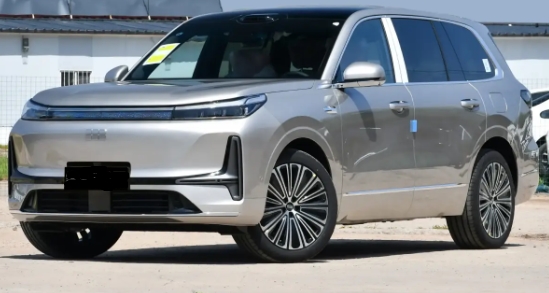
- M-Hero 917 (electric SUV, luxury off-road SUV)
This brand blends military heritage with cutting-edge EV technology, targeting premium adventure buyers.
6. Nammi (Urban EV Brand)
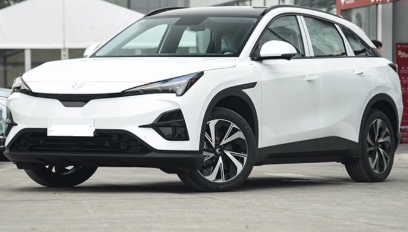
Nammi is a newer brand focused on compact, affordable electric vehicles.
Notable Models:
Nammi aims to capture urban consumers and compete in China’s rapidly growing small EV segment.
Manufacturing and Operations
Dongfeng operates a vast manufacturing network across China, with major hubs in:
- Wuhan (primary headquarters and production center)
- Shiyan (original truck production base)
- Guangzhou and Liuzhou (joint venture and regional production)
Factories utilize modern assembly lines, robotics, and increasingly automated EV production systems. Dongfeng produces:
- Passenger vehicles
- Commercial trucks
- Electric vehicles
- Automotive components
Racing and Performance Programs
Compared to Western automakers, Dongfeng has had limited motorsports involvement, but it has participated in:
- Truck racing events in China
- Engineering collaborations in endurance racing (indirectly via partners)
Its most notable international exposure came through Dongfeng Race Team in the Volvo Ocean Race (2014–2018), highlighting engineering capability rather than automotive racing.
Marketing and Strategy
Dongfeng’s marketing evolved significantly over time:
- Early years: Government procurement and industrial contracts
- 2000s: Joint venture branding (Nissan, Honda)
- 2020s: Premium and EV branding campaigns
Voyah and M-Hero campaigns emphasize:
- Advanced technology
- Luxury positioning
- National pride in Chinese innovation
Milestones and Achievements
- 1969: تأسيس Second Automobile Works
- 1992: First major international joint venture
- 2003: Partnerships with Nissan and Honda
- 2009: Launch of Aeolus brand
- 2020: Launch of Voyah EV brand
- 2022: Introduction of M-Hero luxury EVs
Dongfeng has consistently ranked among China’s “Big Four” state-owned automakers.
Sales and Market Performance
Global Sales
Dongfeng has produced millions of vehicles annually, with peak production exceeding 3 million units per year in the mid-2010s.
U.S. Market Presence
Dongfeng has no significant direct retail presence in the United States. As a result:
- U.S. sales figures: Essentially zero for consumer vehicles
- Indirect presence: Limited to partnerships and component supply
Most Successful Vehicle
The Nissan Sylphy (produced via Dongfeng Nissan) is arguably the most successful vehicle associated with Dongfeng, due to:
- High reliability
- Strong fuel efficiency
- Massive sales volume in China
What Makes Dongfeng Unique
- State Ownership
Unlike most global automakers, Dongfeng is government-controlled. - Joint Venture Dependence
It has built success through partnerships rather than independent innovation alone. - Military Origins
Its roots in defense manufacturing influence its engineering approach. - Rapid EV Transition
Brands like Voyah and M-Hero show aggressive movement into electrification.
Current Status and Outlook (2026)
Dongfeng Motor Group is still in operation and remains a major player in China’s automotive industry. However, it faces significant challenges:
Strengths
- Strong government backing
- Established manufacturing infrastructure
- Growing EV portfolio
Weaknesses
- Weak global brand recognition
- Heavy reliance on joint ventures
- Increasing domestic competition
Future Outlook
Dongfeng is expected to:
- Expand EV exports
- Strengthen premium brands like Voyah
- Invest in autonomous driving and smart vehicle technology
From its origins as a remote military truck factory in 1969 to its current role as a diversified automotive conglomerate, Dongfeng Motor Group reflects the broader evolution of China’s industrial economy. While it has struggled to build globally recognized independent brands, its partnerships, scale, and rapid pivot toward electrification position it as a significant force in the future of mobility.
Whether brands like Voyah and M-Hero can elevate Dongfeng onto the global stage remains an open question—but its history suggests a company capable of adapting to enormous economic and technological change.