The Evolution of the Haima M3: A Complete History of Haima’s Compact Sedan
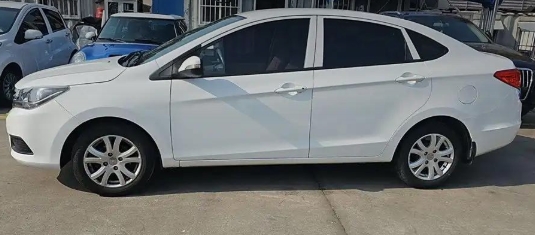
The Haima M3 is a compact sedan produced by the Chinese automaker Haima Automobile. Introduced in 2013, the M3 was designed to strengthen Haima’s presence in the highly competitive compact-car segment by offering modern styling, practical transportation, and affordable pricing. Although the model never achieved major international recognition, it became one of Haima’s most important passenger cars during the 2010s and helped establish the company’s modern design direction.
Origins of the Haima M3
Haima’s roots can be traced to its historical cooperation with Mazda. For many years, Haima produced vehicles based on Mazda platforms and technology. By the early 2010s, however, the company was developing more independent products to compete in China’s rapidly growing automotive market.
The vehicle that would become the Haima M3 was initially developed under the project name “Haima V30.” The prototype was shown at the 2012 Guangzhou Auto Show before the production model debuted at the 2013 Shanghai Auto Show. The M3 entered the Chinese market shortly afterward as an affordable compact sedan aimed at young families and first-time car buyers.
.
You’ve got that cool car, but is it resting in its own cool place?
It’s visually pleasing for the surrounding areas outside of your home to look as awesome as what’s stored inside your garage! If you desire a truly inspirational environment for your landscape, you should check into these easy plans! You’ll happy with the end results!

.
First Generation Haima M3 (2013–2016)
Launch Year: 2013
Production of the Haima M3 began in 2013 at Haima’s manufacturing facilities in Hainan, China. The sedan featured a front-engine, front-wheel-drive layout and was positioned in the compact-car segment. At launch, the vehicle measured approximately 178.9 inches long, with a wheelbase of 102.4 inches, providing competitive interior space for its class.
Power came from a naturally aspirated 1.5-liter four-cylinder gasoline engine producing approximately 112 horsepower and 108 pound-feet of torque. Buyers could choose between a five-speed manual transmission and an automatic transmission, depending on market availability.
Trim Levels (2013–2016)
Trim naming varied slightly depending on the market, but the Chinese domestic lineup generally consisted of several equipment grades built around the same 1.5-liter engine. Typical trim levels included:
- Standard
- Comfort
- Elite
- Luxury
- Premium-equipped variants with automatic transmission
Equipment levels ranged from basic transportation-oriented models to better-equipped versions offering touchscreen infotainment systems, keyless entry, climate control, alloy wheels, and additional safety features.
Market Reception
The M3 quickly became one of Haima’s strongest-selling passenger vehicles. During its first full year on sale, it recorded substantial sales in China, helping the manufacturer compete against rivals from brands such as Geely, Changan, and Great Wall. Sales peaked during the model’s early years before gradually declining later in the decade.
Annual Chinese sales figures included:
| Year | Units Sold |
|---|---|
| 2013 | 44,995 |
| 2014 | 48,875 |
| 2015 | 31,482 |
| 2016 | 32,692 |
| 2017 | 18,888 |
| 2018 | 9,635 |
| 2019 | 339 |
These figures illustrate the model’s strong early performance followed by a gradual decline as newer competitors entered the market.
The Haima @3 EV (2016)
In 2016, Haima introduced an electric variant based on the M3 platform known as the Haima @3 EV. This version represented the company’s early efforts in the emerging electric vehicle sector.
The @3 EV featured:
- Electric motor producing approximately 95 horsepower
- Top speed of about 75 mph
- Driving range of roughly 124 miles under Chinese testing standards
- Recharge time of approximately seven hours using standard charging equipment
The electric model received revised styling and served as a technology demonstration while helping Haima gain experience in battery-electric vehicle development.
Major Facelift (2017)
Updated Design
For the 2017 model year, Haima introduced a significant facelift for the M3. The redesign modernized both the exterior and interior, giving the sedan a more contemporary appearance. The front fascia received a new grille, redesigned headlights, and updated bumper styling, while the rear gained revised taillights and a cleaner overall design.
Inside, the cabin was refreshed with improved materials, updated dashboard styling, and enhanced technology features. The facelift helped keep the M3 competitive in a market where customer expectations were rapidly increasing.
Powertrain Improvements
The facelifted model continued to use a 1.5-liter four-cylinder engine equipped with variable valve timing technology. Transmission options expanded over time and included:
- Five-speed manual transmission
- Six-speed manual transmission (in some markets)
- Continuously variable transmission (CVT)
The addition of the CVT improved fuel economy and driving refinement compared with earlier versions.
Facelift Trim Levels
The updated M3 continued to be offered in multiple equipment grades, commonly including:
- Standard
- Comfort
- Deluxe
- Elite
- Luxury
- CVT-equipped premium models
Features available on higher trims included:
- Touchscreen infotainment
- Navigation system
- Rearview camera
- Keyless entry and push-button start
- Automatic climate control
- Alloy wheels
- Improved interior materials
Production Years
The Haima M3 was officially produced from 2013 through 2017 in its original form. The facelifted version continued to be sold in several markets afterward, with inventory and updated variants remaining available through approximately 2019.
Haima M3 Timeline
| Year | Event |
|---|---|
| 2012 | V30 prototype shown |
| 2013 | Production M3 launched |
| 2014 | Strong sales growth |
| 2015 | Continued production |
| 2016 | Haima @3 EV introduced |
| 2017 | Major facelift unveiled |
| 2018 | Sales decline begins |
| 2019 | Final market presence largely ends |
Significance in Haima’s History
The M3 represented an important transition for Haima. Earlier Haima vehicles relied heavily on Mazda-derived engineering, while the M3 demonstrated the company’s growing ability to create vehicles with a more independent identity. The sedan also helped establish a design language that influenced later Haima products.
In addition, the M3’s electric derivative showed Haima’s willingness to participate in China’s rapidly expanding electric vehicle industry. Although the @3 EV was not a high-volume success, it contributed valuable experience for the company’s future electrification efforts.
Future Outlook
The original Haima M3 is no longer a major part of Haima’s lineup, and there has been no official announcement regarding a direct next-generation successor. However, the compact sedan segment remains important in many developing markets, and the lessons learned from the M3 continue to influence Haima’s vehicle development.
As the Chinese automotive industry shifts increasingly toward electrification, connectivity, and intelligent vehicle technologies, any future model carrying the M3 name would likely feature hybrid or fully electric powertrains, advanced driver-assistance systems, and significantly upgraded digital features compared with the original sedan.
The Haima M3 was one of the most important vehicles produced by Haima during the 2010s. Introduced in 2013 as an affordable compact sedan, it offered practical transportation, competitive pricing, and steadily improving equipment levels. Its 2017 facelift modernized the design and technology, while the Haima @3 EV demonstrated the company’s early commitment to electric mobility. Although production has effectively ended, the M3 remains a notable chapter in Haima’s history, representing the company’s evolution from a Mazda-affiliated manufacturer to a more independent automotive brand.