The 2002 GMMG Chevrolet Camaro Hot Rod Magazine Edition: A Rare Tribute to Muscle and Motoring History
In the final year of the fourth-generation Chevrolet Camaro’s production (1993–2002), a unique and highly collectible special edition emerged that captured the attention of enthusiasts across the muscle-car world: the 2002 GMMG Chevrolet Camaro Hot Rod Magazine Edition. Conceived as a celebratory tribute to both the Camaro’s legacy and Hot Rod magazine’s influence on American car culture, this limited-run vehicle stands apart from standard Camaro variants in both rarity and character. With just a handful of examples produced, the Hot Rod Edition today is highly sought after by collectors and fans of customized performance cars. This article explores the history, production, specifications, and lasting legacy of this remarkable 2002 Camaro variant.
Origins: Celebration and Collaboration
By 2002 the fourth generation of the Camaro was drawing to a close. Launched in 1993 amid renewed enthusiasm for performance coupes, this era of Camaro had already spawned iconic variants such as the Z28 and the SS. As a final nod to the Camaro’s then-36-year history, Berger Chevrolet in Grand Rapids, Michigan collaborated with Hot Rod magazine and the specialty tuner GMMG, Inc. to create a limited-edition series of Camaros blending nostalgia, performance, and custom touches.
Berger Chevrolet had a history of working with both GMMG and enthusiast publications to develop bespoke Camaro programs, and for the Hot Rod Edition project, they chose to build upon the Camaro’s strong existing platform by accentuating style, performance, and collectibility. This collaboration was intended as a celebration of the magazine’s role in shaping the performance aftermarket as well as a tribute to the Camaro itself.
.

.
Production Overview (2002 Only)
The 2002 GMMG Chevrolet Camaro Hot Rod Magazine Edition was produced only in the 2002 model year, coinciding with Camaro’s final year of the fourth-generation F-body platform. Unlike regular production models built on GM’s assembly lines, these cars began life as standard Camaro units sourced by Berger Chevrolet and were then sent to GMMG’s facility in Marietta, Georgia for extensive upgrades and customization before returning to Berger’s showroom for sale.
Production was extremely limited. In total, 38 Hot Rod Edition vehicles were created—consisting of 36 numbered production cars plus 2 early prototypes painted in Berger’s signature red and white livery. Each numbered car was labeled with a number corresponding to the years of Camaro production covered from 1967 to 2002, making each example a symbolic representation of a year in the model’s history.
Key Features and Specifications
The Hot Rod Magazine Edition was not merely a cosmetic package; each car received a suite of performance and appearance upgrades from GMMG along with bespoke features unique to this edition. Though based on the stock Camaro platform, the modifications elevated both style and capability.
Powertrain and Performance
Under the hood, the Hot Rod Edition retained Chevrolet’s LS1 5.7-liter V8, but it was enhanced with GMMG’s Phase I tuning package, resulting in approximately 380 horsepower and 400 lb-ft of torque in manual transmission cars (automatic transmission cars were tuned slightly lower, about 360 hp). This Phase I package included ECU tuning, a high-flow airbox, a cat-back chambered exhaust, and other calibrated upgrades to maximize performance while maintaining reliability.
Power was routed to the rear wheels via a 6-speed manual transmission—the preferred choice among buyers—paired with a limited-slip differential for improved traction. While not as potent as later Z28 or SS models, the Hot Rod Edition offered a compelling combination of city and highway performance with the added benefit of enthusiast-oriented upgrades.
Chassis and Handling Enhancements
GMMG bolstered the Hot Rod Edition’s handling and road manners through:
- Eibach progressive-rate lowering springs, which reduced body roll and sharpened responsiveness.
- Performance chambered exhaust, enhancing both airflow and exhaust note.
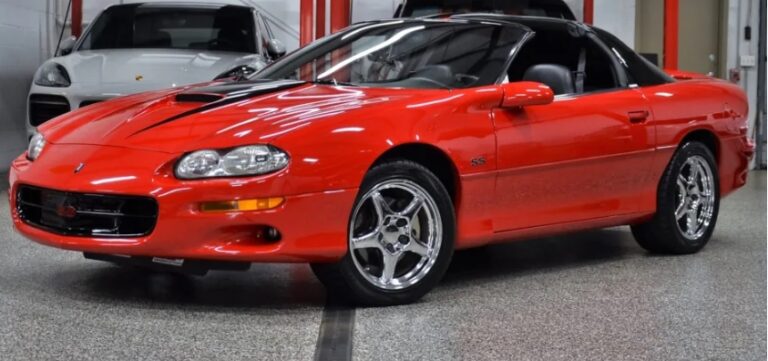
- Chrome 17″ Cragar SS wheels wrapped in performance BFGoodrich tires.
- Cross-drilled rotors with red-coated calipers for a more aggressive look and improved braking feel.
These upgrades made the Hot Rod Edition feel more planted and engaging than a stock LS1-equipped Camaro, particularly in spirited driving scenarios.
Distinctive Styling and Badging
Visually, the Hot Rod Edition distinguished itself with a variety of bespoke touches:
- “HOT ROD Magazine Edition” exterior badging celebrating the collaboration.
- 1969-style hockey stick striping applied to the body—an homage to early muscle car graphics.
- Black rear taillight panel contrasting with the paint.
- New grille with a red bowtie emblem adding a bold front-end accent.
- Painted body-color top hoops and other trim pieces.
- Two-tone leather interiors with special floor mats and embroidered logos.
- Numbered plaques and decals marking each car as part of the limited series.
Collectively these elements helped ensure that the Hot Rod Edition wasn’t just a performance package, but a fully envisioned and collectable special edition.
Models and Trim Levels
Unlike factory-defined trims such as “LT,” “Z28,” or “SS,” the 2002 GMMG Hot Rod Magazine Edition had only one core variant: the Berger/GMMG Hot Rod Edition. Within that singular series, cars could differ slightly depending on original body style and options installed by the customer or dealership prior to tuning:
- Coupe (hardtop) – The most common body style for this edition.
- T-Top Coupe – A rarer example featuring removable roof panels.
- Convertible – Even more limited, with the open-top design adding to desirability.
The Hot Rod Edition was not offered in multiple distinct performance tiers (e.g., Phase II or III) as seen with other GMMG programs like the ZL1 series. Instead, all production cars received the Phase I package as standard. However, individual owners have over the years documented custom enhancements and modifications beyond original specification, increasing variability among surviving examples.
Market Reception and Rarity
At the time, the Hot Rod Edition was one of many specialty F-body variants created by local dealers and tuners; however, it distinguished itself through authenticity and thematic connection to Hot Rod magazine’s storied role in automotive culture. Its limited production—just 36 customer cars plus 2 prototypes—places it among the rarest of fourth-generation special editions.
Collectors and enthusiasts have consistently noted the Hot Rod Edition’s value, with well-preserved, documented examples bringing strong interest at auction and on secondary markets. Specimens with verified rarity, low mileage, or unique provenance (such as original owner history or promotional ties to Hot Rod magazine) can command premiums well above typical fourth-generation Camaro values. Bringing attention to its desirability, auctions like Bring a Trailer have seen limited examples achieve bids in excess of $40,000 and climbing, depending on condition and originality.
Comparisons to Other GMMG Editions
While the Hot Rod Edition occupies its own niche, it is worth briefly comparing it to other GMMG-modified Camaros of the era:
- GMMG ZL1 Supercar – A performance-focused homage to the 1969 ZL1, with more potent Phase II and Phase III engine options and a larger production run (69 customer cars plus prototypes).
- Dick Harrell Edition – A distinct wide-body program introduced slightly later, featuring even more aggressive performance modifications and styling, often with Phase III or Phase IV engines.
In contrast, the Hot Rod Edition’s appeal stems less from outright performance extremes and more from its thematic tribute and collectable nature.
Legacy and Future Outlook
As one of the last special editions of the fourth-generation Camaro before the model’s discontinuation, the 2002 GMMG Chevrolet Camaro Hot Rod Magazine Edition holds an enduring place in muscle-car lore. Its limited numbers, unique collaboration with an iconic automotive publication, and bespoke character combine to make it a standout in the F-body universe.
Looking forward, the legacy of the Hot Rod Edition is likely to continue growing alongside interest in rare, enthusiast-focused vehicles from the late 20th and early 21st centuries. As the broader Camaro model line evolved in later generations—including the modern revival in 2010 and subsequent performance variants such as the ZL1 and 1LE—the lineage of special editions like the Hot Rod Edition offers a tangible link between factory offerings and bespoke performance culture. With the modern collector market increasingly gravitating toward unique variants with provenance and character, these Camaros are poised to appreciate in awareness and value.
The 2002 GMMG Chevrolet Camaro Hot Rod Magazine Edition stands as a rare and meaningful tribute to both the Camaro’s rich history and the longstanding influence of Hot Rod magazine. Produced in an extremely limited run of 38 cars, each example represents not just a final celebration of the fourth-generation Camaro but also a unique moment when performance culture, automotive journalism, and enthusiast dedication intersected. With distinctive styling, purposeful performance enhancements, and strong collectible appeal, the Hot Rod Edition remains one of the most intriguing and desirable special Camaro variants to emerge from the early 2000s.