The Evolution of the Wuling Sunshine: China’s People’s Microvan
The Wuling Sunshine stands as one of the most significant vehicles in modern automotive history—particularly within China’s rapidly expanding economy. Designed as an affordable, practical microvan for families, small businesses, and rural users, the Sunshine became a symbol of mobility and economic growth. From its introduction in 2002 to its continued evolution into newer generations, the model has undergone substantial development while retaining its core identity: simplicity, durability, and value.
Origins and Historical Context
The Wuling Sunshine was developed by SAIC-GM-Wuling (SGMW), a joint venture formed in 2002 between SAIC Motor, General Motors, and Liuzhou Wuling Motors. Its roots trace back to earlier Wuling microvans such as the Wuling Dragon (1990–2009), which itself was derived from licensed versions of the Mitsubishi Minicab.
The Sunshine replaced these earlier models and was intended to modernize Wuling’s lineup. It arrived at a time when China’s urbanization and small-business economy demanded low-cost, reliable transport.
.

.
First Generation (2002–2013)
The first-generation Wuling Sunshine, often internally coded as LZW6371 and related variants, was launched in 2002 and produced until 2013.
Key Features and Specifications
- Body style: 5-door microvan (5–8 seats)
- Engine options: 1.0L–1.2L gasoline engines
- Power output: 50–84 horsepower
- Drivetrain: Mid-engine, rear-wheel drive
- Transmission: 5-speed manual
- Fuel economy: Approximately 6.8–7.8 L/100 km
The Sunshine’s engineering was deliberately simple. It used manual windows, minimal safety equipment, and optional air conditioning to keep costs low. Despite this, it proved extremely reliable and easy to repair—key factors in rural and commercial markets.
Facelifts and Updates
The first generation underwent multiple updates:
- 2006 facelift: Minor exterior refresh
- 2010–2013 facelift: Updated styling and mechanical refinements
These updates helped maintain competitiveness without significantly increasing cost.
Variants and Body Types
Throughout its production, the first-generation Sunshine was offered in multiple configurations:
- Standard passenger van (5–8 seats)
- Long wheelbase version (LWB)
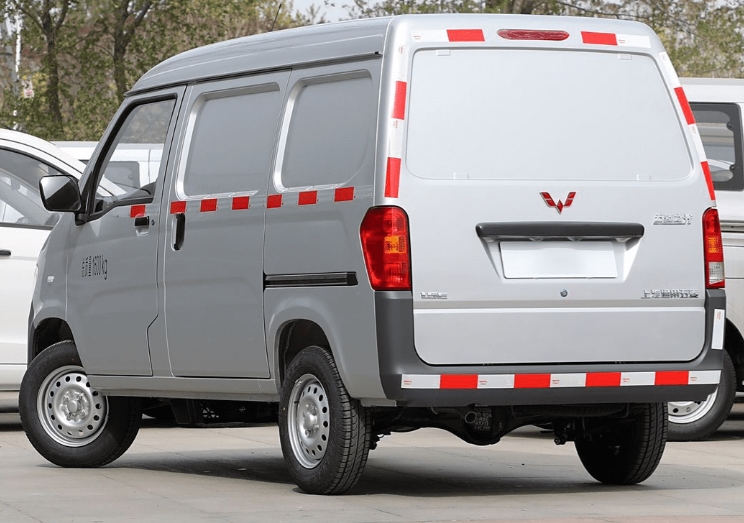
- Panel van/commercial version
- Pickup variant (LZW1027)
Trim Levels
Trim levels were typically basic and function-oriented rather than luxury-oriented. Known trims and configurations included:
- Base model: Minimal equipment, often without air conditioning
- Standard/regular: Slightly upgraded interior and optional features
- Cargo-focused trims: Reduced seating, increased load space
Later model years (around 2012–2013) introduced clearer distinctions such as Base and Regular trims in some markets.
Market Success
The first-generation Sunshine became a global phenomenon:
- Best-selling vehicle in China (2010–2013)
- 943,000 units produced in 2011 alone
- Third best-selling vehicle globally in 2011
Its success was driven by affordability and versatility, making it indispensable for small businesses and rural households.
Second Generation (2010–2022)
The second-generation model, often called the “New Wuling Sunshine” or Wuling 6390, began production around 2010 and overlapped with the first generation until 2013.
Design and Engineering Changes
While retaining the same overall concept, the second generation introduced:
- Updated exterior styling
- Improved interior ergonomics
- Slightly more refined ride quality
- Expanded engine lineup
Despite these changes, the platform remained fundamentally similar, ensuring continuity and cost efficiency.
Powertrain Options
The second generation offered a broader range of engines:
- 1.0L inline-4 engines (various variants)
- 1.1L inline-4 engines
- 1.2L inline-4 engines
All engines were paired with a 5-speed manual transmission, maintaining the model’s simplicity.
Trim Levels and Variants
The second generation expanded the Sunshine lineup with more defined trims and sub-models:
- Base / entry-level trims
- Standard/regular trims
- Cargo-oriented versions
- Passenger-focused variants
Additionally, more specialized versions appeared:
- Sunshine S (introduced around 2015): A more upscale variant with improved features
- Regional variants: Different trims and equipment levels depending on export markets
Global and Regional Variants
Unlike the first generation, the second generation saw broader international adaptation:
- Sunshine S / Confero (Southeast Asia)
- Sunshine L (Africa)
- Badge-engineered versions (e.g., Chevrolet N200)
These models often featured upgraded interiors, improved safety, and larger engines to meet local requirements.
2013 Update
A notable refresh in 2013 refined styling and retained the 1.0L engine producing around 61 horsepower, demonstrating Wuling’s commitment to incremental improvement rather than radical redesign.
Third Generation (2025–Present)
The third-generation Wuling Sunshine was introduced around 2025, marking a significant modernization of the platform.
Key Improvements
Although detailed specifications are still emerging, the third generation is expected to include:
- Updated safety features (airbags, ABS standardization)
- More efficient engines
- Potential electrified or hybrid variants
- Improved cabin comfort and infotainment
This generation reflects broader industry trends toward electrification and safety compliance.
Design Philosophy and Practicality
Across all generations, the Wuling Sunshine has adhered to a consistent design philosophy:
- Affordability above all else
- Mechanical simplicity
- Maximum interior space
- Ease of maintenance
Its cab-forward design, compact footprint, and flexible seating arrangements made it ideal for:
- Rural transportation
- Small-scale logistics
- Urban delivery services
- Family use
Trim Levels Overview (Across Generations)
While exact naming conventions varied by market and year, the Sunshine lineup generally included:
Core Trim Categories
- Base:
- Minimal features
- No air conditioning (optional)
- Basic interior
- Standard / Regular:
- Improved seating materials
- Optional air conditioning
- Slightly upgraded dashboard
- Commercial / Cargo:
- Reduced seating
- Reinforced suspension
- Focus on payload capacity
- Passenger-focused trims:
- Full seating configurations
- More comfort-oriented features
Special and Regional Trims
- Sunshine S: More upscale variant
- Sunshine L: Heavy-duty export version
- Electric/Hybrid variants (limited markets): Emerging in recent years
Cultural and Economic Impact
The Wuling Sunshine’s importance extends beyond automotive engineering. It played a central role in:
- Supporting China’s small business ecosystem
- Providing affordable mobility to millions
- Enabling rural economic participation
Its widespread adoption earned it the nickname of a “people’s vehicle,” similar in cultural significance to the Volkswagen Beetle or Ford Model T in their respective eras.
Strengths and Weaknesses
Strengths
- Extremely affordable
- Durable and reliable
- Easy to repair
- Highly versatile
Weaknesses
- Limited safety features (especially early models)
- Basic interior quality
- Modest performance
These trade-offs were intentional, prioritizing accessibility over refinement.
Future Outlook
The future of the Wuling Sunshine is closely tied to broader automotive trends:
Electrification
Wuling has already demonstrated success with electric vehicles like the Hongguang Mini EV. Future Sunshine models are likely to include:
- Fully electric variants
- Hybrid powertrains
- Improved battery technology
Safety and Regulations
As global safety standards tighten, newer Sunshine models will likely include:
- Standard airbags
- ABS and stability control
- Reinforced structures
Continued Global Expansion
With increasing demand in emerging markets, the Sunshine platform is expected to evolve into more region-specific variants, maintaining its role as an affordable global workhorse.
From its debut in 2002 to its modern iterations, the Wuling Sunshine has remained true to its original mission: delivering simple, affordable, and practical transportation. Across three generations, it has adapted to changing markets while preserving its core identity.
Its legacy is defined not by luxury or performance, but by impact. Few vehicles have played such a direct role in empowering everyday people and small businesses. As the automotive industry transitions toward electrification and increased safety, the Sunshine is poised to evolve once again—continuing its journey as one of the world’s most influential microvans.