The Evolution of the Geely Vision X1 and X6: From Budget Crossovers to Modern Compact SUVs
The Geely Vision X1 and Vision X6 represent two important branches of Geely Auto’s Vision lineup, developed during a period of rapid expansion and technological improvement for the company. While the Vision X1 served as an entry-level micro crossover, the Vision X6 evolved from an earlier SUV platform into a more refined compact SUV with global ambitions. Together, these vehicles illustrate how Geely transitioned from basic domestic offerings to increasingly competitive modern crossovers.
Origins of the Vision Series
Geely introduced the Vision (Yuanjing) series as a value-focused lineup aimed at cost-conscious buyers. Positioned below the company’s more premium Emgrand and later Boyue models, Vision vehicles emphasized affordability, practicality, and accessibility.
The Vision X6 traces its roots back to 2012, when Geely launched the Gleagle GX7, one of its earliest compact SUVs. This model underwent several rebrandings before becoming the Vision X6 in 2016.
Meanwhile, the Vision X1 was introduced later as a smaller, urban-oriented crossover designed for first-time buyers.
.
THIS is GOOD stuff if your car is in need:

.
Geely Vision X1: Production and Model Evolution (2017–2019)
Launch and Positioning
The Geely Vision X1 debuted in 2017 as a micro crossover SUV positioned below the Vision X3. It targeted younger buyers and urban drivers seeking a compact, affordable vehicle with SUV styling.
Production ran from 2017 to approximately 2019, making it one of the shorter-lived models in Geely’s lineup.
Powertrain and Mechanical Layout
The Vision X1 was built on a compact front-wheel-drive platform and offered small displacement engines:
- 1.0-liter inline-3 engine
- 1.3-liter inline-4 engine
Both engines were paired with either a 5-speed manual transmission or an automated manual transmission (AMT), prioritizing fuel efficiency and low cost over performance.
Trim Levels
The Vision X1 was typically offered in multiple trims, often varying by market, but generally included:
- Base / Standard Trim
- Manual windows (in early variants)
- Basic infotainment system
- Steel wheels
- Mid-Level Trim
- Power windows and mirrors
- Air conditioning
- Upgraded audio system
- High-End / Luxury Trim
- Touchscreen infotainment
- Alloy wheels
- Enhanced interior finishes
While trim naming conventions varied, this tiered structure allowed buyers to choose between affordability and added convenience.
Design and Features
The Vision X1 emphasized youthful styling:
- Compact five-door crossover body
- Raised ride height
- Bright color options and contrasting trim
Despite its small size, it included modern features such as touchscreen infotainment and smartphone connectivity in higher trims, reflecting Geely’s push toward tech integration even in entry-level vehicles.
Discontinuation
By around 2019, the Vision X1 was discontinued as Geely streamlined its lineup and shifted focus toward more advanced platforms and electrified vehicles.
Geely Vision X6: Origins as GX7 (2012–2016)
First Generation: Gleagle GX7 / Emgrand GX7
The Vision X6’s lineage begins with the Gleagle GX7, launched in 2012.
This model was also sold under multiple names:
- Gleagle GX7
- Shanghai Englon SX7
- Emgrand GX7
This multi-brand strategy reflected Geely’s early attempt to segment its lineup, though it later proved confusing and was abandoned.
Powertrains and Features
The GX7 offered:
- 1.8-liter inline-4 engine
- 2.0-liter inline-4 engine
- Manual and automatic transmissions
It was designed as a practical compact SUV with:
- Five-door configuration
- Front-wheel-drive layout
- Spacious interior
Trim Levels
Typical trims included:
- Standard
- Comfort
- Luxury
Higher trims added features such as:
- Leather upholstery
- Sunroof
- Advanced infotainment systems
Transition to Vision X6 (2016–2019)
Rebranding and Second Generation Launch
In 2016, Geely rebranded and heavily updated the GX7 as the Vision X6, aligning it with the Vision series.
This marked the beginning of the second generation, with updated styling and improved technology.
Engine Options
At launch, the Vision X6 offered:
- 1.3-liter turbocharged engine (with CVT)
- 1.8-liter naturally aspirated engine (with manual transmission)
These engines provided improved efficiency and performance compared to earlier GX7 units.
Trim Levels (2016 Launch)
The 2016 Vision X6 debuted with six trim levels, reflecting a broader range of configurations:
- Base models with manual transmission
- Mid-range trims with CVT and added comfort features
- High-end trims with advanced safety systems
Standard and optional features included:
- ABS and electronic stability control
- Front airbags (standard)
- Side airbags and curtain airbags (higher trims)
- Infotainment systems with touchscreen displays
Facelifts and Updates (2018–2021)
2018 Facelift
The 2018 update brought:
- Revised front grille design
- Updated interior materials
- Improved infotainment
This facelift helped maintain competitiveness in China’s rapidly growing SUV market.
2020 Facelift
A more substantial update arrived in 2020, featuring:
- Redesigned front and rear styling
- Black Geely badges
- Updated dimensions (length increased to about 179 inches)
Powertrain improvements included a 1.4-liter turbocharged engine producing around 141 horsepower.
Transmission options expanded to include:
- 6-speed automatic
- CVT
2019–2020 Trim Levels
By 2019, the Vision X6 was offered in six trims, reflecting a more refined lineup:
Typical trim hierarchy included:
- Entry-level manual variants
- Mid-range automatic trims
- High-end trims with advanced driver assistance systems
High-end features included:
- Adaptive cruise control (ACC)
- Autonomous emergency braking (AEB)
- Large touchscreen infotainment (up to 10.25 inches)
Vision X6 Pro and Continued Evolution (2021–2024)
2021 Facelift: Vision X6 Pro
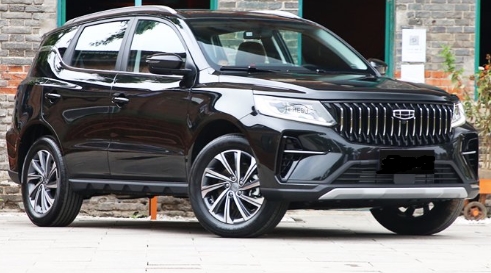
In 2021, Geely introduced the Vision X6 Pro, a heavily updated version featuring:
- Sharper exterior styling
- Improved interior quality
- Enhanced technology
This version continued production through 2024, representing the most refined iteration of the Vision X6.
Trim Levels
The X6 Pro maintained a multi-trim structure:
- Base
- Mid-level
- High-end
Higher trims emphasized connectivity and safety, including:
- Digital instrument clusters
- Advanced driver assistance systems
- Premium interior materials
Third Generation and Renaming (2024–Present)
In 2024, Geely introduced a significantly updated model, renaming the vehicle Haoyue Pro while retaining its underlying platform.
This marked the third generation, featuring:
- Updated design language
- New 1.5-liter turbocharged engine
- Improved technology and connectivity
The model is also exported under different names, such as the Livan X6 Pro, reflecting Geely’s expanding global strategy.
Sales Performance and Market Impact
The Vision X6 has been one of Geely’s more successful SUVs, particularly in China. Sales peaked in 2017 at over 126,000 units before stabilizing in subsequent years.
Its success can be attributed to:
- Competitive pricing
- Strong feature set for the segment
- Continuous updates and facelifts
The Vision X1, while less successful, played an important role in introducing younger buyers to the brand.
Design Philosophy and Engineering
Both models reflect Geely’s evolving design and engineering philosophy:
- Early models emphasized affordability and practicality
- Later versions incorporated global design cues and advanced technology
- Collaboration with international partners improved quality and performance
The Vision X6, in particular, benefited from Geely’s growing expertise following its acquisition of Volvo, which influenced safety and engineering standards.
Future Outlook
Although the Vision X1 has been discontinued, its role has been replaced by newer entry-level vehicles and electric models in Geely’s lineup.
The Vision X6, meanwhile, continues to evolve under new branding. The transition to the Haoyue Pro and related export models suggests:
- Continued relevance in emerging markets
- Increasing focus on turbocharged and electrified powertrains
- Integration of advanced connectivity and driver assistance systems
Geely’s broader strategy includes electrification and global expansion, meaning future successors to the Vision X6 will likely incorporate hybrid or fully electric platforms.
The Geely Vision X1 and X6 represent two distinct but complementary approaches within Geely’s Vision lineup. The X1 offered an affordable entry point into the crossover market, while the X6 evolved into a more sophisticated compact SUV with multiple generations, facelifts, and global variants.
From the early GX7 roots in 2012 to the modern Haoyue Pro introduced in 2024, the Vision X6 demonstrates Geely’s steady progress in design, engineering, and market positioning. Alongside it, the Vision X1 highlights the company’s efforts to capture younger, urban buyers.
Together, these vehicles illustrate how Geely transformed itself from a domestic budget automaker into a globally competitive brand, with the Vision series serving as a crucial stepping stone in that journey.