The Evolution of the Geely Geometry C: From Early EV Pioneer to Global Compact Crossover
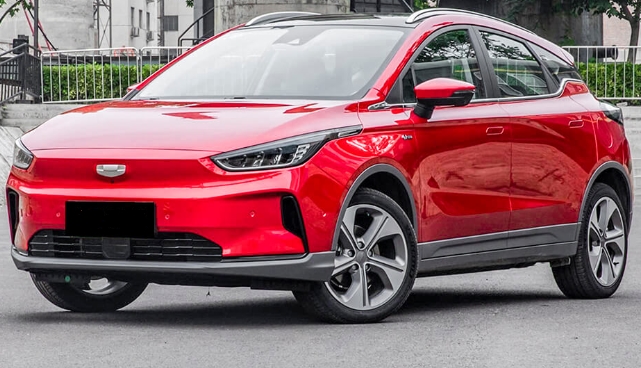
The Geely Auto Geometry C stands as one of the most important early electric crossovers in Geely’s modern lineup. Introduced in 2020 under the Geometry electric sub-brand, the Geometry C helped establish Geely’s presence in the rapidly growing global EV market. Over its production life from 2020 to 2024, the model evolved through multiple trim levels, battery configurations, and international variants, before transitioning into the updated Geometry M6.
This article traces the full evolution of the Geometry C, including its origins, production years, trim structures, technical development, and long-term significance.
Origins: The Geometry Brand and Early Development (2019–2020)
The Geometry C was the second model launched under Geely’s Geometry sub-brand, which debuted in 2019 with the Geometry A sedan. The Geometry brand was created to focus specifically on affordable, mass-market electric vehicles, targeting younger buyers and urban markets.
Development of the Geometry C began shortly after the Geometry A, with a focus on creating a compact electric crossover—a body style rapidly gaining popularity worldwide.
The model was based on the gasoline-powered Geely Emgrand GS platform, but heavily modified for electric use.
Launch and Production (2020–2024)
The Geometry C officially launched in June 2020, with sales beginning shortly after in China.
Production Timeline
- 2020 – Initial launch
- 2021–2022 – Expansion of trims and exports
- 2023 – Gradual transition toward facelifted successor
- 2024 – End of primary production
Overall production ran from 2020 to 2024, making it a relatively short-lived but impactful model.
.
THIS is GOOD stuff if your car is in need:

.
First Generation Overview
The Geometry C was produced as a single generation, with updates occurring through trim and feature revisions rather than full redesigns.
Core Specifications
- Body style: 5-door compact crossover
- Drivetrain: front-wheel drive
- Motor: up to 150 kW (about 201 horsepower)
- Top speed: about 93 mph (150 km/h)
The vehicle used a single electric motor across all variants, simplifying production and maintenance.
Early Trim Levels and Model Structure (2020 Launch)
At launch, the Geometry C was offered with five trim levels, combining battery size and equipment level.
Battery Options
- 53 kWh battery
- Range: ~249 miles (NEDC 400 km)
- 70 kWh battery
- Range: ~342 miles (NEDC 550 km)
2020 Trim Lineup
Although naming varied slightly by region, the initial lineup included:
- 350 Pure (entry-level, smaller battery)
- 350 Pro (mid-level, smaller battery)
- 460 Pro (long-range mid-level)
- Additional higher-end variants with expanded features
These trims reflected a range-based naming system, where numbers corresponded to approximate driving range.
Expanded Trim Levels (2021–2022)
By 2021 and 2022, the Geometry C lineup expanded significantly, introducing more detailed trim naming conventions—often using fruit-themed names in the Chinese market.
2022 Trim Levels
Examples of trims included:
- 400 km Blueberry Pro
- 400 km Blueberry Plus
- 550 km Grapefruit Pro
- 550 km Grapefruit Plus
- 550 km Grapefruit Halo
- 550 km Business Edition
This expanded structure allowed Geely to:
- Offer more price points
- Differentiate features more clearly
- Appeal to a wider audience
Powertrain and Performance Evolution
The Geometry C maintained a consistent powertrain architecture, but refined its efficiency and usability over time.
Motor
- Output: 150 kW (about 201 hp)
- Torque: approximately 229 lb-ft (310 Nm)
- Acceleration: about 0–60 mph in 7 seconds
Battery Development
- Continued use of CATL lithium-ion batteries
- Improvements in energy density and efficiency
- Enhanced thermal management systems
Design and Engineering
Exterior Design
The Geometry C featured a modern, aerodynamic design with:
- Flush door handles
- Full-width LED taillights
- Floating roof design
These features contributed to a low drag coefficient of 0.273, improving efficiency.
Dimensions
- Length: ~174.5 inches (4432 mm)
- Width: ~72.2 inches (1833 mm)
- Height: ~61.4 inches (1560 mm)
- Wheelbase: ~106.3 inches (2700 mm)
These dimensions placed it firmly in the compact SUV segment.
Interior and Technology
The Geometry C emphasized a technology-focused interior, reflecting broader EV trends.
Key Features
- Dual-screen digital cockpit
- 12.3-inch infotainment display
- Head-up display (HUD)
- Advanced air filtration system
Driver Assistance Systems
Higher trims included:
- Adaptive cruise control
- Lane-keeping assist
- Blind spot detection
- 540-degree camera system
Global Expansion and Market Impact
The Geometry C was one of Geely’s first EVs to achieve significant international success.
Key Markets
- China (primary market)
- Israel (notably successful)
- Europe (limited rollout)
- Middle East and Africa
In August 2022, the Geometry C became the top-selling vehicle in Israel, marking a milestone for Chinese EVs globally.
Sales Performance
- 2020: 5,277 units
- 2021: 10,770 units
- 2022: 28,414 units (peak year)
- 2023: 10,391 units
- 2024: 4,656 units
Sales growth peaked in 2022 before declining as newer models entered the market.
Facelift and Transition: Geometry M6 (2022–Present)
In September 2022, Geely introduced the Geometry M6, a heavily updated version of the Geometry C.
Key Changes in M6
- Redesigned front and rear styling
- Integration of Huawei HarmonyOS
- Updated infotainment and connectivity
- Revised trim structure
The M6 effectively replaced the Geometry C, although both models overlapped in production for a short period.
Trim Evolution Summary
2020 Launch Trims
- 350 Pure
- 350 Pro
- 460 Pro
- Higher-end variants
2021–2022 Expanded Trims
- Blueberry Pro / Plus
- Grapefruit Pro / Plus / Halo
- Business Edition
2023 Export Trims
- 360 Pure
- 360 Pro
- 480 Pure
- 480 Pro
Relationship to Other Models
The Geometry C is closely related to:
- Geometry A (sedan predecessor)
- Geometry M6 (facelift successor)
- Geely Emgrand GS (platform origin)
It also helped lay the groundwork for later models such as the Geometry G6.
Brand Transition: Geometry to Geely Integration
During the Geometry C’s lifecycle, Geely restructured its EV strategy:
- 2023: Geometry integrated into Geely Auto
- Focus shifted toward unified EV branding
This transition marked the end of Geometry as a standalone brand.
Strengths and Limitations
Strengths
- Competitive pricing
- Strong range for its time
- Modern design and technology
- Global market success
Limitations
- Based on adapted ICE platform
- Increasing competition from newer EVs
- Limited differentiation in later years
Future Outlook and Legacy
Although production of the Geometry C ended in 2024, its influence continues.
Legacy
- One of Geely’s first globally successful EVs
- Helped establish the Geometry brand
- Demonstrated viability of compact electric crossovers
Future Implications
The Geometry C paved the way for:
- Geometry M6 and G6
- Geely Galaxy EV lineup
- More advanced EV platforms
Significance in the EV Market
The Geometry C represents a key moment in EV development:
1. Early Mainstream EV Adoption
It helped bring electric crossovers to a broader audience.
2. Global Expansion of Chinese EVs
Its success in Israel and other markets showed growing international acceptance.
3. Transitional Engineering
It bridged older platforms and newer dedicated EV designs.
The Geely Geometry C, produced from 2020 to 2024, stands as a pivotal model in the evolution of affordable electric vehicles. With a wide range of trims—from early 350 Pure models to later Grapefruit and Blueberry variants—it offered flexibility, practicality, and competitive range during a critical growth period for EVs.
Though eventually replaced by the Geometry M6, the Geometry C’s impact remains significant. It not only established Geely as a serious player in the electric crossover segment but also helped shape the company’s future direction in electrification.
As the automotive industry continues its shift toward electric mobility, the Geometry C will be remembered as an important stepping stone—one that helped bring electric vehicles closer to the mainstream.