The Riich G3: Evolution of Chery’s Compact Premium Sedan Experiment
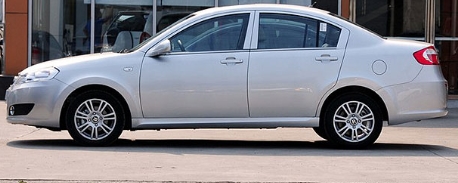
The Riich G3 represents one of the final chapters in Chery Automobile’s ambitious but ultimately short-lived attempt to establish a premium automotive sub-brand under the Riich name. Introduced in the early 2010s, the G3 was positioned as a compact sedan offering enhanced refinement over mainstream Chery models, bridging the gap between affordability and aspirational design.
Although produced for only a brief period, the Riich G3 reflects a transitional moment in China’s automotive industry—when domestic manufacturers began experimenting with branding, quality improvements, and global competitiveness. This article explores the evolution of the Riich G3, including its production timeline, trim levels, engineering, and legacy.
Origins of the Riich Brand and G3 Development (2009–2011)
The Riich G3’s story begins with the creation of the Riich brand in 2009, a premium division launched by Chery to compete with higher-end domestic and international vehicles. Chery Automobile introduced Riich as part of a broader multi-brand strategy, aiming to elevate its image beyond budget vehicles.
Within this lineup, earlier models such as the G5 and G6 targeted mid-size and executive segments. The G3, however, was conceived as a compact sedan alternative, offering a more accessible entry point into the Riich brand.
The G3 was developed as a premium derivative of the Chery E5, incorporating improved styling, upgraded interiors, and enhanced features.
.

.
Introduction and Production Timeline
The Riich G3 was introduced in 2011, making it one of the final models launched under the Riich brand.
- Years produced: 2011–2013
- Vehicle class: Compact sedan
- Body style: Four-door sedan
- Assembly: Wuhu, Anhui, China
Production lasted only about two years, as the Riich brand itself was discontinued in April 2013 due to weak sales and limited market acceptance.
This short production run makes the G3 one of the rarest Riich models.
Design Evolution and Positioning
Exterior Design
The Riich G3 adopted a design language that was more conservative and refined than earlier Chery models:
- Clean, understated front fascia
- Chrome-accented grille
- Balanced sedan proportions
Compared to its donor model, the Chery E5, the G3 featured subtle styling enhancements intended to give it a more premium appearance.
Dimensions and Size
The G3’s dimensions placed it firmly in the compact sedan segment:
- Length: approximately 180–182 inches
- Wheelbase: around 102–103 inches
These proportions made it comparable to global compact sedans such as the Toyota Corolla and Honda Civic.
Interior Improvements
One of the G3’s key selling points was its upgraded interior:
- Improved materials compared to standard Chery models
- Enhanced dashboard design
- Additional comfort features
While still modest by global standards, the interior represented a step forward in Chery’s pursuit of higher quality.
Engineering and Platform
The Riich G3 was built on the same platform as the Chery E5, reflecting a common strategy of platform sharing to reduce development costs.
Key Characteristics
- Front-engine, front-wheel drive layout
- Independent front suspension (MacPherson struts)
- Rear torsion beam suspension
This setup prioritized affordability and practicality over performance.
Powertrain and Technical Specifications
Unlike larger Riich models, the G3 offered a relatively simple range of powertrain options.
Engine
- 1.5-liter inline-4 gasoline engine
- Output: approximately 107 horsepower
This engine was part of Chery’s Acteco family and was designed for efficiency and reliability.
Transmission Options
- 5-speed manual transmission
- Continuously variable transmission (CVT) (available in higher trims)
The availability of a CVT provided smoother driving characteristics, particularly in urban environments.
Performance
- Modest acceleration and top speed
- Emphasis on fuel efficiency
- Suitable for city and light highway use
The G3 was not intended as a performance vehicle but rather as a practical daily driver.
Models and Trim Levels (2011–2013)
The Riich G3 followed a straightforward trim structure, typical of compact sedans in emerging markets.
1. Base / Standard Trim
- 1.5L engine with manual transmission
- Basic interior features
- Essential safety systems (ABS, airbags)
This trim targeted budget-conscious buyers seeking an affordable sedan.
2. Comfort / Mid-Level Trim
- Optional CVT transmission
- Improved interior materials
- Additional convenience features such as power windows and upgraded audio
This version offered a balance between price and comfort.
3. Luxury / Premium Trim
- Full feature set
- Enhanced infotainment system
- Leather upholstery (market-dependent)
- Additional safety features
This trim represented the most refined version of the G3, aligning with Riich’s premium aspirations.
Evolution During Production
Although the Riich G3 had a short lifecycle, it underwent minor refinements:
2011 (Launch Year)
- Introduction of base, comfort, and premium trims
- Initial market rollout
2012 (Refinement Phase)
- Minor feature updates
- Expanded availability of CVT transmission
- Incremental improvements in interior quality
2013 (End of Production)
- Declining sales
- Discontinuation of the Riich brand
- End of G3 production
Unlike some competitors, the G3 did not receive a facelift or second generation.
Market Position and Competition
The Riich G3 competed in the compact sedan segment, one of the most competitive automotive categories.
Key Competitors
- Toyota Corolla
- Honda Civic
- Volkswagen Jetta
Strengths
- Competitive pricing
- Improved interior compared to standard Chery models
- Availability of automatic transmission
Weaknesses
- Limited brand recognition
- Perceived quality gap
- Short production lifespan
Relationship to Other Riich Models
The G3 was part of a broader Riich lineup:
- Riich M1: Subcompact hatchback
- Riich M5: Small sedan
- Riich G5: Mid-size sedan
- Riich G6: Full-size sedan
The G3 served as a bridge between entry-level and mid-size vehicles, offering a compact yet relatively refined option.
Challenges and Decline
The Riich G3’s evolution was heavily influenced by the challenges faced by the Riich brand itself.
Brand Identity Issues
Riich struggled to establish itself as a premium brand, particularly in a market dominated by established international manufacturers.
Market Competition
The compact sedan segment was highly saturated, making it difficult for the G3 to stand out.
Limited Differentiation
Because the G3 was closely based on the Chery E5, it lacked the distinctiveness needed to justify its premium positioning.
Discontinuation of the Riich Brand (2013)
In 2012, Chery announced plans to discontinue the Riich brand due to poor sales performance.
- April 2013: Official end of Riich sales
- Production of the G3 ceased shortly thereafter
This marked the end of the G3’s lifecycle and Chery’s first attempt at a premium sub-brand.
Legacy and Influence
Although short-lived, the Riich G3 contributed to Chery’s long-term development.
Lessons in Branding
The failure of the Riich brand highlighted the importance of:
- Clear brand identity
- Strong differentiation
- Consistent quality
Platform Strategy
The G3 demonstrated the effectiveness—and limitations—of platform sharing.
Influence on Future Models
Chery later applied lessons from Riich to newer global brands, improving:
- Design quality
- Technology integration
- Market positioning
Evolution Summary
The evolution of the Riich G3 can be summarized as follows:
2011
- Launch as a compact premium sedan
- Introduction of multiple trims
2012
- Minor updates and refinements
- Expansion of automatic transmission availability
2013
- Discontinuation of Riich brand
- End of production
Future Outlook and Historical Significance
Although the Riich G3 has no direct successor, its influence can still be seen in modern Chery vehicles:
- Improved compact sedan offerings
- Better integration of technology and design
- Stronger global brand strategies
The G3 also reflects a broader trend:
- The evolution of Chinese automakers from budget-focused to globally competitive
The Riich G3 was a modest but meaningful step in Chery’s journey toward building more refined and competitive vehicles. Produced from 2011 to 2013, it served as a compact sedan offering improved quality and features within the Riich lineup.
Key highlights of its evolution include:
- A single-generation lifecycle with minor updates
- A three-tier trim structure (base, comfort, luxury)
- A simple powertrain lineup focused on efficiency
- A short production run, ending with the discontinuation of the Riich brand
While it ultimately struggled in the marketplace, the Riich G3 provided valuable lessons that continue to shape Chery’s modern vehicles. Today, it stands as a reminder of an ambitious experiment—one that helped pave the way for the global success of Chinese automakers in the years that followed.