The Evolution of the BMW X1: How BMW’s Smallest SUV Became a Global Success
The BMW X1 has played a crucial role in BMW’s sport utility vehicle lineup since its introduction in 2009. As the smallest member of BMW’s X family for much of its existence, the X1 was designed to bring the premium SUV experience to a wider audience while combining the practicality of a crossover with the driving dynamics traditionally associated with the BMW brand. Over three generations, the X1 has evolved from a compact rear-wheel-drive-based crossover into a technologically advanced luxury SUV available with gasoline, diesel, plug-in hybrid, and fully electric powertrains.
Produced continuously since 2009, the X1 has become one of BMW’s best-selling models worldwide. Its success has helped establish BMW as a major player in the premium compact SUV segment and has influenced the development of numerous competitors from other luxury manufacturers.
Origins and Development
The origins of the X1 can be traced to the 2008 Paris Motor Show, where BMW unveiled the Concept X1. The concept previewed a compact crossover positioned below the larger X3 and targeted at buyers seeking a premium vehicle with SUV versatility in a smaller package.
At the time, BMW’s SUV lineup consisted primarily of the X3, X5, and X6. The company recognized growing consumer demand for smaller crossovers, particularly in Europe and urban markets. The X1 was developed to fill this gap and attract younger buyers to the BMW brand.
Production of the first-generation X1 began in 2009 at BMW’s Leipzig plant in Germany, marking the beginning of what would become one of the company’s most successful vehicle lines.
.
NO MORE dead batteries with this:

.
First Generation (E84: 2009–2015)
The first-generation BMW X1, internally designated E84, debuted in 2009 as a 2010 model-year vehicle. Unlike many compact crossovers, the E84 was based on the rear-wheel-drive architecture of the BMW 3 Series (E90), giving it handling characteristics more similar to a sports sedan than a traditional SUV.
The vehicle featured a relatively low roofline, short overhangs, and BMW’s signature kidney grille. It was offered with rear-wheel drive (sDrive) and all-wheel drive (xDrive) configurations.
Early Model Lineup (2009–2012)
Depending on market, available models included:
Gasoline Models
- X1 sDrive18i
- X1 sDrive20i
- X1 xDrive20i
- X1 xDrive28i
- X1 xDrive35i
Diesel Models
- X1 sDrive16d
- X1 sDrive18d
- X1 xDrive18d
- X1 sDrive20d
- X1 xDrive20d
- X1 xDrive23d
- X1 xDrive25d
Engine outputs ranged from approximately 114 horsepower in the diesel-powered sDrive16d to 300 horsepower in the turbocharged six-cylinder xDrive35i.
Trim Levels
BMW generally offered the X1 with equipment packages rather than traditional trim levels. Common packages included:
Base
- Automatic climate control
- Alloy wheels
- Stability control
- Premium interior materials
xLine
- Unique exterior trim
- Special wheels
- Distinctive interior accents
Sport Line
- Sport seats
- Performance-inspired styling
- Sport steering wheel
M Sport
- Aerodynamic body kit
- Larger wheels
- M Sport suspension
- Premium interior enhancements
2012 Facelift
In 2012, BMW introduced a facelift for the E84 generation.
Updates included:
- Revised front bumper
- New headlights
- Updated taillights
- Additional engine improvements
- New wheel designs
- Enhanced interior technology
The facelift also introduced more efficient engines and improved fuel economy across the lineup.
Second Generation (F48: 2015–2022)
The second-generation X1, known internally as the F48, debuted in 2015 and represented one of the most significant changes in the model’s history.
Unlike its predecessor, the F48 moved to BMW’s UKL2 front-wheel-drive-based platform, shared with MINI models and other compact BMW vehicles. This transition allowed BMW to increase interior space significantly while improving practicality.
Although some enthusiasts criticized the move away from rear-wheel-drive architecture, the majority of buyers appreciated the improved cabin room, larger cargo area, and greater efficiency.
Model Lineup (2015–2019)
Gasoline Models
- sDrive18i
- sDrive20i
- xDrive20i
- xDrive25i
Diesel Models
- sDrive16d
- sDrive18d
- xDrive18d
- sDrive20d
- xDrive20d
- xDrive25d
Plug-In Hybrid
- xDrive25e (introduced later in the generation)
Power outputs ranged from approximately 114 horsepower to more than 230 horsepower depending on engine choice.
Available Trims
BMW expanded the trim structure during this generation.
SE
The entry-level trim included:
- Dual-zone climate control
- Navigation system
- Rear parking sensors
- LED daytime running lights
Sport
Added:
- Larger wheels
- Sport seats
- Enhanced exterior styling
xLine
Included:
- SUV-inspired exterior accents
- Aluminum trim details
- Unique upholstery options
M Sport
Featured:
- M aerodynamic package
- Sport suspension
- M steering wheel
- Sport seats
M Sport Plus Package
Available in many markets and included:
- Larger wheels
- Upgraded brakes
- Premium audio system
- Additional performance-oriented features
2019 Facelift
The F48 received a major facelift in 2019.
Changes included:
- Larger kidney grilles
- Revised front and rear bumpers
- Updated LED lighting
- New digital displays
- Improved infotainment systems
- Additional driver-assistance technology
The facelift also marked the introduction of BMW’s latest-generation infotainment software and expanded connectivity features.
Third Generation (U11: 2022–Present)
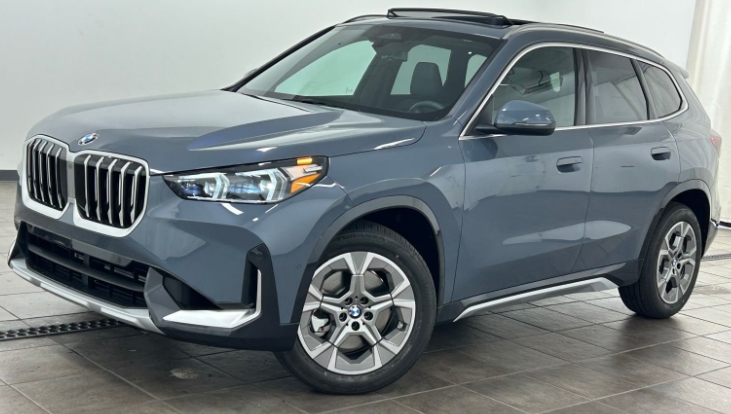
The third-generation X1, internally designated U11, debuted in 2022 and remains in production today.
The latest generation represents the most technologically advanced X1 ever produced. It features a more upright design, larger dimensions, improved interior space, and extensive digital technology.
The U11 also introduced the first fully electric version of the X1, significantly expanding the model’s appeal in markets transitioning toward electrification.
Current Model Range
Gasoline Models
- sDrive18i
- sDrive20i
- xDrive23i
Diesel Models
- sDrive18d
- xDrive23d
Plug-In Hybrid Models
- xDrive25e
- xDrive30e
Performance Model
- M35i xDrive
Fully Electric Models
- iX1 eDrive20
- iX1 xDrive30
Power outputs range from approximately 134 horsepower in certain entry-level models to more than 300 horsepower in the M35i xDrive.
Current Trim Levels
Depending on market, trims typically include:
Base
- Digital instrument cluster
- Curved display
- Advanced safety systems
- Wireless smartphone integration
xLine
Adds:
- Distinctive SUV styling
- Premium trim materials
- Additional comfort features
M Sport
Includes:
- M aerodynamic package
- Sport seats
- M steering wheel
- Unique suspension tuning
M Sport Pro
Offers:
- Larger performance wheels
- Enhanced braking systems
- Additional appearance upgrades
BMW iX1
One of the most important developments in the X1’s history is the introduction of the BMW iX1.
The fully electric model uses battery-electric technology and offers:
- Zero tailpipe emissions
- All-wheel drive availability
- Rapid charging capability
- Competitive driving range
The iX1 reflects BMW’s broader strategy of electrifying its lineup while maintaining familiar model names and vehicle formats.
Technology Evolution
Over three generations, the X1 has seen major technological advances.
Notable innovations include:
- xDrive intelligent all-wheel drive
- Adaptive cruise control
- Lane-keeping assistance
- Digital instrument displays
- Wireless smartphone connectivity
- Over-the-air software updates
- Plug-in hybrid technology
- Fully electric powertrains
These features have transformed the X1 from a relatively simple premium crossover into a highly connected luxury vehicle.
Global Production
Production of the X1 has expanded beyond Germany.
Manufacturing locations have included:
- Leipzig, Germany
- Regensburg, Germany
- Shenyang, China
- Chennai, India
- Araquari, Brazil
This global production strategy has helped BMW meet growing demand across multiple regions while reducing logistics costs.
Sales Success and Market Impact
The X1 has consistently ranked among BMW’s best-selling vehicles worldwide. Its combination of luxury, practicality, efficiency, and relatively accessible pricing has made it particularly popular in Europe, China, and North America.
The model has also played a key role in attracting first-time BMW customers, many of whom later move into larger BMW vehicles.
Future Outlook
The future of the BMW X1 appears strong as demand for premium compact SUVs continues to grow globally. BMW is expected to continue expanding electrified offerings while maintaining gasoline, diesel, and plug-in hybrid options in markets where demand remains strong.
Future updates will likely focus on:
- Increased electric driving range
- Enhanced autonomous driving features
- Advanced software integration
- Improved battery technology
- Greater sustainability in manufacturing
As BMW continues its transition toward electrification, the iX1 is expected to become an increasingly important part of the lineup. At the same time, performance-oriented variants such as the M35i will ensure that the X1 retains the driving character that has defined the model since its debut.
More than fifteen years after its introduction, the BMW X1 remains one of the most successful compact luxury SUVs ever produced. From its origins as a rear-wheel-drive-based crossover to today’s technologically advanced and electrified models, the X1 has continually evolved to meet changing customer expectations while maintaining its position as a key pillar of the BMW lineup.