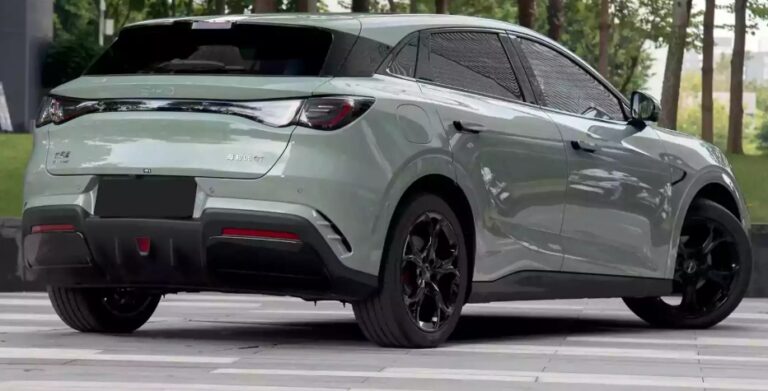
BAIC Ruixiang Hoen O₂ (Qingcheng Shidai VC): Evolution of China’s Compact Electric City Hatchback
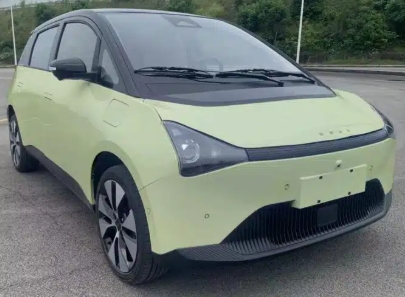
The BAIC Ruixiang Hoen O₂, also known as the Qingcheng Shidai VC (轻橙时代 VC), is a compact all-electric city hatchback developed within China’s rapidly evolving new-energy vehicle ecosystem. It is produced under the BAIC Ruixiang brand, a successor structure to the former BAIC–Yinxiang joint venture. Unlike traditional multi-generation vehicles with long, clearly separated redesign cycles, the Hoen O₂ is better understood as a transitional electric model that emerged from a multi-company development chain involving startup design input, platform outsourcing, and later industrialization by BAIC Ruixiang.
Production of the Hoen O₂ began in 2023 and continues to the present day, making it one of the newer entrants in China’s highly competitive urban EV segment.
Corporate Background: From Qingcheng Shidai to BAIC Ruixiang
The Hoen O₂ has an unusual origin compared to most production vehicles. It was initially developed not directly by BAIC Ruixiang, but by Qingcheng Shidai (Shenzhen) Technology Co., Ltd., a smaller mobility-focused company that unveiled the model under the name Qingcheng Shidai VC at the 2021 Guangzhou Auto Show.
The original concept was built on the EEZI STEP 1.0 platform, developed by Qingcheng Shidai, while manufacturing responsibilities were intended to be outsourced to BAIC Ruixiang. This reflects a common trend in China’s EV industry: startups designing vehicles while established manufacturers handle production and homologation.
By late 2022, patent filings and regulatory documents indicated that BAIC Ruixiang was preparing the production version, now renamed the Hoen O₂.
This transition effectively marked the evolution of the model from:
- Concept phase (Qingcheng Shidai VC)
- Industrial validation phase (BAIC Ruixiang patents)
- Mass production phase (Hoen O₂)
Production Timeline (2023–Present)
The BAIC Ruixiang Hoen O₂ entered series production in 2023, and it remains in production today.
Unlike traditional vehicles that undergo major generational redesigns every five to eight years, the Hoen O₂ is currently still within its initial production generation, with no officially confirmed facelift or second generation.
Its lifecycle so far can be summarized as:
- 2021: Qingcheng Shidai VC unveiled as a concept
- 2022: BAIC Ruixiang patent and production preparation phase
- 2023: Start of production under Hoen O₂ name
- 2023–present: Ongoing production and market rollout
Vehicle Classification and Platform
The Hoen O₂ is classified as a city car (A-segment), designed primarily for dense urban environments. It is a 5-door hatchback with compact dimensions optimized for city parking, short-distance commuting, and low operating cost.
It is built on the EEZI STEP 1.0 platform, which is an electric vehicle architecture developed specifically for lightweight urban EVs.
Key structural characteristics include:
- Front-engine-equivalent layout (electric motor mounted at front axle)
- Front-wheel drive configuration
- Compact wheelbase of 2,520 millimeters (about 99.2 inches)
- Emphasis on interior space efficiency relative to footprint
Dimensions place it firmly in the micro-to-compact EV segment:
- Length: about 3,806 millimeters
- Width: about 1,740 millimeters
- Height: about 1,550 millimeters
Powertrain Evolution and Technical Specifications
Unlike combustion vehicles with multiple engine generations, the Hoen O₂’s “evolution” is primarily defined by motor tuning and battery optimization rather than mechanical redesigns.
It uses a permanent magnet synchronous electric motor, available in at least two output configurations:
- Approximately 75 horsepower base version
- Approximately 109 horsepower higher-output version
Power is delivered through a single-speed automatic transmission, standard for most EVs in this class.
The vehicle uses an LFP (lithium iron phosphate) battery, chosen for:
- Lower cost compared to nickel-based chemistries
- Improved thermal stability
- Long cycle life
Reported range figures vary depending on configuration and testing cycle, with estimates generally between 305 kilometers and over 400 kilometers in more efficient versions.
.
NO MORE dead batteries with this:

.
Trim Levels and Model Variants
Unlike mainstream global vehicles, the Hoen O₂ does not have a widely standardized trim structure documented across multiple model years. However, based on available regulatory filings and typical Chinese EV market structuring, its configuration can be understood in simplified tiers.
Base / Standard Version
This entry configuration typically includes:
- Standard electric motor output (~75 horsepower)
- Basic infotainment system
- Standard cloth interior
- Manual or semi-automatic climate control
- Basic safety package (ABS, airbags, stability control)
Mid-Level / Extended Range Version
Common upgrades include:
- Higher-output motor (~109 horsepower)
- Larger infotainment display
- Enhanced connectivity features
- Improved interior materials
- Additional driver assistance features (parking assist systems)
Top / Fully Equipped Variant
Higher-spec versions generally add:
- Advanced infotainment interface
- Improved seat materials and cabin finishing
- Expanded digital instrument display
- Enhanced camera-based parking systems
- Extended driving range battery configuration
These trims reflect typical structuring in China’s EV market rather than a formally published global trim hierarchy specific to the Hoen O₂.
Design Evolution and External Influence
Although the Hoen O₂ itself has not undergone a full redesign cycle, its design lineage is important.
The original Qingcheng Shidai VC concept established:
- A minimalist, rounded urban EV design
- High roofline for cabin space efficiency
- Compact footprint optimized for dense cities
After BAIC Ruixiang took over production responsibility, the design was subtly refined for manufacturability and regulatory compliance rather than aesthetic reinvention.
A notable development in its broader design ecosystem is the Jiangnan U2, introduced in 2023, which heavily draws from the Hoen O₂ body structure while modifying front and rear styling for cost reduction. This demonstrates how the Hoen O₂ platform influenced derivative vehicles within China’s EV supply chain.
Market Position and Competition
The Hoen O₂ competes in one of the most crowded automotive segments in China: the urban electric hatchback category.
Its competitors include:
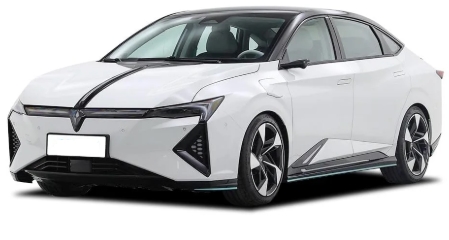
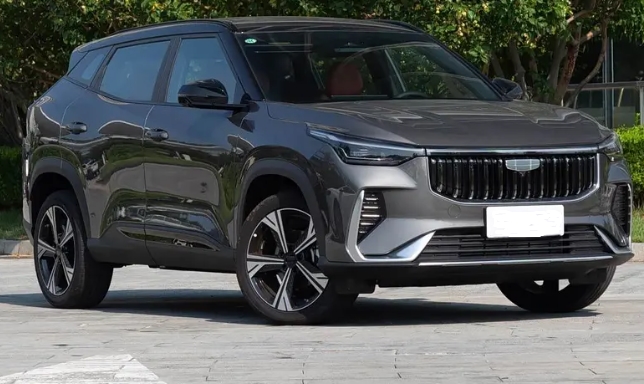
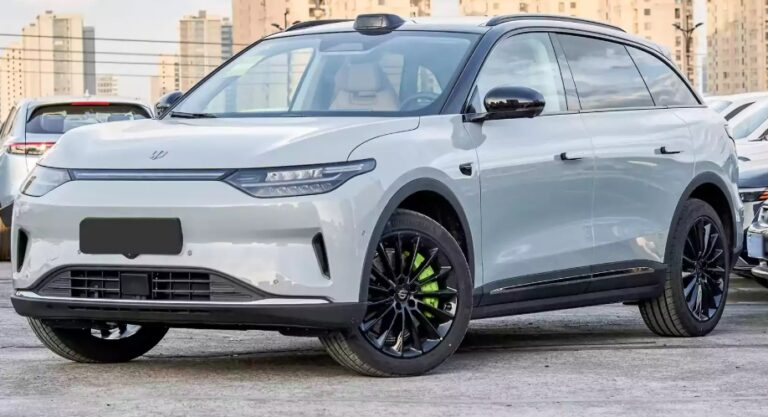
- Wuling Hongguang Mini EV (entry-level micro EV segment)
- Chery eQ series models
- Various Geely Geometry small EVs
- Dongfeng and Changan compact EV offerings
Unlike ultra-low-cost micro EVs, the Hoen O₂ is positioned slightly higher, focusing on:
- Better range
- More conventional hatchback proportions
- Improved highway usability
Market Challenges
Despite its technical competence, the Hoen O₂ faces several structural challenges:
- Limited brand recognition outside China
- Highly saturated domestic EV market
- Overlap with both micro EVs and compact crossovers
- Reliance on BAIC Ruixiang’s distribution strength
Additionally, because it originates from a startup-to-OEM pipeline, its brand identity is less stable than long-established automakers.
Future Outlook
The future of the BAIC Ruixiang Hoen O₂ will depend on how BAIC Ruixiang positions itself in China’s evolving EV landscape. Several possible directions exist:
1. Continued Incremental Updates
The most likely path involves:
- Battery efficiency improvements
- Software and infotainment upgrades
- Minor styling revisions
2. Platform Evolution
The EEZI STEP 1.0 platform may evolve into:
- A second-generation urban EV architecture
- Shared use across multiple small EV models
3. Export Expansion
If BAIC Ruixiang expands internationally, the Hoen O₂ could be adapted for:
- Southeast Asian urban markets
- Middle Eastern entry-level EV segments
- Select European microcar classifications
4. Replacement by New Model
Given China’s fast EV development cycles, a successor model could emerge within a typical three- to five-year product refresh window.
The BAIC Ruixiang Hoen O₂ (Qingcheng Shidai VC) represents a modern type of vehicle development increasingly common in China: a model born from startup innovation, refined through OEM manufacturing partnerships, and launched into a highly competitive electric vehicle market within just a few years.
Its evolution from a 2021 concept to a 2023 production EV reflects not a traditional multi-generation automotive lifecycle, but rather a compressed development pipeline shaped by China’s fast-moving new-energy ecosystem.
While it does not yet have multiple generations or a long-established trim evolution history, the Hoen O₂ stands as a clear example of how contemporary urban EVs are created, scaled, and continuously refined in real time.