The Evolution of the Jiangnan Alto: China’s Licensed Microcar That Shaped an Era
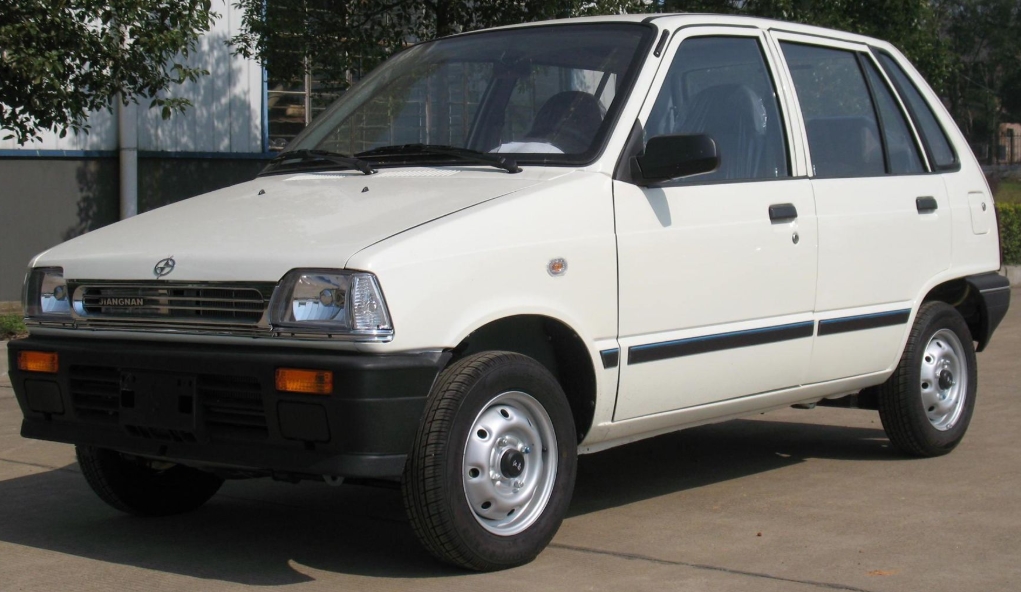
The Jiangnan Alto was a compact city car produced in China by Jiangnan Automobile, a manufacturer best known for building extremely low-cost vehicles aimed at first-time buyers and urban commuters. The model is most closely associated with licensed production of the second-generation Suzuki Alto, a Japanese kei car that became one of the most widely reproduced small cars in global automotive history.
Produced in various forms from approximately 1999 through 2010, the Jiangnan Alto represented one of the earliest examples of China’s licensed automotive manufacturing strategy. It played an important role in introducing affordable motorized transportation to smaller cities and rural regions, while also laying the groundwork for later Jiangnan models such as the TT and other derivative microcars.
Historical Background and Licensing Origins
The Jiangnan Alto originated from a licensing agreement based on the second-generation Suzuki Alto, originally developed in Japan during the 1980s. The Suzuki Alto was designed as a kei-class city car focused on efficiency, affordability, and compact dimensions. Its simplicity made it an ideal candidate for licensed production in emerging automotive markets.
In the late 1990s, Jiangnan Automobile began producing licensed versions of the Alto in China. These vehicles were assembled locally with simplified components to reduce manufacturing costs and make them accessible to budget-conscious consumers.
Unlike modern vehicles that undergo significant redesign during localization, the Jiangnan Alto remained extremely close to the original Suzuki architecture, both mechanically and visually. Over time, minor adjustments were made to adapt the vehicle to Chinese road conditions and regulatory requirements.
.
MANY auto lovers not only spend time in their garages to tinker on their autos, but have other projects going on in there as well. Wood working is a popular pastime for the creative type of individual. Not sure what to make next? Or thinking about getting into this kind of hobby? There’s lots of possibilities… Here’s some of them…

.
Production Years
The Jiangnan Alto was produced in China from approximately 1999 through 2010, although production timelines varied slightly depending on configuration and factory output.
Production Timeline
| Year | Development |
|---|---|
| 1999 | Licensed production begins in China |
| 2000–2003 | Early expansion and stable production |
| 2004–2006 | Minor updates and continued low-cost output |
| 2007–2009 | Simplified production and reduced variants |
| 2010 | End of Jiangnan Alto production |
| Post-2010 | Replaced by Jiangnan TT and later microcars |
The Alto name gradually disappeared as Jiangnan shifted toward newer, even lower-cost models like the TT.
Design and Dimensions
The Jiangnan Alto retained the compact proportions of the original Suzuki design, making it well-suited for narrow urban streets and low-speed commuting.
Typical dimensions included:
- Length: approximately 133 inches (3,385 mm)
- Width: approximately 59 inches (1,495 mm)
- Height: approximately 55 inches (1,400 mm)
- Wheelbase: approximately 87 inches (2,200 mm)
The design was extremely simple, featuring a boxy hatchback body, minimal overhangs, and small steel wheels. Aerodynamic efficiency was secondary to cost and practicality.
Inside, the Alto offered seating for four passengers in a tight but functional layout. Interior materials were basic, with a focus on durability rather than comfort or refinement.
Powertrain and Mechanical Layout
The Jiangnan Alto used small-displacement gasoline engines derived from Suzuki’s original kei car engineering.
Engine Options
Most versions featured:
- 0.8-liter three-cylinder gasoline engine
- Output: approximately 35 horsepower to 40 horsepower
- Torque: minimal, optimized for city driving
Some later or variant models included:
- 1.0-liter three-cylinder gasoline engine
- Output: approximately 45 horsepower to 50 horsepower
Transmission options typically included:
- Four-speed manual transmission
- Five-speed manual transmission (later versions in limited markets)
There were no automatic transmissions offered in most configurations, reflecting the vehicle’s extremely low-cost positioning.
Performance was modest, with the Alto designed strictly for low-speed urban travel.
Trim Levels and Model Variants
The Jiangnan Alto followed a very simple trim structure, especially compared to modern vehicles. Variants were primarily differentiated by equipment availability rather than distinct model names.
Base Trim
The entry-level version was highly minimal and included:
- Basic cloth seats
- Manual windows
- Steel wheels
- Simple analog instrument cluster
- No air conditioning in early models
- Minimal interior trim
This version targeted buyers seeking the lowest possible purchase price.
Standard Trim
The most widely produced configuration added essential convenience features:
- Air conditioning (optional or standard in later years)
- Basic radio or cassette audio system
- Power steering (later production years)
- Improved seat materials
- Rear window defroster
- Slight interior refinements
This trim became the most commonly purchased version across most regions.
Comfort-Oriented Variants (Late Production Years)
In later years, Jiangnan introduced slightly upgraded versions to remain competitive as consumer expectations increased:
- Improved upholstery materials
- Enhanced air conditioning systems
- Updated dashboard design
- Better sound insulation (limited improvement)
- Basic audio upgrades
- Additional color options
Even these upgraded variants remained extremely basic compared to global standards.
Driving Experience
The Jiangnan Alto was designed for simplicity rather than performance or comfort.
Key driving characteristics included:
- Low top speed, typically around 60 miles per hour (100 km/h)
- Lightweight body for improved fuel efficiency
- Minimal sound insulation, resulting in high cabin noise
- Basic suspension system designed for city roads
- Easy maintenance and low repair costs
Its small size made it highly maneuverable in dense urban environments, especially in older Chinese cities with narrow streets.
Market Position and Reception
The Jiangnan Alto played an important role in China’s early automotive market by providing extremely affordable personal transportation. At a time when car ownership was still growing rapidly, the Alto offered a stepping stone between motorcycles and more modern vehicles.
Strengths included:
- Very low purchase price
- Simple mechanical design
- Easy maintenance and repair
- Compact size ideal for city driving
- Proven Suzuki-based engineering reliability
However, it also faced limitations:
- Minimal safety equipment by modern standards
- Outdated design even during later production years
- Limited performance and highway capability
- Basic comfort and interior features
- Increasing competition from newer domestic models
Despite these drawbacks, it remained a practical solution for budget-conscious buyers.
Role in China’s Automotive Development
The Jiangnan Alto is significant because it represents one of the earliest phases of China’s licensed automotive production strategy. Rather than developing entirely new platforms, manufacturers like Jiangnan initially relied on proven foreign designs to accelerate industrial growth.
The Alto contributed to:
- Early mass motorization in smaller Chinese cities
- Development of domestic assembly and manufacturing capabilities
- Training ground for later microcar production
- Establishment of Jiangnan’s brand identity in budget transportation
It also influenced later vehicles such as the Jiangnan TT, which continued the philosophy of ultra-low-cost mobility.
Decline and End of Production
By the late 2000s, the Jiangnan Alto began to show its age. Several factors led to its eventual discontinuation:
- Stricter emissions regulations in China
- Increasing safety standards requirements
- Consumer shift toward larger and more modern vehicles
- Availability of newer domestic microcars and compact sedans
Production ended around 2010, marking the end of Jiangnan’s licensed Alto era.
Legacy and Future Outlook
The Jiangnan Alto remains an important historical model in China’s automotive development. While it is no longer produced and has no direct successor, its legacy continues in several ways.
Its influence includes:
- Inspiring later budget microcars like the Jiangnan TT
- Demonstrating the viability of licensed production in China
- Contributing to early urban mobility solutions
- Helping establish demand for compact, low-cost vehicles
As of 2026, Jiangnan Automobile has shifted entirely toward electric vehicle development under new ownership structures. While modern Jiangnan models are far more advanced, they still reflect the brand’s original mission of providing affordable mobility.
The Jiangnan Alto was a simple, licensed compact car that played a foundational role in China’s early automotive industry. Produced from approximately 1999 through 2010, it delivered basic transportation to thousands of drivers at a time when car ownership was still emerging across the country.
Though modest in performance, comfort, and safety, its importance lies in its accessibility and historical role. The Alto helped bridge the gap between motorcycles and modern automobiles, shaping the early evolution of China’s vast and diverse automotive market.