The Dongfeng Box: The Rise of a Global Budget Electric Hatchback
The Dongfeng Box is a modern subcompact electric hatchback that represents one of the most ambitious global entry-level EV programs from China. Introduced in the early 2020s, the model—also known domestically as the Nammi 01—has rapidly evolved from a low-cost city car into a globally marketed electric vehicle competing in Europe, Southeast Asia, and Africa.
Despite its short production history, the Dongfeng Box has already undergone notable development in trims, battery configurations, and global positioning. This article examines the evolution of the Dongfeng Box, including its origins, production timeline, trim levels, engineering, and future outlook.
Origins and Development (2023–2024)
The Dongfeng Box originates from Dongfeng Motor Corporation’s Nammi brand, which focuses on affordable electric vehicles. The model was first unveiled in August 2023 as the Nammi 01, with production officially beginning in January 2024.
- Production: 2024–present
- Manufacturer: Dongfeng Motor Corporation (Nammi division)
- Assembly Location: Xiangyang, Hubei, China
- Class: Subcompact (B-segment) electric hatchback
The Box was developed on the Dongfeng Quantum Architecture S3, a dedicated EV platform designed for small electric vehicles.
From its inception, the vehicle was intended to be:
- Affordable
- Globally exportable
- Technologically competitive in its segment
Naming and Global Identity
The Dongfeng Box is marketed under different names depending on the region:
- China: Nammi 01
- Europe: Nammi Box
- Global export markets: Dongfeng Box
This multi-name strategy reflects Dongfeng’s effort to tailor branding to local markets while maintaining a consistent global product.
.
You’ve got that cool car, but is it resting in its own cool place?
It’s visually pleasing for the surrounding areas outside of your home to look as awesome as what’s stored inside your garage! If you desire a truly inspirational environment, you should check into these plans!

.
First Generation (2024–Present)
The Dongfeng Box is currently in its first generation, launched in 2024. Although no full redesign has occurred yet, the model has already seen expansion in trims, battery options, and international specifications.
Design and Engineering
Exterior Design
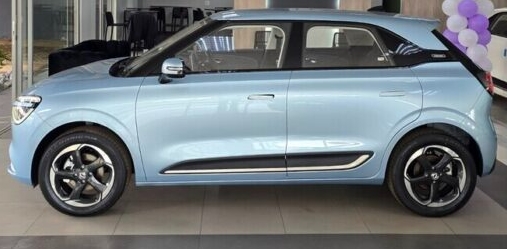
The Dongfeng Box is a compact hatchback measuring approximately:
- Length: 4,030 mm
- Width: 1,810 mm
- Height: 1,570 mm
Its styling emphasizes:
- Rounded, modern body lines
- Two-tier LED lighting
- Contrasting roof designs
- Aerodynamic proportions for efficiency
The design prioritizes interior space optimization, making it practical despite its small footprint.
Interior and Technology
The Box stands out in the entry-level EV segment for offering features typically found in larger vehicles:
- 12.8-inch touchscreen infotainment system
- 50W wireless charging
- 32-color ambient lighting
- 540-degree panoramic camera system
These features help position the Box as a technology-forward budget EV.
Powertrain and Battery Evolution
All versions of the Dongfeng Box are powered by a single front-mounted electric motor:
- Output: 70 kW (94–95 hp)
- Torque: ~160 Nm
Battery Options (2024–Present)
The model has been offered with two main lithium iron phosphate (LFP) battery configurations:
- 31.45 kWh battery
- WLTP range: ~200 km
- 42.3 kWh battery
- WLTP range: up to ~310 km
In some markets, additional configurations include:
- 32.6 kWh battery (CLTC 330 km)
This dual-battery strategy allows Dongfeng to target both:
- Budget-conscious buyers
- Consumers seeking longer range
Models and Trim Levels
One of the most important aspects of the Dongfeng Box’s evolution is its diverse trim structure, which varies significantly by region.
2024 (China Launch – Nammi 01)
At launch in China, the Box was offered in multiple trims primarily distinguished by:
- Battery size
- Equipment levels
Exact trim names varied, but the structure included:
- Base variant (smaller battery, essential features)
- Mid-range variant
- High-spec variant (larger battery, advanced features)
Pricing ranged from approximately 74,800 to 104,000 RMB, reinforcing its affordability.
2024–2025 (Southeast Asia Expansion)
Malaysia (2024 Launch)
The Dongfeng Box was introduced with two clearly defined variants:
- E2
- E3
These trims differ primarily in:
- Battery capacity
- Driving range
- Equipment levels
2025 (Africa and Emerging Markets)
In markets such as South Africa, the Box lineup expanded further:
- E1 330
- E2 330
Key differences:
- E1: Basic equipment, steel wheels
- E2: Enhanced interior materials, added features like cruise control
Both variants used:
- 32.6 kWh battery
- 330 km CLTC range
2025–2026 (Global and European Markets)
As the vehicle entered Europe and other developed markets, Dongfeng introduced more standardized trims:
- Style Edition
- Premium Edition
Style Edition
- Entry-level global trim
- Standard infotainment and safety features
Premium Edition
- Higher equipment level
- Larger battery (typically 42.3 kWh)
- Extended range (~310 km WLTP)
Safety and Ratings
The Dongfeng Box has received mixed safety evaluations:
- Euro NCAP rating: 3 stars (2025)
Safety equipment varies by region, with higher-spec European models typically including:
- Advanced driver assistance systems (ADAS)
- Multiple airbags
Lower-cost versions in some markets may have reduced safety equipment, reflecting cost constraints.
Global Expansion (2024–2026)
The Dongfeng Box has rapidly expanded beyond China:
Europe
- Sales launched in Switzerland and Norway (2024)
- Positioned as one of the most affordable EVs in the region
Southeast Asia
- Malaysia launch in 2024
- Additional markets planned
Africa and Other Regions
- Entry into South Africa and developing markets
- Local rebranding in certain countries (e.g., Nigeria, Pakistan)
This rapid expansion demonstrates Dongfeng’s aggressive globalization strategy.
Market Position and Competitors
The Dongfeng Box competes in the entry-level EV segment against models such as:
- BYD Seagull
- Leapmotor T03
- Mini EV-class vehicles
Its key strengths include:
- Competitive pricing
- Strong feature set for its class
- Practical interior space
However, challenges include:
- Brand recognition in Western markets
- Safety perception
- Increasing competition from both Chinese and legacy automakers
Role in Dongfeng’s EV Strategy
The Box is a cornerstone of Dongfeng’s transition toward electrification.
It serves as:
- A gateway model for first-time EV buyers
- A high-volume global export vehicle
- A demonstration of Dongfeng’s low-cost EV engineering capabilities
The model is also closely related to other Nammi vehicles, such as the Nammi 06 crossover, indicating a shared platform strategy.
Evolution Summary
Key Timeline
- 2023: Revealed as Nammi 01
- 2024: Production begins; China launch
- 2024: Expansion to Europe and Southeast Asia
- 2025: Broader global rollout; new trims introduced
- 2026: Continued expansion and refinement
Future Outlook
Although still early in its lifecycle, the Dongfeng Box is expected to evolve in several ways:
1. Expanded Powertrain Options
Future versions may include:
- More powerful motors
- Longer-range batteries
- Improved charging speeds
2. Enhanced Safety Features
To compete globally, Dongfeng will likely:
- Standardize ADAS systems
- Improve crash safety ratings
3. Software and Connectivity
- Over-the-air (OTA) updates
- Smarter infotainment systems
4. Additional Variants
Potential future body styles or derivatives could include:
- Small crossover variants
- Fleet-oriented versions
The Dongfeng Box is a clear example of how quickly modern electric vehicles can evolve. Introduced in 2023 and entering production in 2024, it has already expanded into multiple global markets with a diverse lineup of trims and configurations.
With its combination of affordability, technology, and practical design, the Box plays a vital role in Dongfeng’s global EV ambitions. While challenges remain—particularly in safety perception and brand recognition—the model’s rapid evolution suggests it will continue to improve and expand.
As the global automotive industry shifts toward electrification, vehicles like the Dongfeng Box highlight a major trend: the emergence of low-cost, feature-rich electric cars designed not just for domestic markets, but for the world.