The Evolution of the Citroën Fukang: China’s First Modern Family Sedan
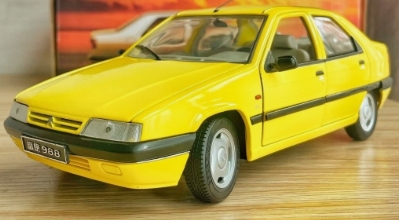
The Citroën Fukang holds an important place in the history of the Chinese automotive industry. Produced from 1992 through 2009, the Fukang was one of the first modern passenger cars to be manufactured locally through an international joint venture. Built by Dongfeng Citroën, the model was based on the highly successful Citroën ZX sold in Europe, but it was adapted to meet the needs of Chinese consumers. During its production run, the Fukang evolved from a practical compact sedan into an entire family of vehicles that included hatchbacks, station wagons, and several trim levels aimed at private buyers, government agencies, and taxi operators.
Origins and Development
The Fukang was introduced shortly after the establishment of Dongfeng Citroën, a joint venture between France’s Citroën and China’s Dongfeng Motor Corporation. Production began in 1992, initially in limited numbers before expanding significantly during the mid-1990s.
Unlike the European Citroën ZX, which was primarily available as a hatchback, the Chinese market strongly favored sedans. As a result, Citroën developed a unique four-door sedan specifically for China. This version featured a conventional trunk while retaining the ZX’s proven platform, suspension, and drivetrain.
The name “Fukang” translates roughly to “prosperity and health,” reflecting Citroën’s intention to create a dependable family vehicle for China’s rapidly growing middle class.
.
You’ve got that cool car, but is it resting in its own cool place?
It’s visually pleasing for the surrounding areas outside of your home to look as awesome as what’s stored inside your garage! If you desire a truly inspirational environment for your landscape, you should check into these easy plans! You’ll happy with the end results!

.
First Generation (1992–1998)
The earliest Fukang models were mechanically similar to the European ZX but featured styling tailored for Chinese buyers.
During the first years of production, available models included:
- Fukang 988 Sedan
- Fukang 988 Taxi
- Fukang Hatchback (limited production)
Early trim levels generally consisted of:
- Standard
- Luxury
Equipment varied depending on the model year but typically included:
- Cloth upholstery
- Manual windows
- Power steering
- Five-speed manual transmission
- Basic ventilation system
Higher trim levels added:
- Air conditioning
- Power windows
- Central locking
- Improved interior trim
Power came primarily from PSA’s reliable four-cylinder gasoline engines.
Available engines included:
- 1.4-liter inline-four
- 1.6-liter inline-four
The 1.6-liter engine quickly became the most popular choice due to its balance of performance and fuel economy.
Expansion During the Late 1990s (1998–2002)
As China’s passenger car market expanded, Dongfeng Citroën broadened the Fukang lineup.
New variants included:
- Fukang 988 Executive
- Fukang AXC
- Fukang Station Wagon
- Fukang Taxi Special Edition
Trim levels became more diversified:
- Standard
- Comfort
- Luxury
- Executive
Optional equipment expanded to include:
- Anti-lock brakes (ABS)
- Driver airbag
- Passenger airbag
- Alloy wheels
- Improved audio systems
- Remote keyless entry
Interior quality also improved through better materials and more refined upholstery.
The suspension remained one of the Fukang’s strongest selling points. Derived from the Citroën ZX, its fully independent rear suspension delivered ride comfort that exceeded many domestic competitors.
Facelift and Updated Models (2002–2005)
By the early 2000s, competition from newer compact sedans increased dramatically. Dongfeng Citroën responded with updated styling and additional equipment.
Models offered during this period included:
- Fukang New Freestyle
- Fukang Elite
- Fukang AXC
- Fukang Wagon
Trim levels generally included:
- Basic
- Comfort
- Luxury
- Elite
Mechanical improvements focused on refinement rather than major redesigns.
Available engines included:
- 1.4-liter gasoline
- 1.6-liter gasoline
Both engines remained paired primarily with a five-speed manual transmission, although some later models were offered with a four-speed automatic transmission.
Additional features included:
- Improved dashboard design
- Better sound insulation
- Revised front fascia
- New taillight design
- Updated steering wheel
- Improved climate controls
These updates helped keep the aging platform competitive despite the arrival of many newer rivals.
Final Years (2005–2009)
The final production years saw the Fukang repositioned as an affordable entry-level sedan while newer Citroën models entered the Chinese market.
Available models included:
- Fukang Classic
- Fukang New Classic
- Fukang Taxi
- Fukang Wagon
Trim levels generally consisted of:
- Standard
- Comfort
- Luxury
By this time, equipment frequently included:
- Air conditioning
- Power steering
- Power windows
- Central locking
- Driver airbag
- Optional ABS
- CD audio system
The dependable 1.6-liter engine remained the primary powertrain.
Fleet operators, especially taxi companies, continued purchasing the Fukang because of its durability, low operating costs, and readily available replacement parts.
Production ultimately concluded in 2009, ending a manufacturing run of approximately 17 years.
Major Models Throughout Production
Over its lifetime, the Fukang family included several body styles and special-purpose versions.
Notable models included:
- Fukang 988 Sedan
- Fukang Hatchback
- Fukang Station Wagon
- Fukang AXC
- Fukang Elite
- Fukang New Freestyle
- Fukang Classic
- Fukang New Classic
- Fukang Taxi
- Executive editions
- Various government and fleet models
Regional availability and naming occasionally varied depending on the model year and local market.
Engines
Throughout production, the Fukang relied primarily on PSA gasoline engines.
Available engines included:
- 1.4-liter TU3 inline-four
- 1.6-liter TU5 inline-four
Both engines earned reputations for reliability and relatively low maintenance costs.
Transmission options included:
- Five-speed manual
- Four-speed automatic (selected later models)
Front-wheel drive remained standard across the entire production run.
Trim Levels
Although trim names changed over time and sometimes varied by region, the principal trim levels included:
- Standard
- Basic
- Comfort
- Luxury
- Executive
- Elite
- Classic
- New Classic
Fleet-specific taxi packages were also widely available and often featured simplified interiors designed for durability.
Market Impact
The Fukang became one of China’s most recognizable passenger cars during the 1990s and early 2000s.
It gained an especially strong reputation among:
- Taxi companies
- Government agencies
- Corporate fleets
- Private families
Its combination of European engineering and local manufacturing helped establish Dongfeng Citroën as one of China’s major automotive manufacturers.
The Fukang also demonstrated that foreign manufacturers could successfully adapt global vehicle platforms for Chinese consumer preferences.
Reliability and Ownership
Owners generally praised the Fukang for:
- Durable engines
- Comfortable ride quality
- Excellent rear suspension
- Simple maintenance
- Good fuel economy
- Long service life
Many examples accumulated several hundred thousand miles in taxi service, highlighting the platform’s durability.
As the vehicle aged, replacement parts remained widely available in China, helping extend the lifespan of many surviving examples.
Legacy
The Fukang occupies a unique position in Chinese automotive history. It represented one of the country’s earliest successful joint-venture passenger cars and helped introduce modern European automotive engineering to millions of Chinese drivers.
Its influence extended beyond its own production. Later Dongfeng Citroën vehicles benefited from the manufacturing experience, supplier networks, and customer confidence established by the Fukang program.
Even after production ended, the Fukang name continued to carry recognition in China because of its association with dependable, practical transportation.
Future Outlook
Although the original Citroën Fukang has been out of production since 2009, it remains an important milestone in China’s automotive development. Surviving examples are increasingly appreciated by enthusiasts interested in early Chinese joint-venture vehicles, while many continue to serve as inexpensive daily transportation in some regions.
The model’s historical significance is likely to grow as China’s automotive industry continues to evolve. As one of the vehicles that helped modernize personal transportation in the country, the Fukang represents the beginning of an era that transformed China into one of the world’s largest automobile markets. While newer Citroën models have long replaced it in showrooms, the Fukang’s reputation for durability, comfort, and affordability ensures that it remains a memorable chapter in both Citroën’s global history and the development of the Chinese automotive industry.