The Evolution of the Fengdu MX6: Dongfeng’s Successor to the Classic Nissan X-Trail
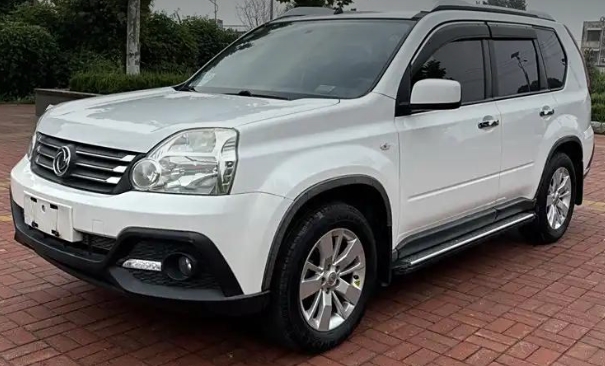
The Fengdu MX6 is a compact sport utility vehicle (SUV) produced by Zhengzhou Nissan under the Dongfeng Fengdu brand. Manufactured from 2015 through 2019, the MX6 was the first vehicle introduced under the newly established Fengdu marque. Based almost entirely on the second-generation Nissan X-Trail (T30), the MX6 gave new life to a proven platform after Nissan had replaced the X-Trail with a newer generation in China.
Rather than developing an entirely new SUV, Zhengzhou Nissan retained the previous-generation X-Trail’s platform, chassis, and mechanical components while updating the exterior styling and interior equipment. The result was a rugged, affordable SUV that appealed to buyers seeking proven reliability and genuine off-road capability at a competitive price. Although production lasted only a few years, the MX6 played an important role in establishing the Fengdu brand and demonstrated how existing vehicle platforms could be successfully repurposed for new markets.
Background
Dongfeng Motor launched the Fengdu brand in 2013 as a sub-brand of Zhengzhou Nissan. The objective was to market affordable crossover SUVs based on established Nissan platforms while differentiating them from Nissan’s own products. The first production vehicle under the new brand was the MX6, which entered the market in March 2015.
The MX6 was derived from the second-generation Nissan X-Trail after production of that model had ended in favor of the newer T32 generation. Much of the original tooling remained available in China, allowing Zhengzhou Nissan to continue manufacturing the vehicle with relatively minor styling revisions. Approximately 98 percent of the vehicle’s components were sourced from Nissan’s supplier network, contributing to its reputation for durability and ease of maintenance.
.
You’ve got that cool car, but is it resting in its own cool place?
It’s visually pleasing for the surrounding areas outside of your home to look as awesome as what’s stored inside your garage! If you desire a truly inspirational environment for your landscape, you should check into these easy plans! You’ll happy with the end results!

.
Production History (2015–2019)
Production began in 2015 at Zhengzhou Nissan’s manufacturing facilities in China.
The MX6 remained largely unchanged throughout its production life. Instead of introducing frequent redesigns, Dongfeng concentrated on maintaining the vehicle’s value by offering dependable mechanical components and competitive pricing.
Although sales gradually declined as newer crossover SUVs entered the market, production continued until 2019, when the MX6 was discontinued without a direct successor. The Fengdu lineup subsequently shifted its focus to newer crossover models such as the MX5 and MX3.
2015 Model Year
The 2015 model year marked the official launch of the MX6.
At introduction, six factory models were available, divided between two-wheel-drive and four-wheel-drive versions with manual or continuously variable transmissions (CVT).
The official model lineup consisted of:
- 2WD Navigator Edition (Manual)
- 4WD Navigator Edition (Manual)
- 2WD Excellence Edition (CVT)
- 4WD Excellence Edition (CVT)
- 2WD Dream Edition (CVT)
- 4WD Ultimate Edition (CVT)
This six-model lineup remained the foundation of the MX6 range throughout most of its production.
Standard equipment on entry-level models included:
- Air conditioning
- Power windows
- Power door locks
- Remote keyless entry
- Cloth upholstery
- Multi-function steering wheel
- AM/FM audio system
- USB connectivity
- Rear windshield wiper
- Alloy wheels
Higher trim levels added features such as:
- Leather upholstery
- Automatic climate control
- Touchscreen infotainment system
- Rearview camera
- Power-adjustable driver’s seat
- Heated front seats
- Power sunroof
- Automatic headlights
- Larger alloy wheels
Powertrain
Throughout production, every Fengdu MX6 used Nissan’s well-established MR20DE gasoline engine.
Specifications included:
- 2.0-liter naturally aspirated inline-four
- 144 horsepower
- 146 pound-feet (198 Nm) of torque
Transmission choices included:
- Six-speed manual
- Continuously variable transmission (CVT)
Drive configurations consisted of:
- Front-wheel drive
- Intelligent four-wheel drive
The four-wheel-drive system featured selectable driving modes that improved traction on gravel, mud, snow, and other challenging surfaces. The vehicle retained much of the off-road capability that had made the original X-Trail popular.
2016–2017 Updates
For the 2016 and 2017 model years, Dongfeng made only minor revisions.
Mechanical specifications remained unchanged, while updates focused primarily on:
- Improved interior materials
- Updated infotainment software
- Additional exterior colors
- Minor equipment revisions
The six-trim lineup continued largely unchanged, allowing buyers to choose between manual or CVT transmissions and either front-wheel or four-wheel drive.
Because the MX6 already utilized a mature platform, there was little need for significant engineering changes.
2018–2019 Final Years
The final years of production saw the MX6 continue with minimal changes.
Equipment improvements included:
- Updated multimedia compatibility
- Revised wheel designs
- Minor interior trim refinements
The vehicle’s dependable mechanical package remained unchanged.
As crossover competition intensified, sales gradually declined, and Dongfeng elected to discontinue the MX6 during 2019.
Models and Trim Levels
During its production life, the officially documented models included:
2015–2019
- 2WD Navigator Edition (Manual)
- 4WD Navigator Edition (Manual)
- 2WD Excellence Edition (CVT)
- 4WD Excellence Edition (CVT)
- 2WD Dream Edition (CVT)
- 4WD Ultimate Edition (CVT)
While equipment packages evolved slightly from year to year, these six principal models represented the complete factory lineup throughout the MX6’s production.
Design
The MX6 closely resembled the second-generation Nissan X-Trail but featured several distinctive styling elements.
Exterior highlights included:
- Revised front grille
- Redesigned front bumper
- New headlights
- Unique rear badging
- Roof rails
- Rear spoiler
- Panoramic sunroof on higher trims
The SUV measured approximately:
- Length: 182.1 inches
- Width: 70.5 inches
- Height: 68.3 inches
- Wheelbase: 103.5 inches
These dimensions provided generous passenger space and practical cargo capacity, making the MX6 suitable for both family use and outdoor activities.
Market Position
The MX6 occupied an unusual position in the Chinese SUV market.
Rather than competing through cutting-edge technology, it appealed to buyers seeking:
- Proven Nissan engineering
- Competitive pricing
- Genuine off-road capability
- Reliable mechanical components
- Low ownership costs
Its principal competitors included compact SUVs from Great Wall, Changan, BYD, and several joint-venture manufacturers.
Reliability and Ownership
Because the MX6 shared nearly all of its mechanical components with the second-generation Nissan X-Trail, it earned a strong reputation for durability.
Owners generally praised the vehicle for:
- Reliable engine
- Durable transmission
- Comfortable suspension
- Capable four-wheel-drive system
- Readily available replacement parts
- Straightforward maintenance
The long production history of the underlying Nissan platform also contributed to lower repair costs compared with many newer competitors.
Legacy
Although the Fengdu MX6 enjoyed only a relatively brief production run, it successfully launched the Fengdu brand and demonstrated the value of extending the life of proven vehicle platforms. It introduced many Chinese buyers to a dependable SUV that combined established Nissan engineering with updated styling and competitive pricing.
Today, the MX6 remains respected as a practical and reliable used SUV. Its close relationship with the second-generation Nissan X-Trail continues to make it attractive to owners seeking affordable maintenance and dependable long-term performance.
Future Outlook
Production of the Fengdu MX6 ended in 2019, and no direct replacement has been introduced. Instead, Dongfeng shifted the Fengdu brand toward newer crossover models while Zhengzhou Nissan concentrated on more modern SUVs, including the revived Paladin.
Although the MX6 is no longer in production, its legacy remains significant. As the first Fengdu-branded vehicle, it established the identity of the marque and demonstrated that proven engineering could remain competitive when paired with thoughtful updates. Well-maintained examples continue to serve owners throughout China, reflecting the enduring reputation of the Nissan platform on which the MX6 was built.