The Evolution of the Fengon E5: DFSK’s Plug-In Hybrid Mid-Size SUV
The Fengon E5 is a mid-size plug-in hybrid SUV produced by DFSK Motor under its Fengon (Fengguang) passenger vehicle brand. Introduced in 2023 and still in production as of 2026, the E5 represents a major step in the company’s transition from conventional gasoline-powered crossovers toward electrified mobility.
Positioned within DFSK’s broader SUV lineup, the Fengon E5 sits above compact models such as the Fengon 500 and alongside larger family-oriented vehicles like the Fengon ix7. Unlike earlier DFSK models that focused primarily on affordability and basic utility, the E5 was developed to compete in the increasingly competitive global plug-in hybrid SUV segment.
Its evolution reflects both the rapid advancement of Chinese hybrid technology and DFSK’s strategy of expanding into more premium and globally relevant electrified vehicles.
Origins and Development Background
The Fengon E5 was officially launched in 2023 as a plug-in hybrid SUV designed for both domestic Chinese buyers and export markets. It is widely understood to be based on an evolution of DFSK’s compact and mid-size SUV platforms, adapted to accommodate electrified powertrain components and a larger, more refined body structure.
DFSK Motor, a joint venture between Dongfeng Motor Corporation and Sokon Group, had already built a reputation for producing value-focused SUVs under the Fengon and Glory nameplates. However, by the early 2020s, the company increasingly shifted toward electrification to remain competitive in both domestic and international markets.
The E5 was introduced as part of this strategy, combining:
- A turbocharged gasoline engine
- Electric motor assistance
- Plug-in charging capability
- Expanded cabin space
- More advanced infotainment systems
Production began in 2023 in Chongqing, China, and continues today.
.

.
First Generation Fengon E5 (2023–Present)
The Fengon E5 has not yet received a full redesign and remains in its first generation.
It is classified as a mid-size five-seat SUV with plug-in hybrid capability.
Key dimensions:
| Specification | Measurement |
|---|---|
| Length | About 187.4 inches |
| Width | About 73.4 inches |
| Height | About 67.3 inches |
| Wheelbase | About 109.6 inches |
These proportions place it in the same general category as other mid-size electrified SUVs aimed at family buyers.
Powertrain and Hybrid System
The defining feature of the Fengon E5 is its plug-in hybrid (PHEV) system. It combines a gasoline engine with an electric motor and a rechargeable battery pack.
Core system components:
- 1.5-liter turbocharged gasoline engine
- Electric motor integrated into hybrid drivetrain
- Plug-in lithium battery system
- E-CVT automatic transmission
Performance output:
- Combined power: approximately 217 horsepower
- 0 to 62 miles per hour: about 7.4 seconds
- Top speed: around 102 miles per hour
Efficiency and range:
The E5 is designed primarily for efficiency in urban and suburban use. Depending on driving conditions and battery charge levels, it offers:
- Low fuel consumption in hybrid mode
- Electric-only driving for short distances
- Extended total driving range when combining both systems
In real-world usage, the plug-in system allows many daily trips to be completed without using gasoline, provided regular charging is maintained.
Exterior Design Evolution
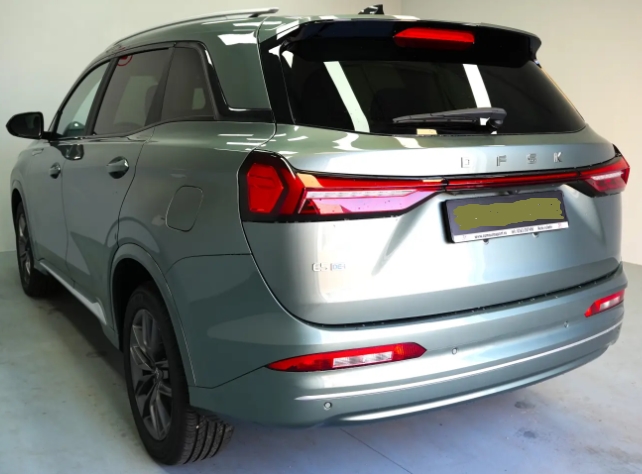
The Fengon E5 introduced a more modern design language compared with earlier DFSK SUVs.
Its styling includes:
- A closed or partially closed grille typical of hybrid models
- Slim LED headlights
- Clean aerodynamic body lines
- Sculpted side panels
- A relatively upright SUV stance for interior space efficiency
While the overall body design has remained consistent since launch, minor updates in export versions have included:
- Revised front bumper styling
- Updated wheel designs
- Improved LED lighting signatures
- Subtle trim refinements
These changes help keep the model visually competitive without requiring a full redesign.
Interior and Technology Development
Inside, the Fengon E5 reflects DFSK’s move toward more modern and technology-focused interiors.
Key interior features include:
- Large central infotainment touchscreen
- Digital instrument cluster in higher trims
- Leather or leatherette seating surfaces depending on version
- Multi-function steering wheel
- Automatic climate control system
Higher trim levels also introduced:
- Enhanced voice control systems
- Smartphone connectivity integration
- Improved dashboard materials
- More advanced driver information displays
Compared with earlier DFSK vehicles, the E5’s interior represents a clear step forward in perceived quality and digital integration.
Trim Levels and Model Variants
Trim structures for the Fengon E5 vary by market, but most follow a similar tiered approach.
Chinese domestic lineup (typical structure):
- Base / Standard
- Comfort
- Luxury
- Premium or Flagship
These trims generally differ in:
- Interior material quality
- Infotainment screen size and software features
- Driver assistance availability
- Convenience features such as keyless entry and seating adjustments
Export market variants:
In international markets, the E5 is often simplified into fewer trims, commonly including:
- Comfort trim (entry-level hybrid specification)
- Luxury trim (mid-range equipment upgrade)
- Flagship trim (full feature package with advanced assistance systems)
Export versions may also include market-specific branding under DFSK or Fengon names, depending on the region.
Safety and Driver Assistance Systems
The Fengon E5 includes a range of safety technologies that vary by trim level and market.
Common features include:
- Electronic Stability Control
- Anti-lock Braking System
- Hill-start assist
- Rear parking sensors and camera
- Tire pressure monitoring system
Higher trims may also include:
- Lane departure warning
- Blind-spot monitoring
- Forward collision warning
- Adaptive cruise control in select markets
These systems position the E5 as a competitive option in the global mid-size SUV segment, particularly in value-oriented hybrid markets.
Market Position and Reception
The Fengon E5 has generally been positioned as an affordable plug-in hybrid SUV offering strong value relative to its size and equipment.
Common strengths:
- Competitive price compared with global hybrid SUVs
- Efficient plug-in hybrid system
- Spacious cabin for a mid-size vehicle
- Modern infotainment features
- Good fuel savings in urban use
Common criticisms:
- Limited global brand recognition
- Inconsistent dealership and service networks outside China
- Conservative brand perception compared with Toyota or Hyundai hybrids
- Limited long-term reliability data due to its recent introduction
Despite these concerns, the E5 has been viewed as a practical entry point into plug-in hybrid ownership, especially in developing and emerging markets.
Production Timeline
| Model | Years Produced |
|---|---|
| Fengon E5 | 2023–present |
| DFSK E5 (export branding in some regions) | 2023–present |
| Market-specific variants | 2023–present |
Future Outlook
The future of the Fengon E5 is closely tied to the global shift toward electrification and plug-in hybrid adoption.
Expected future developments include:
- Improved battery capacity and electric-only range
- More efficient hybrid powertrain calibration
- Expanded driver-assistance systems
- Updated infotainment software with faster processing
- Possible facelift with more modern exterior styling
As DFSK and its parent companies continue developing more advanced electric platforms, the E5 may eventually evolve into a more sophisticated hybrid SUV or transition toward a fully electric successor within the Seres product family.
The Fengon E5 represents an important milestone in DFSK’s evolution from a budget-focused SUV manufacturer into a producer of electrified, globally competitive vehicles. Since its introduction in 2023, it has served as a bridge between traditional combustion-engine SUVs and the company’s more advanced electric models.
With its plug-in hybrid system, modern interior technology, and competitive positioning, the E5 reflects both the rapid development of China’s hybrid vehicle industry and DFSK’s growing ambition in global automotive markets.