The Evolution of the Fiat Doblo
The Fiat Doblo is a versatile and practical multi-purpose vehicle (MPV) and light commercial vehicle that has served a broad spectrum of drivers and businesses since its debut. Over the decades, the Doblo has undergone significant transformations in design, technology, and market positioning, establishing itself as a reliable choice in the compact van and MPV segments. This article provides a detailed overview of the Fiat Doblo’s evolution, including production years, models, and trim levels.
Origins and First Generation (2000–2010)
Introduction and Development
The Fiat Doblo was first introduced in 2000, marking Fiat’s entry into the small van and MPV markets. Developed on a platform shared with the Fiat Punto and other Fiat models, the Doblo was designed to combine cargo space, passenger comfort, and affordability.
Production and Launch
Production of the first-generation Fiat Doblo commenced in 2000 at Fiat’s Turkish plant in Tofas, a joint venture with Tofaş. It was initially available in two main body styles: a panel van and a five-door passenger version, with a focus on commercial use but with a growing emphasis on family and leisure markets.
Models and Trim Levels
During its first decade, the first-generation Doblo was offered in various configurations:
- Panel Van: Focused on commercial users, with a basic, utilitarian design.
- Passenger Van / MPV: Configured to seat five or seven passengers, with increased comfort features.
Trim levels varied depending on the market:
- Base/Standard: Basic features, manual windows, minimal interior amenities.
- Elx/Active: Added features such as power windows, better interior trim.
- Dynamic/Emotion: Higher trims with upgraded interior, optional air conditioning, and improved audio systems.
- Cargo Versions**: Specially configured for commercial purposes with reinforced panels and cargo-specific features.
Powertrain Options
Initially, the first-gen Doblo offered several petrol engines, including 1.2L and 1.4L units. Diesel options included 1.9L turbo-diesel engines, which became popular for their fuel economy and durability.
Second Generation (2010–2019)
Development and Design
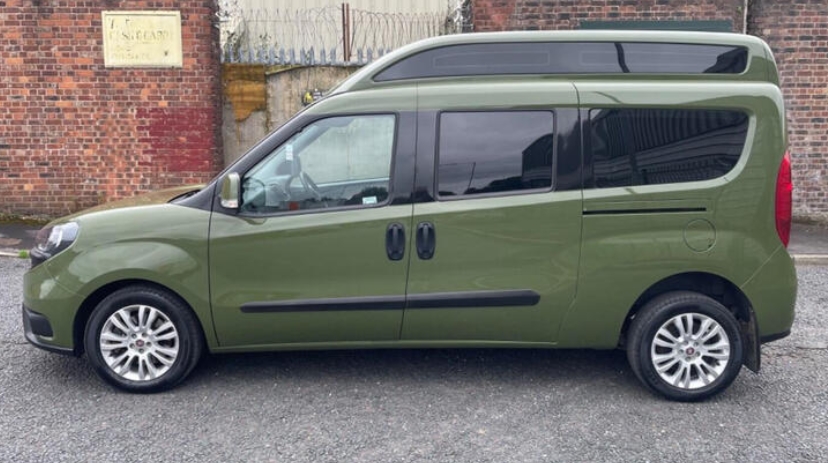
The second-generation Fiat Doblo was unveiled in 2010, with a more modern, aerodynamic design and improved interior quality. This generation marked a significant step forward in terms of safety, technology, and versatility. It was built on Fiat’s newer platform, sharing components with the Alfa Romeo Giulietta and other models.
Production and Markets
Production continued at Fiat’s Tofas plant in Turkey, and the model was marketed across Europe, South America, and other regions. The second-gen Doblo expanded its appeal as both a practical family vehicle and a commercial van.
Models and Trim Levels
The 2010 facelift introduced a range of trims tailored to different markets and uses:
- Standard/Basic: Entry-level with essential features.
- Active: Included features like air conditioning, electric mirrors, and upgraded audio.
- Dynamic: Added alloy wheels, cruise control, and more modern infotainment.
- Cargo Van: A stripped-down model for commercial use, with reinforced cargo space.
In some markets, additional special editions were released, such as:
- Lounge: Focused on comfort and convenience features.
- Cross: An off-road-inspired version with raised suspension and rugged styling.
Engines and Powertrain Options
The second-generation Doblo featured a broader range of engines:
- Petrol: 1.4L, 1.6L, and later 1.4L T-Jet turbocharged units.
- Diesel: 1.3L MultiJet, 1.6L MultiJet, and 2.0L MultiJet engines, offering improved fuel economy and performance.
Transmission options included 5- and 6-speed manual gearboxes, with some markets offering a dual-clutch automatic transmission.
Innovations
This generation introduced safety and technology features such as:
- Electronic stability control (ESC)
- Traction control systems
- Improved crash safety ratings
- Optional touchscreen infotainment systems
- Flexible seating configurations, including the “Magic Space” system for increased cargo versatility
Special Editions and Variants (2010s)
Throughout the second generation, Fiat released several special editions and variants to expand the Doblo lineup:
- Cargo versions for commercial use, with reinforced panels, partition walls, and cargo management systems.
- Family-oriented models with additional comfort features, rear parking sensors, and multimedia systems.
- Off-road inspired versions like the Doblo Cross, featuring raised suspension and rugged styling cues.
Third Generation (2019–Present)
Introduction and Design
The third-generation Fiat Doblo was unveiled in 2019, built on the new Fiat Small Platform (also used for the Fiat Panda and Fiat 500). It features a more modern, streamlined design, improved aerodynamics, and advanced technology.
Production and Markets
Manufactured at the Stellantis factory in Bursa, Turkey, the third-gen Doblo is positioned as both a practical family vehicle and a commercial van. It has been marketed extensively across Europe and parts of Latin America.
Models and Trim Levels
The third-generation Doblo offers a comprehensive range of models:
- Doblo Cargo: Focused on commercial use, with panel van variants and cargo-focused features.
- Doblo Family: Designed for family and leisure use, with five- or seven-seat configurations.
- Trim Levels: Across both variants, trims include:
- Easy: Basic features, manual air conditioning, and essential infotainment.
- Urban: Upgraded interior materials, rear parking sensors, and enhanced multimedia.
- Lounge: Higher-end features like touchscreen infotainment, climate control, and safety systems.
- Sport: Available in some markets, featuring sportier styling cues and alloy wheels.
Powertrain Options
The third-gen Doblo offers:
- Petrol engines: 1.2L FireFlex, 1.5L GSE, or turbocharged variants.
- Diesel engines: 1.5L MultiJet II, with options tuned for efficiency and performance.
- Transmission: 6-speed manual is standard, with optional automatic transmissions in some markets.
Technological and Safety Features
This generation emphasizes connectivity and safety:
- Apple CarPlay and Android Auto compatibility
- Rear-view cameras and parking sensors
- Advanced driver-assistance systems (ADAS), including lane departure warning and adaptive cruise control (availability varies)
- Improved cargo capacity and flexible seating arrangements
Notable Variants and Special Editions
The third-generation Doblo has seen various editions:
- Cargo Maxi: Extended wheelbase for increased cargo capacity.
- Life: A more affordable, practical version with essential features.
- Crossover-style variants: Featuring stylistic elements from the Cross trim, with raised suspension and rugged aesthetics.
.
THIS might be a great place to get your new car from!
Or for those who are into the “car flipping” business, here’s an excellent resource for you!

.
Market Positioning and Future Outlook
The Fiat Doblo has maintained its reputation as a versatile, value-oriented vehicle suitable for both commercial and personal use. Its continuous evolution reflects shifts toward increased safety standards, technological integration, and customer preferences for comfort and connectivity.
Looking ahead, the Doblo is expected to incorporate hybrid and electric powertrains as part of Fiat’s broader electrification strategy, aligning with global trends toward sustainable mobility.
Conclusion
From its inception in 2000 to the present day, the Fiat Doblo has evolved from a basic utility van into a sophisticated multi-purpose vehicle that balances practicality, comfort, and technology. With multiple generations, model variants, and trim levels, it has adapted to changing market demands and technological advancements. Its enduring popularity underscores its significance in Fiat’s lineup and its role as a dependable workhorse and family vehicle worldwide.