The Evolution of the Hyundai Starex: Twenty-Five Years of a Global Van Icon
The Hyundai Starex is one of the most successful vans ever produced by Hyundai Motor Company. Introduced in 1996 as the successor to the Hyundai Grace, the Starex became a versatile people mover, commercial van, minibus, ambulance, pickup truck, and luxury transporter. Known by various names including the Hyundai H-1, H200, iLoad, iMax, i800, and Grand Starex, the vehicle earned a reputation for practicality, durability, and adaptability across numerous global markets.
Produced from 1996 until 2021 in South Korea and continuing in some international markets until 2023, the Starex evolved through two major generations and multiple facelifts before being succeeded by the Hyundai Staria. Throughout its production run, it became one of Hyundai’s most recognizable commercial and passenger vehicles.
Origins and Development
During the early 1990s, Hyundai sought to replace the aging Hyundai Grace van. Drawing inspiration from the growing global demand for multi-purpose vehicles, Hyundai developed an all-new platform capable of serving both commercial and passenger markets.
The result was the Hyundai Starex, which debuted in 1996. From the beginning, Hyundai designed the vehicle with flexibility in mind. Buyers could choose from cargo vans, passenger vans, minibuses, taxis, ambulances, and pickup truck variants. This versatility helped the Starex become a common sight throughout Asia, the Middle East, Europe, Africa, and Latin America.
.
MANY auto lovers not only spend time in their garages to tinker on their autos, but have other projects going on in there as well. Wood working is a popular pastime for the creative type of individual. Not sure what to make next? Or thinking about getting into this kind of hobby? There’s lots of possibilities… Here’s some of them…

.
First Generation (A1; 1996–2007)
The first-generation Starex entered production in 1996. Initially sold primarily in South Korea, exports soon followed.
Early Models (1996–1998)
The earliest Starex models were powered by a 2.5-liter naturally aspirated diesel engine. Hyundai offered numerous body styles, including:
- Cargo Van
- Passenger Van
- Minibus
- Ambulance
- Taxi
- Pickup Truck (later known as the Libero)
Wheelbase options included short-wheelbase and long-wheelbase configurations, allowing customers to choose between greater maneuverability or increased passenger and cargo capacity.
First Major Trim Levels
By 1998, Hyundai expanded the lineup and introduced several notable trim levels:
- SVX
- Club
These trims added comfort and convenience features such as power windows, upgraded upholstery, alloy wheels, optional sunroofs, improved audio systems, anti-lock brakes, and driver airbags. Luxury-oriented Club models became particularly popular among family buyers and shuttle operators.
Mid-Cycle Updates (1998–2004)
Throughout the late 1990s and early 2000s, Hyundai continuously refined the Starex. New gasoline and turbo-diesel engines were introduced, providing improved performance and fuel efficiency.
Popular body configurations included:
- Seven-passenger RV
- Nine-passenger RV
- Twelve-passenger Jumbo
- Commercial Panel Van
- Libero Pickup
The Starex became especially popular in the Philippines, Indonesia, Malaysia, and South Korea, where it was widely used for both private and commercial transportation.
Second Facelift (2005–2007)
A significant redesign arrived for the 2005 model year. Updates included:
- New front fascia
- Larger grille
- Revised headlights
- Updated taillights
- Enhanced interior materials
- Improved multimedia systems
During this period, Hyundai also offered Gold models, which served as premium variants featuring leather interiors, upgraded equipment, and additional comfort features. The first-generation Starex remained competitive until the arrival of its successor in 2007.
Second Generation (TQ; 2007–2021)
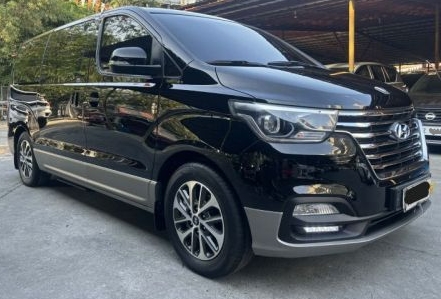
The second-generation Starex debuted in 2007 and represented the most significant redesign in the model’s history. In many markets it was marketed as the Grand Starex, reflecting its larger dimensions and more upscale positioning.
The new model featured:
- Larger body dimensions
- More powerful engines
- Improved safety systems
- Modern styling
- Greater passenger comfort
- Enhanced cargo capacity
This generation became the most successful version of the Starex family.
Grand Starex Model Range
Hyundai offered a wide variety of trims depending on the market.
South Korean Market
Major trims included:
- Van
- Wagon
- Urban
- Limousine
- Special Vehicle variants
- Ambulance
- School Service models
- Camping and recreational conversions
The Limousine versions emphasized passenger comfort, while Urban models introduced more modern interior technology and styling updates.
Philippines
The Grand Starex was available in several well-known grades:
- GL (10-seat and 12-seat)
- GLS
- Gold
- Platinum
The Platinum trim became the flagship model beginning in 2014 and offered premium features aimed at family and executive transportation.
Indonesia
The Hyundai H-1 version was sold in three primary trims:
- GLS
- Elegance
- XG
These models ranged from practical passenger vans to more upscale family-oriented vehicles.
Thailand
Thai-market versions included:
- Touring
- Executive
- Deluxe
- Elite NS
- Elite Final Edition
Earlier Executive and Deluxe models were marketed under the Maestro designation. Premium variants emphasized executive transportation and luxury appointments.
Malaysia
Malaysian versions evolved through several trim levels over the years:
- GLS
- Base
- Deluxe
- Executive
Various Royale editions were also offered, featuring updated styling and luxury equipment packages.
Australia and Europe
In Australia, passenger versions were marketed as the Hyundai iMax, while cargo variants were sold as the Hyundai iLoad. In the United Kingdom, passenger versions were known as the i800 and commonly offered in:
- SE
- SE Nav
These variants focused on practicality and family transportation.
Luxury Variants
One of the most interesting developments in the Starex’s evolution was Hyundai’s push into the luxury van segment.
Notable premium models included:
- Grand Starex VIP
- Grand Starex Premium
- Limousine
These versions featured:
- Captain’s chairs
- Power-adjustable seating
- Entertainment systems
- Leather interiors
- Enhanced sound insulation
- Luxury trim materials
Such variants became popular among business executives, hotels, and private transportation companies throughout Asia.
Powertrain Evolution
Over its 25-year production run, the Starex utilized numerous engines, including:
- 2.4-liter gasoline four-cylinder
- 2.5-liter naturally aspirated diesel
- 2.5-liter turbo-diesel
- 2.5-liter CRDi common-rail diesel
- 2.5-liter VGT diesel
Transmission options included:
- Five-speed manual
- Six-speed manual
- Four-speed automatic
- Five-speed automatic
Both rear-wheel-drive and four-wheel-drive configurations were available in certain markets and model years.
Final Years and Successor
A major facelift arrived in 2018, giving the Grand Starex a more modern appearance. Hyundai updated the front fascia, interior technology, and safety equipment while maintaining the proven platform underneath.
However, by the late 2010s, consumer expectations had shifted toward more modern van designs with improved efficiency and advanced driver-assistance systems. Hyundai responded by developing an entirely new replacement.
Production of the Grand Starex ended in South Korea in March 2021. The all-new Hyundai Staria succeeded it, introducing futuristic styling, modern technology, and enhanced passenger comfort. Some international markets continued selling remaining Starex models through 2023.
Future Outlook
Although production has ceased, the Starex remains one of Hyundai’s most influential vehicles. Millions remain in service worldwide as family vehicles, commercial vans, shuttle buses, ambulances, and specialty vehicles.
The Staria now carries forward the legacy established by the Starex, but the older model continues to enjoy strong demand in the used vehicle market due to its reliability, spacious interior, and low operating costs. In many countries, particularly throughout Southeast Asia, the Middle East, and Africa, the Hyundai Starex remains a familiar and trusted transportation solution.
From its debut in 1996 to its final production years in the early 2020s, the Hyundai Starex evolved from a practical commercial van into a diverse family of passenger and utility vehicles. Across two generations, numerous facelifts, and dozens of trim levels—including SVX, Club, Gold, GL, GLS, Platinum, VIP, Premium, Urban, Limousine, Touring, Executive, Deluxe, and Elite—the Starex demonstrated remarkable adaptability.
Its combination of affordability, versatility, and durability helped establish Hyundai as a serious competitor in the global van market. Even after its replacement by the Staria, the Starex remains one of the most important vehicles in Hyundai’s history and a lasting symbol of the company’s growth into a global automotive manufacturer.