The Evolution of the Ruixiang X3: Reviving a Familiar SUV for a New Automotive Era
The Ruixiang X3 is a compact sport utility vehicle (SUV) produced by Chinese automaker Ruixiang Auto, a brand that emerged from the restructuring of the former BAIC Yinxiang joint venture. Introduced in the early 2020s, the X3 reflects a broader trend in China’s automotive industry: the reuse of existing engineering platforms combined with updated styling, modernized interiors, and expanded feature sets to remain competitive in a rapidly evolving market.
Production of the Ruixiang X3 began in 2022 and continues into the present day. While it is not a globally recognized nameplate, the X3 plays an important role in Ruixiang’s lineup as an affordable family-oriented SUV positioned for value-conscious buyers in China’s domestic market and select export regions.
Origins of the Ruixiang Brand and the X3 Project
The Ruixiang brand itself was created after the collapse and restructuring of BAIC Yinxiang, a joint venture between Beijing Automotive Industry Holding Co. (BAIC Group) and Yinxiang Motorcycle Group. The joint venture had previously produced vehicles under the Bisu brand, but financial difficulties and shifting market conditions led to its dissolution in the late 2010s.
From this restructuring, Ruixiang Auto was formed, inheriting manufacturing resources, supplier networks, and partially developed vehicle platforms. Rather than designing entirely new vehicles from scratch, Ruixiang focused on updating and rebranding existing architectures to quickly re-enter the competitive SUV segment.
The X3 was one of the earliest models developed under this strategy. It was intended to serve as a practical, low-cost SUV offering seating flexibility, modern infotainment features, and sufficient performance for everyday driving.
.
NO MORE dead batteries with this:

.
Launch and Production Start (2022–Present)
The Ruixiang X3 officially entered production in 2022 as part of the brand’s initial product rollout. It was designed as a compact crossover SUV with optional three-row seating, positioning it slightly above entry-level subcompact SUVs in terms of size and practicality.
The vehicle was developed with a focus on affordability and family usability rather than performance or luxury. Its primary competitors include other Chinese domestic SUVs in the value segment, many of which also rely on shared platforms and shared supplier components.
From launch, the X3 was marketed as a practical solution for families needing extra seating capacity without paying for larger mid-size SUVs.
Design and Platform Overview
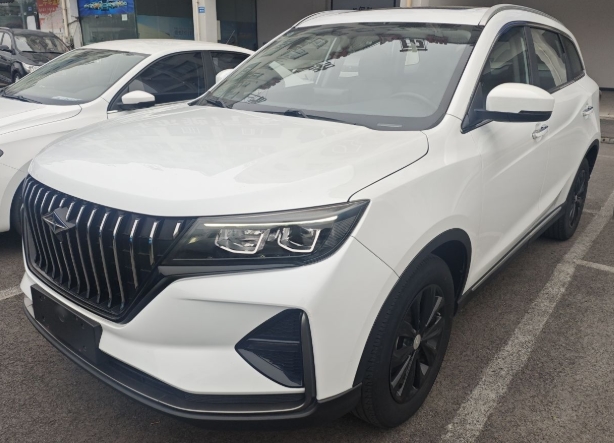
The Ruixiang X3 uses a front-engine, front-wheel-drive architecture typical of budget-oriented compact SUVs in China. While not positioned as an off-road vehicle, it features SUV-inspired styling, including:
- A tall body profile
- A large front grille
- Roof rails
- Raised ground clearance
- Available third-row seating in select configurations
Dimensionally, the X3 sits in the compact SUV segment, with proportions designed to maximize interior space rather than sporty handling or off-road capability.
The interior follows a functional design approach, prioritizing space utilization, digital instrumentation, and cost efficiency. Higher trims include larger infotainment screens and upgraded upholstery materials, while base trims focus on essential comfort features.
Engine and Mechanical Specifications
Throughout its production, the Ruixiang X3 has been primarily offered with a single gasoline engine option designed for efficiency and cost effectiveness.
1.5-Liter Naturally Aspirated Engine
The main engine used in the X3 is a 1.5-liter four-cylinder gasoline engine producing approximately 112 horsepower and around 105 pound-feet of torque.
This engine is paired with either:
- A five-speed manual transmission
- A continuously variable transmission (CVT), depending on trim level and market
The CVT-equipped versions are the most common, as they better suit urban driving conditions and improve fuel economy.
Front-wheel drive is standard across the lineup, reinforcing the vehicle’s focus on affordability and simplicity.
Trim Levels and Configurations (2022–Present)
The Ruixiang X3 has been offered in several trim levels since launch, though naming conventions and equipment packages may vary slightly depending on market and model year updates.
Base / Comfort
The entry-level configuration typically includes:
- Manual air conditioning
- Basic infotainment system with touchscreen
- Power windows
- Rear parking sensors
- Dual front airbags
- Electronic stability control
This trim is designed to keep the purchase price as low as possible while still providing essential safety and convenience features.
Standard / Elite
The mid-level trim adds:
- Alloy wheels
- Upgraded interior materials
- Improved infotainment interface
- Multifunction steering wheel
- Additional USB connectivity ports
- Enhanced exterior styling details
This version is often considered the volume seller due to its balance of price and equipment.
Luxury
The Luxury trim focuses on comfort and convenience upgrades, including:
- Larger touchscreen infotainment system
- Automatic climate control
- Leatherette or upgraded fabric seating surfaces
- Keyless entry
- Push-button start
- Enhanced interior trim accents
This trim targets buyers seeking a more refined interior experience without moving into higher-priced SUV segments.
Flagship
The top-tier configuration typically includes:
- Full digital instrument cluster or upgraded display
- Largest available infotainment screen
- Leather seating surfaces (market-dependent)
- Rearview camera system with dynamic guidelines
- Expanded driver assistance features (such as hill-start assist and parking aids)
- Chrome exterior accents and premium styling enhancements
The Flagship trim represents the highest level of specification offered for the X3.
Market Position and Competition
The Ruixiang X3 competes in one of the most crowded segments of the Chinese automotive market. Compact SUVs with optional third-row seating are extremely popular among domestic manufacturers, and buyers often prioritize price, space, and features over brand prestige.
Key competitors include vehicles from:
- Chery
- Geely
- Changan
- JAC Motors
- Dongfeng
Within this environment, the X3 distinguishes itself primarily through affordability and seating flexibility rather than performance or advanced technology.
Updates and Minor Revisions
Since its launch in 2022, the Ruixiang X3 has received minor updates rather than full redesigns. These updates typically include:
- Small styling adjustments to grille and bumpers
- Updated infotainment software
- Revised interior materials in higher trims
- Minor feature reshuffling depending on production year
As of the mid-2020s, the X3 remains in its initial generation with no major redesign announced.
Production Timeline
- 2022: Launch and production start; full trim lineup introduced
- 2023: Minor feature updates and infotainment improvements
- 2024: Continued production with small equipment revisions
- 2025: Ongoing production with no major generational change
International Potential
While the Ruixiang X3 is primarily designed for the Chinese domestic market, it has characteristics that could make it suitable for export to emerging markets.
Potential export advantages include:
- Low manufacturing cost
- Flexible seating capacity
- Simple mechanical design
- Low maintenance requirements
- Competitive pricing
Markets in Southeast Asia, Africa, the Middle East, and parts of South America are often considered natural destinations for vehicles in this category. However, large-scale international expansion has not yet been confirmed.
Future Outlook
The future of the Ruixiang X3 will likely depend on both the stability of the Ruixiang brand and broader shifts in China’s automotive industry. As consumer expectations rise, even budget SUVs are increasingly expected to include hybrid systems, advanced driver-assistance features, and more refined interiors.
Possible future developments for the X3 may include:
- A facelift with updated exterior styling
- Introduction of hybrid or mild-hybrid variants
- Improved infotainment and connectivity systems
- Enhanced safety features to meet stricter regulations
- Potential expansion into export markets
Given the rapid pace of development in China’s automotive sector, a next-generation X3 or heavily revised successor could emerge within a typical five- to seven-year product cycle.
The Ruixiang X3 represents a practical, value-driven approach to modern SUV design in China. Built on existing engineering foundations and refined through incremental updates, it reflects the strategy of many emerging Chinese automakers: speed to market, affordability, and adaptability.
While it does not yet have the global recognition of more established SUVs, the X3 plays an important role in Ruixiang’s lineup and demonstrates how quickly China’s automotive industry continues to evolve. Its combination of affordability, space efficiency, and flexible configuration ensures it remains relevant in a highly competitive segment, even as expectations for technology and refinement continue to rise.