The History of Venucia
Dongfeng Nissan’s Homegrown Chinese Automotive Brand
Venucia is a Chinese automobile brand created by Dongfeng Nissan Passenger Vehicle Company, a joint venture between Japan’s Nissan Motor Co., Ltd. and China’s Dongfeng Motor Corporation. Established in 2010, the brand was developed specifically for the Chinese domestic market as part of an effort to produce affordable, locally branded vehicles while leveraging Nissan’s engineering, manufacturing expertise, and dealer network. Over the years, Venucia has evolved from producing rebadged Nissan-based vehicles into offering its own crossovers, sport utility vehicles (SUVs), electric vehicles (EVs), and hybrid models tailored to Chinese consumers.
Unlike many Chinese automotive startups that developed independently, Venucia was born from one of China’s oldest and most successful international automotive partnerships. This gave the brand immediate access to proven technology, established manufacturing facilities, and nationwide sales infrastructure. Although the company has faced changing consumer tastes, increased domestic competition, and the rapid rise of electric vehicles, Venucia remains in operation today and continues to serve as an important part of Dongfeng Nissan’s strategy in the world’s largest automobile market.
Founding of Venucia
Venucia officially began operations in September 2010.
The brand was established by Dongfeng Nissan Passenger Vehicle Company (DFL-PV), itself a division of Dongfeng Motor Co., Ltd., the joint venture between Nissan Motor Co., Ltd. of Japan and Dongfeng Motor Corporation of China.
Rather than having an individual founder, Venucia was created through a corporate initiative jointly approved by Nissan and Dongfeng executives. The project was intended to satisfy growing demand for affordable Chinese-branded vehicles while complying with Chinese government policies encouraging foreign automakers to develop local brands using domestic manufacturing and engineering resources.
The name Venucia is derived from the Latin word Venus, symbolizing inspiration and the “morning star.” The brand’s Chinese name, Qichen (启辰), translates roughly as “opening the dawn” or “beginning of the morning star,” reflecting aspirations for innovation and new beginnings.
The Companies Behind the Brand
Venucia owes its existence to the long-running partnership between Nissan and Dongfeng.
Nissan Motor Co., Ltd.
Nissan was founded in 1933 in Yokohama, Japan.
Although no single individual founded Nissan in its modern form, businessman Yoshisuke Aikawa (1880–1967) played the central role in creating the company. Aikawa was a Japanese industrialist and entrepreneur who established the Nissan zaibatsu (industrial conglomerate) and reorganized the automobile operations that eventually became Nissan Motor Co., Ltd. He studied engineering in Japan before gaining industrial experience in the United States, where he became interested in mass production techniques that later influenced Japanese manufacturing.
Today, Nissan ranks among the world’s largest automobile manufacturers and has been producing vehicles in China through joint ventures since the early 2000s.
Dongfeng Motor Corporation
Dongfeng Motor Corporation was founded in 1969 as one of China’s largest state-owned automobile manufacturers. Originally established to support China’s industrial development and military logistics, Dongfeng gradually expanded into passenger cars, commercial vehicles, buses, and automotive components.
The partnership between Nissan and Dongfeng began in 2003 with the creation of Dongfeng Motor Co., Ltd., which remains one of China’s largest automotive joint ventures.
Business Operations
Years of operation: 2010–Present
Venucia has operated continuously since its launch and remains an active automotive brand.
Initially introduced as a sub-brand of Dongfeng Nissan, Venucia became a more independent business unit in 2017 before later reintegrating more closely with Dongfeng Nissan as market conditions evolved. Despite organizational restructuring, the brand itself has never ceased operations.
Why Venucia Was Created
During the late 2000s, China’s automobile market was expanding rapidly.
Government policy encouraged foreign automakers to develop Chinese domestic brands rather than relying exclusively on imported or foreign-branded vehicles.
Nissan responded by creating Venucia to:
- offer lower-priced automobiles
- reuse proven Nissan platforms
- increase local engineering capabilities
- strengthen competitiveness against domestic manufacturers
- expand into emerging market segments
This strategy allowed Nissan to reach customers who wanted reliable transportation but could not afford traditional Nissan models.
Early Development
Venucia’s first production vehicle, the Venucia D50, debuted in 2012.
The sedan was based heavily on the Nissan Tiida platform, using proven Nissan mechanical components while featuring revised styling and lower pricing.
Later that year, the company introduced the Venucia R50, a hatchback version sharing the same engineering foundation.
Because these vehicles used mature Nissan technology, they developed a reputation for dependable mechanical reliability while remaining affordable for first-time buyers.
Factory Operations
Venucia vehicles are produced through Dongfeng Nissan’s existing manufacturing network rather than in separate Venucia-only factories.
Major production facilities are located in:
- Guangzhou
- Xiangyang
- Zhengzhou
- Dalian
- Changzhou
These plants manufacture Nissan and Venucia vehicles on shared production lines.
Using common assembly systems allows Venucia to reduce production costs while maintaining Nissan’s manufacturing standards.
Factory operations include:
- body stamping
- robotic welding
- paint facilities
- engine assembly
- vehicle assembly
- quality inspection
- final testing
Many components are shared with Nissan vehicles, reducing engineering expenses while improving production efficiency.
What Makes Venucia Different
Venucia differs from many automobile manufacturers in several important ways.
Unlike independent Chinese automakers that developed entirely new engineering platforms, Venucia initially built its reputation using proven Nissan mechanical components.
This approach reduced development costs while giving customers confidence in reliability.
As the brand matured, it gradually introduced more original vehicle designs and greater local engineering input, although Nissan technology continues to influence many models.
Another distinguishing feature is its exclusive focus on China.
Unlike Nissan itself, Venucia has never become a major international brand.
Instead, it develops vehicles specifically for Chinese buyers, taking local preferences into account regarding styling, technology, pricing, and interior design.
Vehicle Lineup
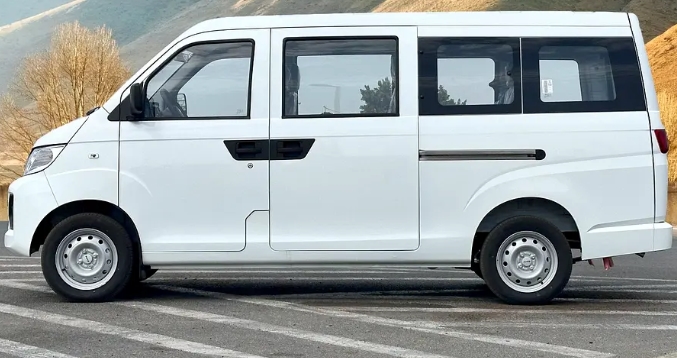
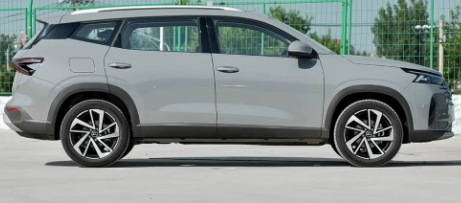
Over the years, Venucia has produced numerous vehicles, including:
The lineup has gradually shifted away from sedans toward SUVs and electrified vehicles as consumer demand changed.
The Most Successful Model
The Venucia T70 is generally regarded as the brand’s most successful model.
Introduced in 2014, the compact SUV benefited from several advantages:
- proven Nissan engineering
- affordable pricing
- spacious interior
- dependable powertrain
- practical design
- strong fuel economy
Chinese consumers increasingly favored SUVs during the mid-2010s, and the T70 arrived at exactly the right time.
Its combination of reliability and value helped establish Venucia as a credible domestic brand backed by Nissan.
Sales Performance
Venucia experienced its strongest sales during the mid-to-late 2010s.
The brand reached annual sales exceeding 140,000 vehicles during its peak years, with the T70 and D50 among its strongest performers.
Because Venucia is sold almost exclusively within China, there are no meaningful global sales figures separate from its Chinese market performance.
Likewise, there are no U.S. sales figures, as the brand has never officially entered the American market.
U.S. Consumer Reception
Venucia has never been officially sold in the United States.
Consequently, there is effectively no mainstream American consumer reception.
Among automotive enthusiasts and industry analysts, Venucia is generally viewed as an interesting example of how international manufacturers adapted to Chinese government policies by creating domestic brands.
American consumers are far more familiar with Nissan than Venucia, and the brand remains largely unknown outside Asia.
Marketing Strategy
Venucia’s marketing has consistently focused on practicality and affordability rather than luxury.
Advertising campaigns have emphasized:
- dependable Nissan engineering
- family transportation
- modern technology
- value for money
- low ownership costs
- youthful styling
As Chinese consumers increasingly researched vehicles online, Venucia expanded its digital marketing efforts through social media platforms, livestream product launches, and online purchasing tools.
The company also promoted its transition toward electrification by highlighting environmentally friendly technology and intelligent driving features.
Major Milestones
Several milestones have shaped Venucia’s history.
2010
Venucia officially announced as Dongfeng Nissan’s new Chinese brand.
2012
Introduction of the D50 sedan and R50 hatchback.
Launch of the highly successful T70 SUV.
2017
Venucia reorganized into a more independent business division within Dongfeng Nissan to strengthen its market identity.
Introduction of more advanced SUVs featuring updated styling and improved connectivity.
Expansion into plug-in hybrid and battery-electric vehicles under the Big V DD-i and VX6 product lines.
Challenges and Hardships
Despite its early success, Venucia has encountered several significant challenges.
Competition from Domestic Brands
The greatest challenge emerged during the late 2010s.
Chinese manufacturers such as BYD, Geely, Changan, GAC Aion, Great Wall, and Chery rapidly improved vehicle quality while investing heavily in electric vehicles and advanced technology.
These companies increasingly matched or exceeded Venucia’s value proposition.
To respond, Venucia accelerated development of hybrid and electric vehicles while updating its styling and infotainment systems.
Declining Sedan Demand
Venucia’s earliest products consisted primarily of sedans.
As Chinese consumers shifted dramatically toward SUVs, sedan sales declined.
The company responded by introducing additional crossover and SUV models while reducing emphasis on traditional passenger cars.
Electric Vehicle Transition
China’s rapid move toward battery-electric transportation presented another challenge.
Companies like BYD gained significant market share through aggressive EV development.
Venucia answered by introducing fully electric models such as the D60 EV and VX6, along with plug-in hybrid vehicles under the DD-i branding.
Organizational Changes
Venucia has never merged with another company, nor has it been acquired.
Instead, the brand has undergone internal organizational restructuring.
In 2017, Dongfeng Nissan separated Venucia into a more independent business unit to improve management flexibility and strengthen brand identity.
Later, the company reintegrated many operations with Dongfeng Nissan to improve efficiency as market competition intensified.
Ownership has always remained under Dongfeng Nissan Passenger Vehicle Company, itself part of the Nissan-Dongfeng joint venture.
Awards and Accomplishments
Although Venucia has not accumulated the extensive international awards received by Nissan, the brand has achieved several important accomplishments.
These include:
- establishing one of China’s most successful foreign joint venture domestic brands
- successfully launching multiple electric vehicles
- expanding into hybrid technology
- developing increasingly original vehicle designs
- maintaining Nissan manufacturing quality while lowering vehicle prices
The company also helped Nissan strengthen its position in China’s competitive domestic-brand market.
Racing Programs
Venucia has not operated a significant factory-backed motorsports program.
Unlike Nissan, which has participated extensively in Formula E, Super GT, endurance racing, touring cars, and rally competition, Venucia has concentrated almost exclusively on consumer vehicle sales.
The company has instead invested resources in product development, electrification, and expanding its position in China’s mainstream automotive market.
Technology Development
In recent years, Venucia has shifted toward greater technological independence.
Modern vehicles include:
- advanced driver-assistance systems
- large touchscreen infotainment displays
- intelligent voice recognition
- smartphone connectivity
- over-the-air software updates
- plug-in hybrid systems
- battery-electric drivetrains
Despite these advances, Nissan engineering continues to influence many of the underlying vehicle systems.
Electrification Strategy
One of Venucia’s most important strategic developments has been its expansion into electrified vehicles.
The company introduced the D60 EV before expanding into newer dedicated electric crossovers and plug-in hybrids.
The Big V DD-i became one of the brand’s flagship hybrid products, combining gasoline power with electric propulsion to improve fuel economy while maintaining practical driving range.
This shift reflects broader changes across China’s automotive industry, where government incentives and consumer demand have increasingly favored electric transportation.
Current Status
As of 2026, Venucia remains an active automotive brand.
It has not gone out of business, has not been bought out, and has not merged with another manufacturer.
Instead, it continues operating under Dongfeng Nissan Passenger Vehicle Company as part of the Nissan-Dongfeng joint venture.
The brand’s future depends largely on its ability to compete in China’s rapidly evolving new-energy vehicle market, where domestic manufacturers continue to expand aggressively. Venucia’s strengths remain its access to Nissan engineering, established manufacturing facilities, and a nationwide dealer network, while its challenges include maintaining a distinct identity in an increasingly crowded marketplace.
Although it has never achieved global recognition comparable to Nissan itself, Venucia has become an important example of how an international automaker adapted to China’s unique automotive policies and consumer preferences. By combining proven Japanese engineering with localized product development and competitive pricing, the brand has carved out a lasting place in the Chinese automotive industry. As it continues to expand its lineup of electric and hybrid vehicles, Venucia is expected to remain a significant participant in China’s highly competitive passenger vehicle market for the foreseeable future.