The Evolution of the Haima 2: Haima’s Affordable Subcompact Hatchback
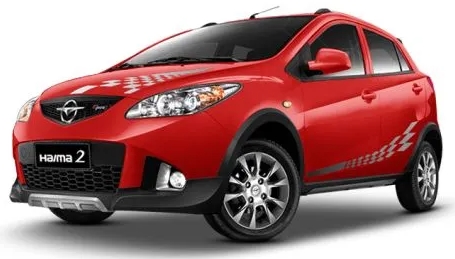
The Haima 2 was a subcompact hatchback produced by Haima Automobile from 2009 to 2015. Designed as an affordable entry-level vehicle for the Chinese market, the model played an important role in Haima’s growth during the late 2000s and early 2010s. Combining compact dimensions, economical engines, and practical hatchback versatility, the Haima 2 appealed to first-time buyers and urban drivers seeking affordable transportation.
Although it never achieved the global recognition of competitors from larger manufacturers, the Haima 2 became a notable vehicle within Haima’s lineup and demonstrated the company’s ability to produce modern small cars during a period of rapid expansion in China’s automotive industry. Its styling, heavily influenced by the second-generation Mazda2, reflected Haima’s historical relationship with Mazda while also marking the beginning of the company’s transition toward greater independence.
The Origins of the Haima 2
Haima Automobile traces its roots to a joint venture between Hainan Automobile and Mazda. In fact, the name “Haima” is derived from a combination of “Hainan” and “Mazda.” Throughout the 1990s and early 2000s, many Haima vehicles were based heavily on Mazda platforms and engineering.
By the late 2000s, demand for affordable compact vehicles in China was growing rapidly. To capitalize on this trend, Haima introduced the Haima 2, known in some markets as the Haima Cupid or Haima Qiubite. The vehicle entered production in September 2009 as a five-door hatchback designed primarily for city driving and young buyers.
The styling closely resembled the second-generation Mazda2, leading many observers to mistake it for a Mazda product at first glance. Despite the similarities, the Haima 2 was marketed as a distinct model within Haima’s growing portfolio.
.
You’ve got that cool car, but is it resting in its own cool place?
It’s visually pleasing for the surrounding areas outside of your home to look as awesome as what’s stored inside your garage! If you desire a truly inspirational environment for your landscape, you should check into these easy plans! You’ll happy with the end results!

.
First Generation Haima 2 (2009–2013)
The Haima 2 was introduced as a front-engine, front-wheel-drive subcompact hatchback. It measured approximately 153.1 inches in length, 66.7 inches in width, and 58.3 inches in height, with a wheelbase of 98.4 inches. These dimensions made it well suited for crowded urban environments while still offering practical passenger and cargo space.
At launch, buyers could choose between two gasoline-powered four-cylinder engines:
Engine Options
1.3-Liter Four-Cylinder
- 92 horsepower
- Five-speed manual transmission
1.5-Liter Four-Cylinder
- 105 horsepower
- Five-speed manual transmission
- Available six-speed automatic transmission in selected markets
Both engines were derived from Mitsubishi engine designs and were known for their simplicity, fuel efficiency, and ease of maintenance.
Original Trim Levels (2009–2013)
During the initial production period, the Haima 2 was offered in several trim levels.
1.3-Liter Models
GL (Standard)
- Entry-level equipment
- Manual windows on some markets
- Basic audio system
- Steel wheels
GLX (Comfort)
- Additional convenience features
- Improved interior trim
- Enhanced audio equipment
GLS (Deluxe)
- Higher equipment level
- Additional comfort features
- Alloy wheels in some markets
1.5-Liter Models
GLS (Deluxe)
- More powerful engine
- Additional equipment compared with lower trims
- Improved interior appointments
These trim levels provided buyers with a range of choices depending on budget and desired equipment. Prices at launch ranged from approximately 53,900 to 68,900 yuan, making the Haima 2 one of the more affordable hatchbacks available in China at the time.
Market Position and Competition
The Haima 2 entered a highly competitive market segment that included vehicles from Chery, Geely, BYD, Great Wall, and several joint-venture manufacturers. Its primary advantages were affordability, hatchback practicality, and styling that echoed the popular Mazda2.
The model found particular success among younger drivers and first-time vehicle owners seeking an economical city car. The five-door hatchback body style offered versatility that many sedan competitors could not match.
The 2013 Facelift
In 2013, Haima introduced a facelifted version of the Haima 2. While the vehicle’s underlying platform and powertrains remained largely unchanged, the update modernized its appearance and helped extend its market life.
Exterior Changes
The facelift included:
- Redesigned front bumper
- Updated rear bumper
- Revised exterior trim details
- Minor styling refinements
Although modest in scope, these updates gave the vehicle a fresher appearance in an increasingly competitive market.
Facelifted Trim Levels (2013–2015)
Following the facelift, Haima simplified and revised portions of the lineup.
1.3-Liter Models
GLS
- Primary 1.3-liter trim after facelift
- Updated styling
- Enhanced standard equipment
1.5-Liter Models
GLX
- Mid-level equipment package
GLS
- Higher specification trim
Automated Manual Variants
In certain markets, Haima introduced automated manual transmission versions:
ASG STD
- Automated manual transmission
- Standard equipment package
ASG SDX
- Automated manual transmission
- Enhanced equipment level
These models improved convenience for urban drivers while maintaining relatively low ownership costs.
Specifications Throughout Production
Throughout its production run, the Haima 2 maintained a relatively consistent mechanical package.
Body Style
- Five-door hatchback
Layout
- Front-engine
- Front-wheel drive
Transmissions
- Five-speed manual
- Six-speed automatic
- Automated manual transmission (selected trims)
Engines
- 1.3-liter inline-four
- 1.5-liter inline-four
Dimensions
- Length: 153.1 inches
- Width: 66.7 inches
- Height: 58.3 inches
- Wheelbase: 98.4 inches
The vehicle’s compact size and lightweight construction contributed to its fuel efficiency and ease of maneuverability.
End of Production
Production of the Haima 2 concluded in 2015. By that time, consumer preferences in China had begun shifting toward larger sedans, crossovers, and SUVs. The compact hatchback segment remained competitive, but manufacturers increasingly focused on more profitable vehicle categories.
The Haima 2 was eventually replaced within the company’s broader lineup by newer passenger vehicles that offered more modern technology, updated safety systems, and larger interiors.
Significance in Haima’s History
The Haima 2 occupies an important place in the company’s history. It represented one of Haima’s most accessible vehicles and helped introduce many customers to the brand. The model also demonstrated how Haima could leverage its engineering experience and historical Mazda connections to produce a competitive small car.
While it was never intended to be a performance vehicle or luxury car, the Haima 2 fulfilled its mission as practical, affordable transportation for a growing market.
Future Outlook
Although the Haima 2 itself has been out of production since 2015, the principles behind the vehicle remain relevant. Affordable compact cars continue to play an important role in emerging automotive markets, particularly in densely populated urban areas.
If Haima were to revive the concept of the Haima 2 today, it would likely feature:
- Hybrid or fully electric powertrains
- Advanced safety technologies
- Digital instrument displays
- Smartphone connectivity
- Improved efficiency and emissions performance
Given the industry’s move toward electrification, any future spiritual successor to the Haima 2 would almost certainly emphasize energy efficiency and connected-car technology.
Produced from 2009 to 2015, the Haima 2 served as an affordable and practical subcompact hatchback that helped strengthen Haima’s position in China’s rapidly expanding automotive market. Offered with 1.3-liter and 1.5-liter engines, multiple trim levels, and a facelift in 2013, the model provided buyers with economical transportation and hatchback versatility. While its design reflected Haima’s historical ties to Mazda, the vehicle also represented an important step in the company’s development as an independent automaker. Today, the Haima 2 remains a noteworthy example of the small, value-focused vehicles that helped shape China’s automotive industry during the early twenty-first century.