The Evolution of the Lingbox COCO: The Story of Lingbox’s Affordable Electric City Car
The Lingbox COCO, marketed in China as the Lingbao COCO, is a compact battery-electric hatchback produced by Jiangsu Jimai New Energy Vehicle Industry Co., Ltd. Designed as an affordable urban commuter, the COCO represents one of the company’s earliest efforts to establish itself in China’s rapidly growing market for entry-level electric vehicles. Combining compact dimensions, seating for four passengers, and a simple electric drivetrain, the COCO has been offered in several trim levels while remaining focused on practical, low-cost transportation.
Although its production history is relatively short, the COCO illustrates the rapid evolution of China’s affordable electric vehicle segment, where manufacturers have continually improved vehicle range, safety, and comfort while maintaining competitive pricing.
Company History
Jiangsu Jimai New Energy Vehicle Industry Co., Ltd. is a Chinese manufacturer specializing in compact battery-electric vehicles. The company markets its passenger vehicles under the Lingbox brand internationally and the Lingbao name within China.
Rather than competing with premium electric vehicle manufacturers, Lingbox has concentrated on producing practical city cars that emphasize affordability, ease of operation, and low operating costs. The COCO was among the company’s first widely marketed passenger vehicles and helped establish the brand before the introduction of later models such as the BOX and Uni.
.
We LOVE cars & cruising around, but sometimes day trips to explore new cities are required (with family or friends) for a spice of variety in your life!
So GO explore!
Cruises & Day/Night USA City Tours to: Baltimore, Boston, Chicago, Marina Del Ray, New York, Niagara, Philadelphia, San Diego, San Francisco, Toronto, Washington DC, etc.:

.
Development of the Lingbox COCO
The Lingbox COCO was first introduced in 2021, with the initial model launching in April of that year. Production of the original version continued until October 2022, when an updated model entered the lineup.
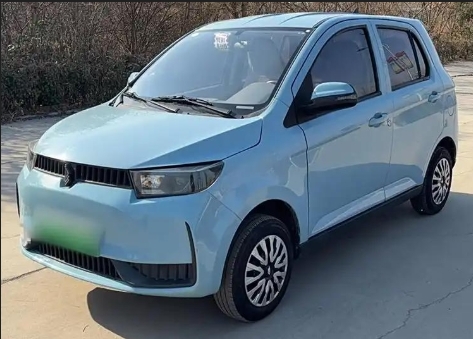
The vehicle was designed as a compact five-door hatchback intended primarily for urban transportation. Compared with earlier Chinese neighborhood electric vehicles, the COCO adopted a more conventional automotive design, featuring a unitized body structure, four-passenger seating, and styling similar to that of modern compact hatchbacks.
Its mission was straightforward: provide an inexpensive electric vehicle capable of meeting the transportation needs of city drivers while keeping ownership costs as low as possible.
Production Years
Based on publicly available information, the Lingbox COCO production history is as follows:
- 2021: Model introduced in April.
- 2022: Original model updated during October.
- 2023: Revised model continued with a new trim lineup.
- Present: No official end-of-production announcement has been issued, although the manufacturer’s focus has increasingly shifted toward newer models such as the BOX and Uni.
No official second-generation COCO has been announced.
2021–2022 Models
The original Lingbox COCO debuted in 2021 as one of the company’s first compact electric passenger cars.
Public documentation identifies the following trim:
- Hero Edition
The Hero Edition featured:
- Rear-mounted permanent-magnet synchronous electric motor
- Rear-wheel drive
- Single-speed electric transmission
- Four-passenger seating
- Five-door hatchback body
- Lithium iron phosphate (LFP) battery
- Compact dimensions optimized for city use
The original model remained in production until October 2022, when it was replaced by an updated version.
2023 Model Year
The updated COCO entered the market in October 2022 as a 2023 model, introducing revised styling, updated specifications, and an expanded trim lineup. Two trim levels were officially offered:
- Hero
- Alliance
Both versions shared the same basic mechanical layout:
- Rear-wheel drive
- Rear-mounted permanent-magnet synchronous motor
- Single-speed transmission
- Five-door hatchback body
- Four-passenger seating
The electric motor produced 34 horsepower (25 kilowatts) and 77 pound-feet (105 Nm) of torque. Power was supplied by an 11.5-kWh lithium iron phosphate battery, providing a CLTC-rated driving range of approximately 87 miles (140 kilometers).
The vehicle’s maximum speed was approximately 63 mph (101 km/h), making it suitable for urban roads and many suburban environments where higher-speed highway travel was not required.
Design Evolution
Although the COCO has not undergone a complete redesign, the updated 2023 model refined the vehicle’s appearance while preserving its original concept.
Notable design characteristics include:
- Five-door hatchback body
- Rounded front fascia
- Large windshield
- Short overhangs
- Tall roofline maximizing passenger space
- Compact footprint suited to dense urban traffic
Rather than emphasizing sporty styling, the COCO was designed to maximize practicality while maintaining an approachable appearance.
The vehicle’s dimensions include:
- Overall length: 139.7 inches (3,548 millimeters)
- Width: 60.5 inches (1,536 millimeters)
- Height: 62.5 inches (1,588 millimeters)
- Wheelbase: 90.6 inches (2,300 millimeters)
These measurements place the COCO within China’s popular compact city-car segment.
Mechanical Specifications
Throughout its production, the COCO has retained a relatively simple engineering layout designed for dependable urban transportation.
Published specifications include:
- Rear-mounted permanent-magnet synchronous motor
- Rear-wheel drive
- Single-speed reduction gearbox
- Lithium iron phosphate battery
- Four-passenger seating
- Five-door hatchback body
- Maximum power of 25 kilowatts (34 horsepower)
- Peak torque of 105 Nm (77 pound-feet)
- Top speed of approximately 63 mph (101 km/h)
Battery capacity and powertrain specifications have remained largely consistent since the introduction of the revised model, reflecting Lingbox’s emphasis on reliability and affordability rather than continual performance upgrades.
Equipment
While positioned as an entry-level electric vehicle, the Lingbox COCO offers several features commonly expected in modern city cars.
Available equipment includes:
- Air conditioning
- Digital instrument display
- Power windows
- Central locking
- USB charging ports
- Foldable rear seats
- Modern LED lighting elements on selected versions
Equipment differences between the Hero and Alliance trims are relatively modest and primarily involve convenience features and cosmetic details rather than major mechanical differences.
Market Position
The Lingbox COCO competes in China’s rapidly expanding market for affordable electric city cars. It was developed to appeal to buyers seeking economical transportation for everyday commuting, shopping, and local travel.
Typical customers include:
- First-time car buyers
- Urban commuters
- Small families
- Retirees
- Fleet operators
- Drivers replacing gasoline-powered minicars
Its low purchase price, compact size, and straightforward engineering have made it an attractive option for buyers whose driving needs are largely confined to urban and suburban environments.
Historical Significance
Although the COCO has not been in production for many years, it occupies an important place in Lingbox’s product history. It helped establish the manufacturer within China’s competitive electric vehicle market and demonstrated that affordable battery-electric vehicles could offer conventional passenger-car styling, four-passenger seating, and practical driving range at an accessible price.
The lessons learned during the COCO’s development also contributed to later Lingbox models, including the larger BOX and the compact Uni, both of which expanded the brand’s presence in the entry-level electric vehicle market.
Future Outlook
Lingbox has increasingly shifted its attention toward newer products with larger battery options, longer driving ranges, and updated technology. While no next-generation COCO has been announced, future compact Lingbox vehicles are likely to benefit from continued improvements in lithium iron phosphate battery technology, charging capability, vehicle safety, and onboard connectivity.
Should the COCO remain in production, future updates are expected to follow Lingbox’s established practice of incremental refinement rather than complete redesigns. At present, however, the manufacturer has not released an official roadmap outlining the model’s long-term future.
Since its introduction in 2021, the Lingbox COCO has evolved from one of Lingbox’s earliest compact electric passenger cars into a mature entry-level city vehicle. Although its production history is relatively brief, the model has progressed through an initial Hero Edition and later Hero and Alliance trims while maintaining its focus on affordability, simplicity, and efficient urban transportation. As China’s electric vehicle industry continues to expand, the COCO remains an example of how compact battery-electric hatchbacks have become increasingly practical, refined, and accessible for everyday drivers.